Cultic Studies Review, Vol. 2, No. 3, 2003, Page 9
characteristics of the study (those who participated via ordinary mail were informed by
phone), and once they gave their informed consent to take part in it, they were provided
with the necessary instruments to be completed and returned.
Analysis
Statistical analyses were carried out using the statistical program SPSS-PC, version 10.0 for
Windows, as follows: First, the Student‘s t distribution helped us examine the existence of
statistically significant differences among the global scores of the Attending and Mail
samples. The following analysis focused on the psychometric characteristics of the Spanish
version of the scale, taking as a reference the original structure. Next we used the Principal
Components Factor Analysis with Oblimin rotation to examine the construct validity of the
scale for the Spanish sample and observed psychometric properties for the new factorial
structure. Finally, taking the average scores for each item in the Spanish and North
American samples, we used the Mann-Whitney U test to compare the mean of the average
scores related to the new subscales found in the Spanish sample.
Results
The 61 participants were initially assigned to two different groups depending on the kind of
participation: Attending (n=42) and by Mail (n=19). As no significant differences (t=1.150
p=0.255) were found between both groups in the global scores for the GPA scale, from then
on both groups were considered together for the rest of the analysis.
Item analysis
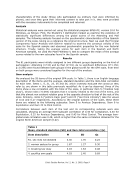
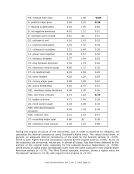
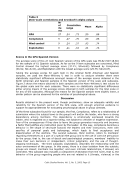
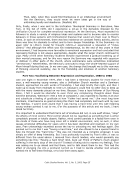
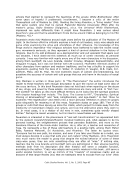
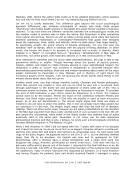
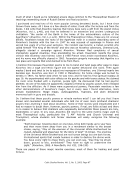
We analyzed the 28 items of the original GPA scale. In Table 1, there is an English language
description of the items and the average, standard deviation and the item-total correlation
for each item. Items 1, 5, 21, 22, 25 and 26, which inversely evaluate the construct they
refer to, are shown in this table previously recodified. As it can be observed, three of the
items show a low correlation with the total of the scale, in particular item 5 (―medical help
okay‖), whose index (-0.044) indicates that it is barely related to the rest of the items, and
that this almost non existent relation goes in the opposite direction to that of the rest of the
scale. Similarly, items 6 (―politics major goal‖) and 22 (―can think critically‖) take the values
of 0.16 and 0.17 respectively. According to the original authors of the scale, these three
items are related to the following subscales: Item 5 to Anxious Dependency, Item 6 to
Exploitation and Item 22 to Mind Control.
Correlations between each item of the test and its corresponding subscale were also
calculated, showing an average item-subscale correlation of 0.45 for Compliance, 0.40 for
Exploitation, 0.32 for Anxious Dependency, and 0.43 for Mind Control. The average item-
global scale correlation was 0.48, which is higher than the same correlation obtained for the
original North American sample (0.42).
Table 1
Mean, standard deviation (SD) and item-total correlation (rjx)
Item description M SD rjx
R1. sex lives not dictated 3.30 1.70 0.24
2. women seduce for group 1.67 1.27 0.30
3. breaking law okay 3.03 1.63 0.48
4. sacrifice own goals 4.03 1.40 0.69
characteristics of the study (those who participated via ordinary mail were informed by
phone), and once they gave their informed consent to take part in it, they were provided
with the necessary instruments to be completed and returned.
Analysis
Statistical analyses were carried out using the statistical program SPSS-PC, version 10.0 for
Windows, as follows: First, the Student‘s t distribution helped us examine the existence of
statistically significant differences among the global scores of the Attending and Mail
samples. The following analysis focused on the psychometric characteristics of the Spanish
version of the scale, taking as a reference the original structure. Next we used the Principal
Components Factor Analysis with Oblimin rotation to examine the construct validity of the
scale for the Spanish sample and observed psychometric properties for the new factorial
structure. Finally, taking the average scores for each item in the Spanish and North
American samples, we used the Mann-Whitney U test to compare the mean of the average
scores related to the new subscales found in the Spanish sample.
Results
The 61 participants were initially assigned to two different groups depending on the kind of
participation: Attending (n=42) and by Mail (n=19). As no significant differences (t=1.150
p=0.255) were found between both groups in the global scores for the GPA scale, from then
on both groups were considered together for the rest of the analysis.
Item analysis
We analyzed the 28 items of the original GPA scale. In Table 1, there is an English language
description of the items and the average, standard deviation and the item-total correlation
for each item. Items 1, 5, 21, 22, 25 and 26, which inversely evaluate the construct they
refer to, are shown in this table previously recodified. As it can be observed, three of the
items show a low correlation with the total of the scale, in particular item 5 (―medical help
okay‖), whose index (-0.044) indicates that it is barely related to the rest of the items, and
that this almost non existent relation goes in the opposite direction to that of the rest of the
scale. Similarly, items 6 (―politics major goal‖) and 22 (―can think critically‖) take the values
of 0.16 and 0.17 respectively. According to the original authors of the scale, these three
items are related to the following subscales: Item 5 to Anxious Dependency, Item 6 to
Exploitation and Item 22 to Mind Control.
Correlations between each item of the test and its corresponding subscale were also
calculated, showing an average item-subscale correlation of 0.45 for Compliance, 0.40 for
Exploitation, 0.32 for Anxious Dependency, and 0.43 for Mind Control. The average item-
global scale correlation was 0.48, which is higher than the same correlation obtained for the
original North American sample (0.42).
Table 1
Mean, standard deviation (SD) and item-total correlation (rjx)
Item description M SD rjx
R1. sex lives not dictated 3.30 1.70 0.24
2. women seduce for group 1.67 1.27 0.30
3. breaking law okay 3.03 1.63 0.48
4. sacrifice own goals 4.03 1.40 0.69