Cultic Studies Review, Vol. 2, No. 3, 2003, Page 36
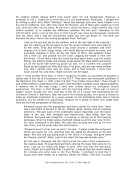
become more and more dependent on receiving his approval through obedient behavior. In
this way, ego functions that interfere with group functions are attacked and diminished. The
cult member becomes child-like and suggestible. Therefore, in order to continue to feel good
the recruit must continually be locked into an idealizing transference the cult leader, which
never ends and never is interpreted.
It was understandable how anti-social and/or narcissistic cult leaders will use suggestion of
childhood sexual abuse as a technique for further separating cult members from their
parents. It was harder to understand how well-meaning therapists could suggest this to
their patients. The suspicion is that some therapists are not aware of how much influence
they have over their patients. Only a very small minority of therapists consciously and
deceptively employs some of the techniques used by cult leaders. However, there is a
continuum of influence and, although therapists do not have the degree of influence over
patients that cult leaders have over their followers, all therapists should recognize that their
behavior and attitudes do have some degree of influence on their patients. Before this
concept is developed further, an historical overview of recovered memories will be explored.
Historical Overview of Recovered Memories
In the late nineteenth century, while working with his first patients, who were displaying
hysterical symptoms, Freud suspected that the causative factors for these symptoms were
sexual seductions from early childhood. When his patients reported recovered memories of
childhood sexual seductions, he believed them without qualification (Freud, 1893-1895).
However, in analyzing his own dreams, investigating children‘s behavior, and in gaining an
appreciation of the power of transference, it became clear to Freud that human behavior
was much more complex than he had originally believed. Freud began to theorize that
memory could be influenced by unconscious sexual and aggressive fantasies. He noted that
hysterical symptoms, like dreams, represented fantasized wishes and conflicts about these
wishes rather than only traumatic memories. Symptoms were based on psychic reality
rather than simply objective reality. Therefore, he considered the possibility that some—not
all—childhood memories were screen memories rather than being historical in every detail.
Freud developed the more complex theory that children have sexual as well as aggressive
feelings from early life and these basic feelings stimulate fantasies and, therefore, can have
an impact on memory. Freud never abandoned the idea that children could be, and often
were, sexually abused. However, Freud began to credit children with a complex mental
capacity by recognizing their ability to wish, invent, and fantasize, and he recognized that
this ability shaped and influenced memory (Freud, 1905).
Freud developed the seduction theory prior to his formulation of his ideas about
transference. As he developed his ideas about transference, he further was able to see how
transference reactions could influence historical reports. That is, he began to consider that
some of his patients, under sway of positive transference feelings, might unconsciously be
reporting material that they felt would please him and, therefore, give him the material for
which they felt he was looking. Along with this insight, Freud began to see transference
reactions as a defense against conscious awareness of intrapsychic conflicts. Therefore, for
Freud, identifying and understanding transference reactions became a central route along
with dreams, to gaining an understanding of the patient‘s true history. Unfortunately, many
in the mental health community viewed Freud‘s insights as an indication that all memories
of childhood sexual experiences were fantasies. There was a tendency for many clinicians to
look intrapsychically to the exclusion of outward reality. This attitude led to the mental
health community‘s virtual abandonment of victims of childhood sexual abuse.
One of the positive outgrowths of the feminist movement in the ‗70s and ‗80s was the
exposure of the reality of spousal and child abuse. Women talking to one another in groups
shared painful experiences of abuse. They demanded services for abused women and
become more and more dependent on receiving his approval through obedient behavior. In
this way, ego functions that interfere with group functions are attacked and diminished. The
cult member becomes child-like and suggestible. Therefore, in order to continue to feel good
the recruit must continually be locked into an idealizing transference the cult leader, which
never ends and never is interpreted.
It was understandable how anti-social and/or narcissistic cult leaders will use suggestion of
childhood sexual abuse as a technique for further separating cult members from their
parents. It was harder to understand how well-meaning therapists could suggest this to
their patients. The suspicion is that some therapists are not aware of how much influence
they have over their patients. Only a very small minority of therapists consciously and
deceptively employs some of the techniques used by cult leaders. However, there is a
continuum of influence and, although therapists do not have the degree of influence over
patients that cult leaders have over their followers, all therapists should recognize that their
behavior and attitudes do have some degree of influence on their patients. Before this
concept is developed further, an historical overview of recovered memories will be explored.
Historical Overview of Recovered Memories
In the late nineteenth century, while working with his first patients, who were displaying
hysterical symptoms, Freud suspected that the causative factors for these symptoms were
sexual seductions from early childhood. When his patients reported recovered memories of
childhood sexual seductions, he believed them without qualification (Freud, 1893-1895).
However, in analyzing his own dreams, investigating children‘s behavior, and in gaining an
appreciation of the power of transference, it became clear to Freud that human behavior
was much more complex than he had originally believed. Freud began to theorize that
memory could be influenced by unconscious sexual and aggressive fantasies. He noted that
hysterical symptoms, like dreams, represented fantasized wishes and conflicts about these
wishes rather than only traumatic memories. Symptoms were based on psychic reality
rather than simply objective reality. Therefore, he considered the possibility that some—not
all—childhood memories were screen memories rather than being historical in every detail.
Freud developed the more complex theory that children have sexual as well as aggressive
feelings from early life and these basic feelings stimulate fantasies and, therefore, can have
an impact on memory. Freud never abandoned the idea that children could be, and often
were, sexually abused. However, Freud began to credit children with a complex mental
capacity by recognizing their ability to wish, invent, and fantasize, and he recognized that
this ability shaped and influenced memory (Freud, 1905).
Freud developed the seduction theory prior to his formulation of his ideas about
transference. As he developed his ideas about transference, he further was able to see how
transference reactions could influence historical reports. That is, he began to consider that
some of his patients, under sway of positive transference feelings, might unconsciously be
reporting material that they felt would please him and, therefore, give him the material for
which they felt he was looking. Along with this insight, Freud began to see transference
reactions as a defense against conscious awareness of intrapsychic conflicts. Therefore, for
Freud, identifying and understanding transference reactions became a central route along
with dreams, to gaining an understanding of the patient‘s true history. Unfortunately, many
in the mental health community viewed Freud‘s insights as an indication that all memories
of childhood sexual experiences were fantasies. There was a tendency for many clinicians to
look intrapsychically to the exclusion of outward reality. This attitude led to the mental
health community‘s virtual abandonment of victims of childhood sexual abuse.
One of the positive outgrowths of the feminist movement in the ‗70s and ‗80s was the
exposure of the reality of spousal and child abuse. Women talking to one another in groups
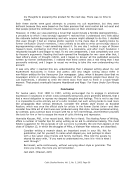
shared painful experiences of abuse. They demanded services for abused women and