Cultic Studies Review, Vol. 2, No. 3, 2003, Page 6
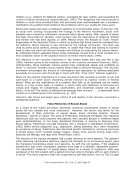
Psychometric Properties of the Spanish Version of the
Group Psychological Abuse Scale
Carmen Almendros
José Antonio Carrobles, Ph.D.
Universidad Autonoma de Madrid
Álvaro Rodríguez-Carballeira, Ph.D.
Universidad de Barcelona
Josep María Jansà, M.D.
Atención e Investigación de Socioadicciones
Abstract
This paper presents preliminary results for the adaptation of the Group
Psychological Abuse Scale (GPA) (Chambers, Langone, Dole &Grice, 1994), a
measure of group psychological abuse, to a Spanish population. This scale is
unique in assessing the varieties and extent of psychological abuse in group
contexts. The Spanish translation of the scale has been administered to 61
self-identified former members of diverse manipulative groups who had
involvements with any of a total of 21 different groups. The findings on the
psychometric properties of the Spanish version of this scale indicate that it is
a reliable and valid instrument that reveals a structure of group psychological
abuse composed of three factors: Compliance, Mind Control and Exploitation.
Key Words: Psychological Abuse Psychological Manipulation Coercive
Persuasion Emotional Violence Mind Control
The existence of dogmatic groups with a certain paranoid component arouses considerable
social unease (Jordán, 1991 Rodríguez, 1994). In these groups some people, who adopt
beliefs, attitudes, and behaviors that would have been strange to them in the absence of
psychological manipulation, place themselves at the service of a doctrine used as an
instrument by the leader and/or group. In this context, a motivation and justification is
found for the performance of sometimes illegal, social actions.
Given the ―ambiguity‖ of the concept ―cult‖— "secta," "secte," "setta," "sekta" are the
preferred terms in Europe— (Langone, 1994) and the caution that is advised when applying
the term to a specific group (Langone, 2001), the concept of psychological abuse is crucial
to delimit and differentiate coercive cults from other minor and legitimate groups that do
not employ techniques of psychological manipulation.i The concept of psychological abuse,
according to Langone (1992), refers to practices through which people are treated as
objects to be used and manipulated, instead of subjects whose mind, autonomy, identity,
and dignity must be respected. Depending on the use, frequency, and intensity of abusive
methods, distinctions can be made between manipulative and benign groups (Chambers,
Langone &Malinoski, 1996).
The Group Psychological Abuse Scale (GPA) (Chambers, Langone, Dole &Grice, 1994)
constitutes an empirical approximation of the characterization of group contexts as a
function of the varieties and the extent of psychological abuse. This scale has been used
with North American subjects, with former members of different manipulative groups
(Chambers et al., 1994 Aronoff, Marshall, Whitney, Malinoski &Martin, 2001) and with
former members of the same manipulative group together or compared to former members
of non manipulative groups (Adams, 1998 Gasde &Block, 1998 Langone, 1996 Malinoski,
Langone &Lynn 1999).
Psychometric Properties of the Spanish Version of the
Group Psychological Abuse Scale
Carmen Almendros
José Antonio Carrobles, Ph.D.
Universidad Autonoma de Madrid
Álvaro Rodríguez-Carballeira, Ph.D.
Universidad de Barcelona
Josep María Jansà, M.D.
Atención e Investigación de Socioadicciones
Abstract
This paper presents preliminary results for the adaptation of the Group
Psychological Abuse Scale (GPA) (Chambers, Langone, Dole &Grice, 1994), a
measure of group psychological abuse, to a Spanish population. This scale is
unique in assessing the varieties and extent of psychological abuse in group
contexts. The Spanish translation of the scale has been administered to 61
self-identified former members of diverse manipulative groups who had
involvements with any of a total of 21 different groups. The findings on the
psychometric properties of the Spanish version of this scale indicate that it is
a reliable and valid instrument that reveals a structure of group psychological
abuse composed of three factors: Compliance, Mind Control and Exploitation.
Key Words: Psychological Abuse Psychological Manipulation Coercive
Persuasion Emotional Violence Mind Control
The existence of dogmatic groups with a certain paranoid component arouses considerable
social unease (Jordán, 1991 Rodríguez, 1994). In these groups some people, who adopt
beliefs, attitudes, and behaviors that would have been strange to them in the absence of
psychological manipulation, place themselves at the service of a doctrine used as an
instrument by the leader and/or group. In this context, a motivation and justification is
found for the performance of sometimes illegal, social actions.
Given the ―ambiguity‖ of the concept ―cult‖— "secta," "secte," "setta," "sekta" are the
preferred terms in Europe— (Langone, 1994) and the caution that is advised when applying
the term to a specific group (Langone, 2001), the concept of psychological abuse is crucial
to delimit and differentiate coercive cults from other minor and legitimate groups that do
not employ techniques of psychological manipulation.i The concept of psychological abuse,
according to Langone (1992), refers to practices through which people are treated as
objects to be used and manipulated, instead of subjects whose mind, autonomy, identity,
and dignity must be respected. Depending on the use, frequency, and intensity of abusive
methods, distinctions can be made between manipulative and benign groups (Chambers,
Langone &Malinoski, 1996).
The Group Psychological Abuse Scale (GPA) (Chambers, Langone, Dole &Grice, 1994)
constitutes an empirical approximation of the characterization of group contexts as a
function of the varieties and the extent of psychological abuse. This scale has been used
with North American subjects, with former members of different manipulative groups
(Chambers et al., 1994 Aronoff, Marshall, Whitney, Malinoski &Martin, 2001) and with
former members of the same manipulative group together or compared to former members
of non manipulative groups (Adams, 1998 Gasde &Block, 1998 Langone, 1996 Malinoski,
Langone &Lynn 1999).