Cultic Studies Review, Vol. 2, No. 3, 2003, Page 7
In order to generate the items of the scale, the investigators considered: (a) a Delphi study
conducted by Dole and Dubrow-Eichel (1985) that examined the perceptions different
experts had on cults (b) Langone's (1992) theoretical analysis of psychological abuse and
(c) a review of the clinical literature on cults and thought reform programs. Afterwards, a
factor analysis of the mail responses given by 308 former members of 101 different groups
to 112 descriptive items was performed. Subjects were contacted through lists provided by
associations that provided educational programs on cults, ex-member organizations, and
professionals.
This paper presents preliminary data on the adaptation of the GPA to the Spanish
population. Besides contributing to the need for a reliable instrument that could evaluate
psychological abuse in group contexts, this study, by looking at group psychological abuse
across different cultural groups, lays the groundwork for comparative studies that may
provide a multicultural knowledge base, which would be more valuable than knowledge
based on a single culture.
Method
Subjects
The Spanish version of the GPA scale was administered to 61 subjects from different
provinces within Spain. These subjects were contacted through data provided by
associations working on information, education, and advice on group psychological
manipulation (42.6%), mental health professionals, who were not necessarily in touch with
the subject matter (21.3%), and some former members, who were taking part in this study
and facilitated contact with other former members (36.1%). The inclusion criterion was that
subjects identified themselves as former members of groups using manipulative methods to
attract, indoctrinate, and keep members inside the group. This criterion implies a feeling of
belonging or of having been a member of the group and excludes those who had just a brief
contact.
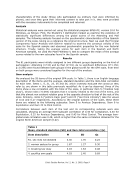
Out of the 61 selected subjects, 68.9% (42 subjects) participated in the interviewer‘s
presence, whereas 31.1% (19 subjects) completed the Scale through ordinary mail. A total
of 34 subjects (55.7%) were male, and 27 female (44.3%). Participant‘s mean age was
44.33 years (SD =11.0). They had belonged to one of a total of 21 different groups. They
got in touch with the groups at a mean age of 29.04 years (SD =12.10) and joined them at
a mean age of 29.58 years (SD =11.13), ranging, in both cases, from a minimum age of 3
years to a maximum of 56 years. The average length of membership was 8.75 years (SD =
7.96), with a range of 0.33 to 31.25 years of membership since they first met their groups.
The average length of time between exiting the group and participating in the study was
6.50 years (SD =7.11), with a median of 3.58 years and a range of 0.25 to 33.33 years.
Instruments
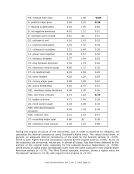
Spanish version of the Group Psychological Abuse Scale (GPA). Developed by
Chambers, Langone, Dole &Grice (1994), the GPA Scale is a standardized measure used to
evaluate psychological abuse in group environments. It is a self-administered instrument,
easily understood and quickly completed by subjects. It consists of 28 items, 7 for each of
the four subscales: Compliance, Exploitation, Mind Control, and Anxious Dependency. Each
item is rated on a 1-5 Likert scale ranging from 1= not at all characteristic to 5 =very
characteristic, with a possible range for each subscale from 7 to 35, and for the global
measure a range from 28 to 140. Scores above the midpoint—21 for each subscale and 84
for the global scale—are considered positive, indicating that the subject perceived the group
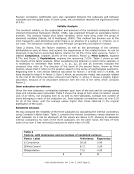
as abusive. The reliability coefficients identified in the original work were, according to the
authors, satisfactory, varying from 0.70 for Mind Control to 0.81 for Compliance.
In order to generate the items of the scale, the investigators considered: (a) a Delphi study
conducted by Dole and Dubrow-Eichel (1985) that examined the perceptions different
experts had on cults (b) Langone's (1992) theoretical analysis of psychological abuse and
(c) a review of the clinical literature on cults and thought reform programs. Afterwards, a
factor analysis of the mail responses given by 308 former members of 101 different groups
to 112 descriptive items was performed. Subjects were contacted through lists provided by
associations that provided educational programs on cults, ex-member organizations, and
professionals.
This paper presents preliminary data on the adaptation of the GPA to the Spanish
population. Besides contributing to the need for a reliable instrument that could evaluate
psychological abuse in group contexts, this study, by looking at group psychological abuse
across different cultural groups, lays the groundwork for comparative studies that may
provide a multicultural knowledge base, which would be more valuable than knowledge
based on a single culture.
Method
Subjects
The Spanish version of the GPA scale was administered to 61 subjects from different
provinces within Spain. These subjects were contacted through data provided by
associations working on information, education, and advice on group psychological
manipulation (42.6%), mental health professionals, who were not necessarily in touch with
the subject matter (21.3%), and some former members, who were taking part in this study
and facilitated contact with other former members (36.1%). The inclusion criterion was that
subjects identified themselves as former members of groups using manipulative methods to
attract, indoctrinate, and keep members inside the group. This criterion implies a feeling of
belonging or of having been a member of the group and excludes those who had just a brief
contact.
Out of the 61 selected subjects, 68.9% (42 subjects) participated in the interviewer‘s
presence, whereas 31.1% (19 subjects) completed the Scale through ordinary mail. A total
of 34 subjects (55.7%) were male, and 27 female (44.3%). Participant‘s mean age was
44.33 years (SD =11.0). They had belonged to one of a total of 21 different groups. They
got in touch with the groups at a mean age of 29.04 years (SD =12.10) and joined them at
a mean age of 29.58 years (SD =11.13), ranging, in both cases, from a minimum age of 3
years to a maximum of 56 years. The average length of membership was 8.75 years (SD =
7.96), with a range of 0.33 to 31.25 years of membership since they first met their groups.
The average length of time between exiting the group and participating in the study was
6.50 years (SD =7.11), with a median of 3.58 years and a range of 0.25 to 33.33 years.
Instruments
Spanish version of the Group Psychological Abuse Scale (GPA). Developed by
Chambers, Langone, Dole &Grice (1994), the GPA Scale is a standardized measure used to
evaluate psychological abuse in group environments. It is a self-administered instrument,
easily understood and quickly completed by subjects. It consists of 28 items, 7 for each of
the four subscales: Compliance, Exploitation, Mind Control, and Anxious Dependency. Each
item is rated on a 1-5 Likert scale ranging from 1= not at all characteristic to 5 =very
characteristic, with a possible range for each subscale from 7 to 35, and for the global
measure a range from 28 to 140. Scores above the midpoint—21 for each subscale and 84
for the global scale—are considered positive, indicating that the subject perceived the group
as abusive. The reliability coefficients identified in the original work were, according to the
authors, satisfactory, varying from 0.70 for Mind Control to 0.81 for Compliance.