Cultic Studies Review, Vol. 2, No. 3, 2003, Page 14
environment (breaking the law). So far as behaviors inside the group are concerned, this
subscale refers to a certain despotism towards the members, who are criticized or led to
certain activities or attitudes such as prostitution or rejection of medical care.
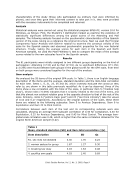
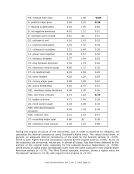
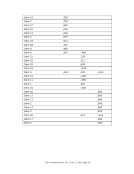
When comparing this factor structure to the one found by the original authors, there are
similarities in the dimensions for both versions. The subscale Compliance in the Spanish
sample is mostly the product of elements of two subscales, Compliance and Anxious
Dependency, in the original version. In this sense, we understand that both original
subscales are conveniently expressed under the term Compliance, taking into consideration
that the construct refers both to items describing submission and obedience to an authority
figure (leader/s or group), as well as extreme dependency to it. Thus, in the new subscale,
Compliance, we find the four items from Anxious Dependency that mainly accounted for the
covariance in the original subscale, those with the highest values of item-total correlation
(Items: 7, 8, 10 and 23 Values: 0.49, 0.34, 0.54 and 0.39 respectively). The remaining
three items of Anxious Dependency: 5, 16 and 17, had lower values for the item-total
correlation (0.03, 0.19 and 0.25). Item 5 was excluded from the scale as it hardly related to
the global scale. We are of the opinion that item 16 (―exercises remove doubt‖), that has
been moved to the subscale Mind Control for the Spanish sample, refers better to this one
than to Anxious Dependency because, although the exercises described in the item are
driven by negative emotions (fear, guilt) experienced by the members, the item does not
ask about them, but refers to the purpose of those exercises (cognitive control). Finally, we
also consider that item 17 (―no medical help‖) is better placed in the subscale Exploitation,
to which it is moved for the Spanish version, as it represents an action carried out by the
group to the detriment of its members. As far as the subscale Mind Control obtained in the
Spanish version is concerned, it corresponds almost perfectly with the same subscale in the
original instrument. Finally, the subscale Exploitation has remained almost the same as in
the original.
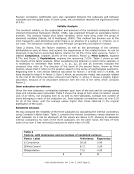
In our study we have observed an important fact, which is the similarity of the varieties of
psychological abuse shown by former members of different manipulative groups in two
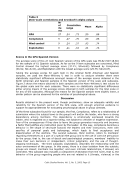
cultural contexts: North American and Spanish. When comparing the average scores for
both samples, we found that in both cases the subscale with the highest average score was
Mind Control (Spanish average: 37.21 North American average: 39.70), followed by
Compliance (Spanish average: 36.91 North American average: 37.36) and finally the
subscale Exploitation (Spanish average: 25.75 North American average: 30.13).
All this strengthens the hypothesis that the most consistent factor in abusive groups is mind
control, leaving at a second level other aspects like isolation, which is more characteristic of
other kind of organizations or of brainwashing processes, mentioned by Lifton (1961) in his
initial studies.
Among the limitations of this study, we could mention the difficulty in verifying the
representativeness of the sample regarding the universe of different situations of people
who have been involved in manipulative groups. All this is due to the difficulty, usual in this
kind of study, of getting in touch with former members of manipulative groups in a way that
produces adequate sample sizes and permits the use of probabilistic methods, especially
when, as in our case, 68.9% of the sample were interviewed, with just a few subjects being
surveyed after information was provided by phone (Almendros, 2001 Langone, 1994). Our
sample of 61 subjects is not the most adequate in size for the kind of analysis we have
used, especially if we consider the large number of items in the original scale (28 items).
Therefore the data obtained should be viewed as preliminary. However, the ratio
subjects/items in our study is similar to the one in the original study (308/112).
In future studies, it will be helpful to analyze the diagnostic validity of the Spanish version
of the scale, using as comparison a group of former members of non manipulative groups.
environment (breaking the law). So far as behaviors inside the group are concerned, this
subscale refers to a certain despotism towards the members, who are criticized or led to
certain activities or attitudes such as prostitution or rejection of medical care.
When comparing this factor structure to the one found by the original authors, there are
similarities in the dimensions for both versions. The subscale Compliance in the Spanish
sample is mostly the product of elements of two subscales, Compliance and Anxious
Dependency, in the original version. In this sense, we understand that both original
subscales are conveniently expressed under the term Compliance, taking into consideration
that the construct refers both to items describing submission and obedience to an authority
figure (leader/s or group), as well as extreme dependency to it. Thus, in the new subscale,
Compliance, we find the four items from Anxious Dependency that mainly accounted for the
covariance in the original subscale, those with the highest values of item-total correlation
(Items: 7, 8, 10 and 23 Values: 0.49, 0.34, 0.54 and 0.39 respectively). The remaining
three items of Anxious Dependency: 5, 16 and 17, had lower values for the item-total
correlation (0.03, 0.19 and 0.25). Item 5 was excluded from the scale as it hardly related to
the global scale. We are of the opinion that item 16 (―exercises remove doubt‖), that has
been moved to the subscale Mind Control for the Spanish sample, refers better to this one
than to Anxious Dependency because, although the exercises described in the item are
driven by negative emotions (fear, guilt) experienced by the members, the item does not
ask about them, but refers to the purpose of those exercises (cognitive control). Finally, we
also consider that item 17 (―no medical help‖) is better placed in the subscale Exploitation,
to which it is moved for the Spanish version, as it represents an action carried out by the
group to the detriment of its members. As far as the subscale Mind Control obtained in the
Spanish version is concerned, it corresponds almost perfectly with the same subscale in the
original instrument. Finally, the subscale Exploitation has remained almost the same as in
the original.
In our study we have observed an important fact, which is the similarity of the varieties of
psychological abuse shown by former members of different manipulative groups in two
cultural contexts: North American and Spanish. When comparing the average scores for
both samples, we found that in both cases the subscale with the highest average score was
Mind Control (Spanish average: 37.21 North American average: 39.70), followed by
Compliance (Spanish average: 36.91 North American average: 37.36) and finally the
subscale Exploitation (Spanish average: 25.75 North American average: 30.13).
All this strengthens the hypothesis that the most consistent factor in abusive groups is mind
control, leaving at a second level other aspects like isolation, which is more characteristic of
other kind of organizations or of brainwashing processes, mentioned by Lifton (1961) in his
initial studies.
Among the limitations of this study, we could mention the difficulty in verifying the
representativeness of the sample regarding the universe of different situations of people
who have been involved in manipulative groups. All this is due to the difficulty, usual in this
kind of study, of getting in touch with former members of manipulative groups in a way that
produces adequate sample sizes and permits the use of probabilistic methods, especially
when, as in our case, 68.9% of the sample were interviewed, with just a few subjects being
surveyed after information was provided by phone (Almendros, 2001 Langone, 1994). Our
sample of 61 subjects is not the most adequate in size for the kind of analysis we have
used, especially if we consider the large number of items in the original scale (28 items).
Therefore the data obtained should be viewed as preliminary. However, the ratio
subjects/items in our study is similar to the one in the original study (308/112).
In future studies, it will be helpful to analyze the diagnostic validity of the Spanish version
of the scale, using as comparison a group of former members of non manipulative groups.