International Journal of Cultic Studies ■ Vol. 3, 2012 69
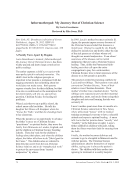
from 1990 to 2012 (volumes 14 to 36) failed to
find a single article about child abuse of any
kind in alternative religions or cults. A 1993
article about female sexual abusers insisted on
the importance of examining the phenomenon
outside of the contexts of cults and incestuous
families, but it did not provide any references to
analyses of female abusers within cults
themselves (Young, 1993, pp. 103, 109, 111).
Anson Shupe mentioned one of the ministers
that I discuss, Wilbert Thomas, Sr., in three of
his books on ministerial malfeasance (1995, p.
64 2007, p. 36 2008, pp. 23–24) but he did not
discuss the underlying religious patriarchalism
that he and others used to justify his actions.
One useful perspective from existing child
sexual-abuse literature that holds great promise
for the study of such violations within cults is
the examination of the abusing groups
themselves as subcultures with vulnerabilities to
abuse and coping mechanisms to prevent it (see
Fontes [Ed.], 1995). Two authors, Catherine
Taylor and Lisa Aronson Fontes, already have
applied this perspective to an examination of
child sexual abuse within Seventh Day
Adventism (Taylor &Fontes, 1995) but
researchers could adopt the same perspective to
other nonmainstream religions.
When we consider cult sexual-abuse stories
collectively, they reveal complex worlds of
deceit and exploitation perpetrated under the
justification of various transcendent themes.
These themes, many of which I identify in this
article, deserve inclusion in the wider analyses
of the motivations and justifications that abusers
use to excuse their actions. Existing scholarship,
for example, about the “explanatory statements”
that perpetrators use as “an excuse syntax” for
their violations involves five options, while this
article would expand that number. Research by
Nathan Pollock and Judith Hashmall reported
that the excuses 86 child molesters gave
clustered around five assertions:
(1) denial of fact, ‘Nothing happened’
(2) denial of responsibility, ‘Something
happened but it wasn’t my idea’ (3)
denial of sexual intent, ‘Something
happened and it was my idea, but it
wasn’t sexual’ (4) denial of
wrongfulness, ‘Something happened and
it was sexual but it wasn’t wrong’ and
(5) denial of self-determination,
‘Something happened and it was my
idea and it was sexual and it was wrong
but there were extenuating factors.’
(Pollock &Hashmall, 1991, p. 57)
Noteworthy about these five excuses is that they
bear some similarity to well-established research
in the sociology of deviance concerning five
common “neutralization” claims that deviants
use to justify their actions. These frequently
used claims involve a) the denial of
responsibility b) the denial of injury c) the
denial of the victim d) the condemnation of the
condemners and e) the appeal to higher loyalties
(Sykes &Matza, 1957). Without going through
a detailed comparative analysis of the two lists,
noteworthy for purposes here is that none of the
perpetrators whom Pollock and Hashmall
interviewed appeared to have used religious
justifications—what Sykes and Matza likely
would have called appeals to higher loyalties—
for their actions. Pollock and Hashmall
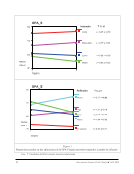
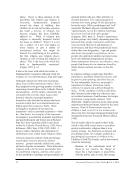
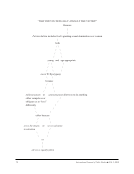
provided a diagram that linked together the
excuse justifications that they heard (Pollock &
Hashmall, 1991, p. 57), and I offer something
similar in the following diagram to show the
alternatives for those using the religious
justifications that I identified. Asking
religiously based perpetrators the designated
question yields the potential suggested
alternatives:
from 1990 to 2012 (volumes 14 to 36) failed to
find a single article about child abuse of any
kind in alternative religions or cults. A 1993
article about female sexual abusers insisted on
the importance of examining the phenomenon
outside of the contexts of cults and incestuous
families, but it did not provide any references to
analyses of female abusers within cults
themselves (Young, 1993, pp. 103, 109, 111).
Anson Shupe mentioned one of the ministers
that I discuss, Wilbert Thomas, Sr., in three of
his books on ministerial malfeasance (1995, p.
64 2007, p. 36 2008, pp. 23–24) but he did not
discuss the underlying religious patriarchalism
that he and others used to justify his actions.
One useful perspective from existing child
sexual-abuse literature that holds great promise
for the study of such violations within cults is
the examination of the abusing groups
themselves as subcultures with vulnerabilities to
abuse and coping mechanisms to prevent it (see
Fontes [Ed.], 1995). Two authors, Catherine
Taylor and Lisa Aronson Fontes, already have
applied this perspective to an examination of
child sexual abuse within Seventh Day
Adventism (Taylor &Fontes, 1995) but
researchers could adopt the same perspective to
other nonmainstream religions.
When we consider cult sexual-abuse stories
collectively, they reveal complex worlds of
deceit and exploitation perpetrated under the
justification of various transcendent themes.
These themes, many of which I identify in this
article, deserve inclusion in the wider analyses
of the motivations and justifications that abusers
use to excuse their actions. Existing scholarship,
for example, about the “explanatory statements”
that perpetrators use as “an excuse syntax” for
their violations involves five options, while this
article would expand that number. Research by
Nathan Pollock and Judith Hashmall reported
that the excuses 86 child molesters gave
clustered around five assertions:
(1) denial of fact, ‘Nothing happened’
(2) denial of responsibility, ‘Something
happened but it wasn’t my idea’ (3)
denial of sexual intent, ‘Something
happened and it was my idea, but it
wasn’t sexual’ (4) denial of
wrongfulness, ‘Something happened and
it was sexual but it wasn’t wrong’ and
(5) denial of self-determination,
‘Something happened and it was my
idea and it was sexual and it was wrong
but there were extenuating factors.’
(Pollock &Hashmall, 1991, p. 57)
Noteworthy about these five excuses is that they
bear some similarity to well-established research
in the sociology of deviance concerning five
common “neutralization” claims that deviants
use to justify their actions. These frequently
used claims involve a) the denial of
responsibility b) the denial of injury c) the
denial of the victim d) the condemnation of the
condemners and e) the appeal to higher loyalties
(Sykes &Matza, 1957). Without going through
a detailed comparative analysis of the two lists,
noteworthy for purposes here is that none of the
perpetrators whom Pollock and Hashmall
interviewed appeared to have used religious
justifications—what Sykes and Matza likely
would have called appeals to higher loyalties—
for their actions. Pollock and Hashmall
provided a diagram that linked together the
excuse justifications that they heard (Pollock &
Hashmall, 1991, p. 57), and I offer something
similar in the following diagram to show the
alternatives for those using the religious
justifications that I identified. Asking
religiously based perpetrators the designated
question yields the potential suggested
alternatives: