Cultic Studies Journal, Vol. 8, No. 1, 1991, Page 6
Yet painful moral dilemmas remain. When laws are violated through fraud or specific harm
to recruits, legal intervention is clearly indicated. But what about situations in which
behavior is virtually automatized, language reduced to rote and cliché, yet the cult member
expresses a certain satisfaction or even happiness? We must continue to seek ways to
encourage a social commitment to individual autonomy and avoid coercion and violence.
*****************
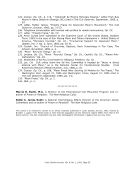
Acknowledgement
Except for the abstract, which was written by this journal‟s editor, this article first appeared
in the February 1991 issue of The Harvard Mental Health Letter. It is reprinted with
permission from The Harvard Mental Health Letter, 74 Fenwood Road, Boston, MA 02115.
******************
Robert J. Lifton, M.D. is Distinguished Professor of Psychology and Psychiatry at John Jay
College and the Graduate Center of the City University of New York. His most recent book,
written with Erik Markuson, is The Genocidal Mentality: Nazi Holocaust and Nuclear Threat
(New York: Basic Books, 1990).
This article is an electronic version of an article originally published in Cultic Studies Journal, 1991, Volume 8,
Number 1, pages 1-6. Please keep in mind that the pagination of this electronic reprint differs from that of the
bound volume. This fact could affect how you enter bibliographic information in papers that you may write.
Yet painful moral dilemmas remain. When laws are violated through fraud or specific harm
to recruits, legal intervention is clearly indicated. But what about situations in which
behavior is virtually automatized, language reduced to rote and cliché, yet the cult member
expresses a certain satisfaction or even happiness? We must continue to seek ways to
encourage a social commitment to individual autonomy and avoid coercion and violence.
*****************
Acknowledgement
Except for the abstract, which was written by this journal‟s editor, this article first appeared
in the February 1991 issue of The Harvard Mental Health Letter. It is reprinted with
permission from The Harvard Mental Health Letter, 74 Fenwood Road, Boston, MA 02115.
******************
Robert J. Lifton, M.D. is Distinguished Professor of Psychology and Psychiatry at John Jay
College and the Graduate Center of the City University of New York. His most recent book,
written with Erik Markuson, is The Genocidal Mentality: Nazi Holocaust and Nuclear Threat
(New York: Basic Books, 1990).
This article is an electronic version of an article originally published in Cultic Studies Journal, 1991, Volume 8,
Number 1, pages 1-6. Please keep in mind that the pagination of this electronic reprint differs from that of the
bound volume. This fact could affect how you enter bibliographic information in papers that you may write.