Cultic Studies Journal, Vol. 8, No. 1, 1991, Page 4
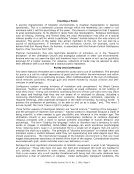
Creating a Pawn
A second characteristic of totalistic environments is mystical manipulation or planned
spontaneity. This is a systematic process through which the leadership can create in cult
members what I call the psychology of the pawn. The process is managed so that it appears
to arise spontaneously to its objects it rarely feels like manipulation. Religious techniques
such as fasting, chanting, and limited sleep are used. Manipulation may take on a special
intense quality in a cult for which a particular “chosen” human being is the only source of
salvation. The person of the leader may attract members to the cult, but can also be a
source of disillusionment. If members of the Unification Church, for example, come to
believe that Sun Myung Moon, its founder, is associated with the Korean Central Intelligence
Agency, they may lose their faith.
Mystical manipulation may also legitimate deception of outsiders, as in the “heavenly
deception” of the Unification Church and analogous practices in other cult environments.
Anyone who has not seen the light and therefore lives in the realm of evil can be justifiably
deceived for a higher purpose. For instance, collectors of funds may be advised to deny
their affiliation with a cult that has a dubious public reputation.
Purity and Confession
Two other features of totalism are a demand for purity and a cult of confession. The demand
for purity is a call for radical separation of good and evil within the environment and within
oneself. Purification is a continuing process, often institutionalized in the cult of confession,
which enforces conformity through guilt and shame evoked by mutual criticism and self-
criticism in small groups.
Confessions contain varying mixtures of revelation and concealment. As Albert Camus
observed, “Authors of confessions write especially to avoid confession, to tell nothing of
what they know.” Young cult members confessing the sins of their pre-cultic lives may leave
out ideas and feelings that they are not aware of or reluctant to discuss, including a
continuing identification with their prior existence. Repetitious confession, especially in
required meetings, often expresses arrogance in the name of humility. As Camus wrote: “I
practice the profession of penitence, to be able to end up as a judge,” and, “The more I
accuse myself, the more I have a right to judge you.”
Three further aspects of ideological totalism are “sacred science,” “loading of the language,”
and the principle of “doctrine over person.” Sacred science is important because a claim of
being scientific is often needed to gain plausibility and influence in the modern age. The
Unification Church is one example of a contemporary tendency to combine dogmatic
religious principles with a claim to special scientific knowledge of human behavior and
psychology. The term “loading the language” refers to literalism and a tendency to deify
words or images. A simplified, cliché-ridden language can exert enormous psychological
force, reducing every issue in a complicated life to a single set of slogans that are said to
embody the truth as a totality. The principle of “doctrine over person” is invoked when cult
members sense a conflict between what they are experiencing and what dogma says they
should experience. The internalized message of the totalistic environment is that one must
negate that personal experience on behalf of the truth of the dogma. Contradictions become
associated with guilt doubt indicates one‟s own deficiency or evil.
Perhaps the most significant characteristic of totalistic movements is what I call “dispensing
of existence.” Those who have not seen the light and embraced the truth are wedded to
evil, tainted, and therefore in some sense, usually metaphorical, lack the right to exist.
That is one reason why a cult member threatened with being cast into outer darkness may
experience a fear of extinction or collapse. Under particularly malignant conditions, the
Creating a Pawn
A second characteristic of totalistic environments is mystical manipulation or planned
spontaneity. This is a systematic process through which the leadership can create in cult
members what I call the psychology of the pawn. The process is managed so that it appears
to arise spontaneously to its objects it rarely feels like manipulation. Religious techniques
such as fasting, chanting, and limited sleep are used. Manipulation may take on a special
intense quality in a cult for which a particular “chosen” human being is the only source of
salvation. The person of the leader may attract members to the cult, but can also be a
source of disillusionment. If members of the Unification Church, for example, come to
believe that Sun Myung Moon, its founder, is associated with the Korean Central Intelligence
Agency, they may lose their faith.
Mystical manipulation may also legitimate deception of outsiders, as in the “heavenly
deception” of the Unification Church and analogous practices in other cult environments.
Anyone who has not seen the light and therefore lives in the realm of evil can be justifiably
deceived for a higher purpose. For instance, collectors of funds may be advised to deny
their affiliation with a cult that has a dubious public reputation.
Purity and Confession
Two other features of totalism are a demand for purity and a cult of confession. The demand
for purity is a call for radical separation of good and evil within the environment and within
oneself. Purification is a continuing process, often institutionalized in the cult of confession,
which enforces conformity through guilt and shame evoked by mutual criticism and self-
criticism in small groups.
Confessions contain varying mixtures of revelation and concealment. As Albert Camus
observed, “Authors of confessions write especially to avoid confession, to tell nothing of
what they know.” Young cult members confessing the sins of their pre-cultic lives may leave
out ideas and feelings that they are not aware of or reluctant to discuss, including a
continuing identification with their prior existence. Repetitious confession, especially in
required meetings, often expresses arrogance in the name of humility. As Camus wrote: “I
practice the profession of penitence, to be able to end up as a judge,” and, “The more I
accuse myself, the more I have a right to judge you.”
Three further aspects of ideological totalism are “sacred science,” “loading of the language,”
and the principle of “doctrine over person.” Sacred science is important because a claim of
being scientific is often needed to gain plausibility and influence in the modern age. The
Unification Church is one example of a contemporary tendency to combine dogmatic
religious principles with a claim to special scientific knowledge of human behavior and
psychology. The term “loading the language” refers to literalism and a tendency to deify
words or images. A simplified, cliché-ridden language can exert enormous psychological
force, reducing every issue in a complicated life to a single set of slogans that are said to
embody the truth as a totality. The principle of “doctrine over person” is invoked when cult
members sense a conflict between what they are experiencing and what dogma says they
should experience. The internalized message of the totalistic environment is that one must
negate that personal experience on behalf of the truth of the dogma. Contradictions become
associated with guilt doubt indicates one‟s own deficiency or evil.
Perhaps the most significant characteristic of totalistic movements is what I call “dispensing
of existence.” Those who have not seen the light and embraced the truth are wedded to
evil, tainted, and therefore in some sense, usually metaphorical, lack the right to exist.
That is one reason why a cult member threatened with being cast into outer darkness may
experience a fear of extinction or collapse. Under particularly malignant conditions, the