Cultic Studies Journal, Vol. 8, No. 1, 1991, Page 49
The court found the Church of Scientology‟s conduct met every requirement of an
intentional infliction of emotional distress tort. As to the church‟s defense that such conduct
was protected by the First Amendment, the court had no trouble finding it was not. The
court accepted the trial court‟s adjudication that Scientology is a religion for purposes of this
case58 but concluded that even if Wollersheim had freely participated in the activity, it would
still not be protected religious conduct.
It was the element of coercion that lowered the value of auditing as a religious practice.
Unlike the Molko case, the retribution complained of was not divine but in the here and now,
and the state had a compelling interest in discouraging the deliberate economic ruin of one
of its citizens.
Though the First Amendment analysis is sound, the language in the opinion is frequently
disturbing. The court ventures to say that lawsuits that have a chilling effect on practices
such as auditing ought not to be tolerated because, absent coercion, “the only harm which
occurs is emotional injury to the psychologically weak.”59 The findings of Lifton, Schein,
Singer, Delgado and other scholars in cult-related behavioral studies, and the testimonies of
ex-cult members, would belie such an assumption.60
Greater Accountability
In light of the recent cases involving cults and the First Amendment, it appears self-
proclaimed religious organizations are heading towards a time of greater accountability.
Courts facing cases involving religious issues classically err on the side of religion for fear of
impinging on First Amendment guarantees. The trend now appears to be toward greater
restrictions of religious activities given strict adherence to constitutional analysis. The road
for that analysis was paved in Molko. According to Green, “We have a trend toward
compelling self-ascribed religious organizations to act responsibly and conform their conduct
to the rules of society. The days of special privileges for unethical, if not illegal, abuse of
religious liberty are coming to a close.”61
It is clear from the huge damage awards in these most recent cases that juries are
sympathetic to plaintiffs who claim to have suffered from cult involvement. It is equally
clear the courts are unwilling to enforce judgments so large they threaten the very
existence of the groups in question. Plaintiffs must adequately prove the true net worth of
the defendant groups if they expect judgments to have a truly punishing effect, but this is
most difficult to accomplish. Even so, if groups such as the Krishnas suffer multiple
judgments like the one in the George case, they will not survive.
Notes
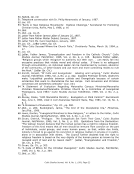
1. The Moonies -members of the Holy spirit Association for the Unification of World
Christianity (Unification Church) headed by the Reverend Sun Myung Moon -and the
Krishnas -members of the International Society of Krishna Consciousness -presently
claim membership in the millions. Experts estimate actual Moonie membership is much
lower with perhaps 8,000 members in the U.S. Moon‟s real estate holdings in the U.S.
were worth $200 million in 1984. As to his political clout, see H. R. Rep. of The
Subcomm. on International Relations (Fraser Report), Oct. 31, 1978. Moon spent $42
million alone on his unsuccessful film, Inchon. He owns the second largest newspaper in
the nation‟s capital, the Washington Times. Ron Hubbard‟s Church of Scientology claims
a membership of almost 4 million in the U.S. and 6 million worldwide. In 1984 Hubbard‟s
son estimated scientology‟s assets at $400 million. See Grafstein, Messianic Capitalism,
The New Republic, Feb 20, 1984, at 15.
2. These figures represent the Cult Awareness Network‟s best estimate, based upon figures
from ex-members, mental health professionals who encounter confused victims of such
groups, and the organizations themselves.
The court found the Church of Scientology‟s conduct met every requirement of an
intentional infliction of emotional distress tort. As to the church‟s defense that such conduct
was protected by the First Amendment, the court had no trouble finding it was not. The
court accepted the trial court‟s adjudication that Scientology is a religion for purposes of this
case58 but concluded that even if Wollersheim had freely participated in the activity, it would
still not be protected religious conduct.
It was the element of coercion that lowered the value of auditing as a religious practice.
Unlike the Molko case, the retribution complained of was not divine but in the here and now,
and the state had a compelling interest in discouraging the deliberate economic ruin of one
of its citizens.
Though the First Amendment analysis is sound, the language in the opinion is frequently
disturbing. The court ventures to say that lawsuits that have a chilling effect on practices
such as auditing ought not to be tolerated because, absent coercion, “the only harm which
occurs is emotional injury to the psychologically weak.”59 The findings of Lifton, Schein,
Singer, Delgado and other scholars in cult-related behavioral studies, and the testimonies of
ex-cult members, would belie such an assumption.60
Greater Accountability
In light of the recent cases involving cults and the First Amendment, it appears self-
proclaimed religious organizations are heading towards a time of greater accountability.
Courts facing cases involving religious issues classically err on the side of religion for fear of
impinging on First Amendment guarantees. The trend now appears to be toward greater
restrictions of religious activities given strict adherence to constitutional analysis. The road
for that analysis was paved in Molko. According to Green, “We have a trend toward
compelling self-ascribed religious organizations to act responsibly and conform their conduct
to the rules of society. The days of special privileges for unethical, if not illegal, abuse of
religious liberty are coming to a close.”61
It is clear from the huge damage awards in these most recent cases that juries are
sympathetic to plaintiffs who claim to have suffered from cult involvement. It is equally
clear the courts are unwilling to enforce judgments so large they threaten the very
existence of the groups in question. Plaintiffs must adequately prove the true net worth of
the defendant groups if they expect judgments to have a truly punishing effect, but this is
most difficult to accomplish. Even so, if groups such as the Krishnas suffer multiple
judgments like the one in the George case, they will not survive.
Notes
1. The Moonies -members of the Holy spirit Association for the Unification of World
Christianity (Unification Church) headed by the Reverend Sun Myung Moon -and the
Krishnas -members of the International Society of Krishna Consciousness -presently
claim membership in the millions. Experts estimate actual Moonie membership is much
lower with perhaps 8,000 members in the U.S. Moon‟s real estate holdings in the U.S.
were worth $200 million in 1984. As to his political clout, see H. R. Rep. of The
Subcomm. on International Relations (Fraser Report), Oct. 31, 1978. Moon spent $42
million alone on his unsuccessful film, Inchon. He owns the second largest newspaper in
the nation‟s capital, the Washington Times. Ron Hubbard‟s Church of Scientology claims
a membership of almost 4 million in the U.S. and 6 million worldwide. In 1984 Hubbard‟s
son estimated scientology‟s assets at $400 million. See Grafstein, Messianic Capitalism,
The New Republic, Feb 20, 1984, at 15.
2. These figures represent the Cult Awareness Network‟s best estimate, based upon figures
from ex-members, mental health professionals who encounter confused victims of such
groups, and the organizations themselves.