Cultic Studies Journal, Vol. 8, No. 1, 1991, Page 17
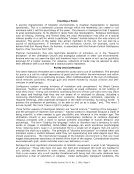
“Master Speaks” speeches,115 and former black Unification Church members say they were
denied leadership positions and were always the first to be suspected when money was
missing from the church.116
The Unification Church has given money to some black churches and clergy.117 Often using
different organizational names and not identifying themselves as Unification Church
representatives unless pressed,118 the workers have provided black churches with free food
and other needed social services such as housing programs in Harlem, transportation for the
elderly, and setting up a free camp in upstate New York for ghetto children.119 While most
black clergy stopped accepting these favors when they found out the Unification Church was
their source, others have continued to accept them, and Dr. Polk maintains the Unification
Church has made definite inroads into black churches.120 This issue has caused heated
controversy in the black community.121
Some cults have also sought support of religious-studies academicians and institutions. The
Unification Church invites many prominent scholars to conferences sponsored by its
organization, ICUS (International Conference for the Unity of Sciences), offering generous
honoraria in addition to expenses.122 In 1985 the Church of Scientology presented its
Religious Freedom Award to Dr. Franklin Littell, a Methodist minister and a distinguished
professor of religion at Temple University. The award included a $25,000 donation to a
religious liberty organization headed by Dr. Littell.123 The Unification Church donated
$60,000 to the Shaw Divinity School, a black seminary in Raleigh, North Carolina, which a
few weeks later presented an honorary doctorate to Sun Myung Moon.124 The Unification
Theological Seminary hires many prominent clergy and religious-studies academicians,
including Catholic sociologist Father Joseph Fichter of Loyola University, who was a visiting
scholar there in the fall of 1986 and who wrote a book highly supportive of the Unification
Church.125 Many present and former priests and nuns study at the Unification Church‟s
seminary.126 One hundred and eighty-two faculty members of colleges and universities
throughout the world signed a full-page advertisement in The New York Times of August 14,
1985, voicing support for Sun Myung Moon during his imprisonment.127
Perhaps the most successful strategy cults have used to gain public support from
mainstream religious leaders is their argument that investigation and prosecution of cults
could negatively affect their mainstream religious organizations. Playing on this fear that
“Today the government is coming after us, but tomorrow it might be your church,” the
Unification Church successfully enlisted the National Council of Churches of Christ in the
U.S.A., the American Baptist Churches in the U.S.A., the Presbyterian Church U.S.A., the
African Methodist Episcopal Church, the Christian Legal Society Center for Law and Religious
Freedom, the National Association of Evangelicals, the Southern Christian Leadership
Conference, the Church of Jesus Christ of Latter Day Saints (Mormon Church), the Catholic
League for Religious and Civil Rights, the American Association of Christian Schools, the
Christian Voice, the Unitarian Universalist Association, the National Black Clergy Caucus,
and The American Coalition of Unregistered Churches to submit Amici Curiae briefs in The
Case of United States v. Sun Myung Moon, Moon‟s income tax fraud case.128 In 1980 the
National Council of Churches and the Baptist Joint Committee on Public Affairs submitted
Amici Curiae briefs to support the Church of Scientology‟s tax-exempt status in its
controversy with the Internal Revenue Service. They maintained that no church should be
deprived of its tax-exempt status because it violates public policy or because individual
church members break the law.129
Religious cults also capitalize on the fear that closer governmental regulation of them can
blur boundaries between church and state and that attacks on cults damage healthy
religious pluralism. Calling those critical of religious cults intolerant and bigoted “anti-
religionists” who seek to destroy freedom of religion,130 groups such as the Unification
Church have been able to mobilize mainstream religious leaders‟ support and to mask and
“Master Speaks” speeches,115 and former black Unification Church members say they were
denied leadership positions and were always the first to be suspected when money was
missing from the church.116
The Unification Church has given money to some black churches and clergy.117 Often using
different organizational names and not identifying themselves as Unification Church
representatives unless pressed,118 the workers have provided black churches with free food
and other needed social services such as housing programs in Harlem, transportation for the
elderly, and setting up a free camp in upstate New York for ghetto children.119 While most
black clergy stopped accepting these favors when they found out the Unification Church was
their source, others have continued to accept them, and Dr. Polk maintains the Unification
Church has made definite inroads into black churches.120 This issue has caused heated
controversy in the black community.121
Some cults have also sought support of religious-studies academicians and institutions. The
Unification Church invites many prominent scholars to conferences sponsored by its
organization, ICUS (International Conference for the Unity of Sciences), offering generous
honoraria in addition to expenses.122 In 1985 the Church of Scientology presented its
Religious Freedom Award to Dr. Franklin Littell, a Methodist minister and a distinguished
professor of religion at Temple University. The award included a $25,000 donation to a
religious liberty organization headed by Dr. Littell.123 The Unification Church donated
$60,000 to the Shaw Divinity School, a black seminary in Raleigh, North Carolina, which a
few weeks later presented an honorary doctorate to Sun Myung Moon.124 The Unification
Theological Seminary hires many prominent clergy and religious-studies academicians,
including Catholic sociologist Father Joseph Fichter of Loyola University, who was a visiting
scholar there in the fall of 1986 and who wrote a book highly supportive of the Unification
Church.125 Many present and former priests and nuns study at the Unification Church‟s
seminary.126 One hundred and eighty-two faculty members of colleges and universities
throughout the world signed a full-page advertisement in The New York Times of August 14,
1985, voicing support for Sun Myung Moon during his imprisonment.127
Perhaps the most successful strategy cults have used to gain public support from
mainstream religious leaders is their argument that investigation and prosecution of cults
could negatively affect their mainstream religious organizations. Playing on this fear that
“Today the government is coming after us, but tomorrow it might be your church,” the
Unification Church successfully enlisted the National Council of Churches of Christ in the
U.S.A., the American Baptist Churches in the U.S.A., the Presbyterian Church U.S.A., the
African Methodist Episcopal Church, the Christian Legal Society Center for Law and Religious
Freedom, the National Association of Evangelicals, the Southern Christian Leadership
Conference, the Church of Jesus Christ of Latter Day Saints (Mormon Church), the Catholic
League for Religious and Civil Rights, the American Association of Christian Schools, the
Christian Voice, the Unitarian Universalist Association, the National Black Clergy Caucus,
and The American Coalition of Unregistered Churches to submit Amici Curiae briefs in The
Case of United States v. Sun Myung Moon, Moon‟s income tax fraud case.128 In 1980 the
National Council of Churches and the Baptist Joint Committee on Public Affairs submitted
Amici Curiae briefs to support the Church of Scientology‟s tax-exempt status in its
controversy with the Internal Revenue Service. They maintained that no church should be
deprived of its tax-exempt status because it violates public policy or because individual
church members break the law.129
Religious cults also capitalize on the fear that closer governmental regulation of them can
blur boundaries between church and state and that attacks on cults damage healthy
religious pluralism. Calling those critical of religious cults intolerant and bigoted “anti-
religionists” who seek to destroy freedom of religion,130 groups such as the Unification
Church have been able to mobilize mainstream religious leaders‟ support and to mask and