Cultic Studies Journal, Vol. 8, No. 1, 1991, Page 28
led, he concluded, to greatly heightened suggestibility as well as physical debilitation and
mental exhaustion. It might be noted that this approach is used regularly by police
personnel in questioning suspects. (See Ofshe [1989] for a description of law-enforcement
abuses.) We‟re all familiar (from television) with the starkly bare interrogation room that
promotes tension and anxiety and with the “good cop, bad cop” team of questioners.
The hope of salvation mentioned by Sargant was also the “carrot” used by such eminent
preachers as Jonathan Edwards in colonial New England and John Wesley in 18th-century
Britain --after they had aroused anxiety, feelings of guilt, conflicting loyalties, and
heightened group suggestibility. Again, this technique became familiar through the
portrayal of “Elmer Gantry.” In fact, Sargant asserted, the techniques used by the
Communists in Russia and Korea could be better understood if these religious uses were
studied. Of course, physical terror was used by these political groups in addition to the
massive psychological assault, as the latter process alone would have been too slow to
obtain control of hundreds of millions of people.
Both Sargant and Joost Meerloo, author of The Rape of the Mind (1956), point out,
moreover, that these techniques are also related to Pavlov‟s simple conditioning techniques.
One might also cite the use of Skinner‟s operant conditioning theory. In both situations,
reinforcement is heavily dependent upon the organism‟s behavior, with positive
reinforcement (from a simple affirmative nod to the excessive “love bombing” employed by
some cult members) given for all acceptable behavior and no reinforcement for contrary
behavior.
Sargant also quotes Richard Walker, author of China Under Communism, as identifying six
steps in the training of party workers who will transmit the message between the party and
the masses:
1. Training in an area isolated from family and friends
2. Fatigue --no opportunity for relaxation or reflection
3. Tension
4. Uncertainty --related to those who didn‟t measure up
5. Use of vicious language
6. Seriousness of the process --humor is forbidden (Sargant, 1957, pp. 165-166).
Does this sound suspiciously like what happened to those recruited by many of the cults in
the 1960s, „70s, and „80s? The first four steps certainly have been reported and
documented by thousands of former cult devotees. To some extent, military drill instructors
use modifications of these same techniques with new recruits in basic training. One ex-DI
told me, for example, that a major message conveyed in the training course for DIs was
that for the first two weeks no recruit can do anything correctly --even if he makes his bed
perfectly, exceeds the quota of push-ups, and so on. (You may recall seeing such scenes in
the film “An Officer and a Gentleman.”)
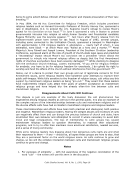
Depersonalization, Deindividualization, and the Search for Happiness
An essential part of cult indoctrination has been a kind of depersonalization, that is,
breaking down one‟s persona or identity in order to create a new one in the image of the
group and its leader. It‟s interesting to note how this was carried out by a Charles Manson
as well as a Jim Jones (Lindholm, 1990) and also, in earlier generations, by some convents
and seminaries with their novices. In the latter situations, however, novices usually not only
entered an order voluntarily and with knowledge of what was to come, but also had the
opportunity to withdraw if they found that they could not adapt to the strict religious life.
led, he concluded, to greatly heightened suggestibility as well as physical debilitation and
mental exhaustion. It might be noted that this approach is used regularly by police
personnel in questioning suspects. (See Ofshe [1989] for a description of law-enforcement
abuses.) We‟re all familiar (from television) with the starkly bare interrogation room that
promotes tension and anxiety and with the “good cop, bad cop” team of questioners.
The hope of salvation mentioned by Sargant was also the “carrot” used by such eminent
preachers as Jonathan Edwards in colonial New England and John Wesley in 18th-century
Britain --after they had aroused anxiety, feelings of guilt, conflicting loyalties, and
heightened group suggestibility. Again, this technique became familiar through the
portrayal of “Elmer Gantry.” In fact, Sargant asserted, the techniques used by the
Communists in Russia and Korea could be better understood if these religious uses were
studied. Of course, physical terror was used by these political groups in addition to the
massive psychological assault, as the latter process alone would have been too slow to
obtain control of hundreds of millions of people.
Both Sargant and Joost Meerloo, author of The Rape of the Mind (1956), point out,
moreover, that these techniques are also related to Pavlov‟s simple conditioning techniques.
One might also cite the use of Skinner‟s operant conditioning theory. In both situations,
reinforcement is heavily dependent upon the organism‟s behavior, with positive
reinforcement (from a simple affirmative nod to the excessive “love bombing” employed by
some cult members) given for all acceptable behavior and no reinforcement for contrary
behavior.
Sargant also quotes Richard Walker, author of China Under Communism, as identifying six
steps in the training of party workers who will transmit the message between the party and
the masses:
1. Training in an area isolated from family and friends
2. Fatigue --no opportunity for relaxation or reflection
3. Tension
4. Uncertainty --related to those who didn‟t measure up
5. Use of vicious language
6. Seriousness of the process --humor is forbidden (Sargant, 1957, pp. 165-166).
Does this sound suspiciously like what happened to those recruited by many of the cults in
the 1960s, „70s, and „80s? The first four steps certainly have been reported and
documented by thousands of former cult devotees. To some extent, military drill instructors
use modifications of these same techniques with new recruits in basic training. One ex-DI
told me, for example, that a major message conveyed in the training course for DIs was
that for the first two weeks no recruit can do anything correctly --even if he makes his bed
perfectly, exceeds the quota of push-ups, and so on. (You may recall seeing such scenes in
the film “An Officer and a Gentleman.”)
Depersonalization, Deindividualization, and the Search for Happiness
An essential part of cult indoctrination has been a kind of depersonalization, that is,
breaking down one‟s persona or identity in order to create a new one in the image of the
group and its leader. It‟s interesting to note how this was carried out by a Charles Manson
as well as a Jim Jones (Lindholm, 1990) and also, in earlier generations, by some convents
and seminaries with their novices. In the latter situations, however, novices usually not only
entered an order voluntarily and with knowledge of what was to come, but also had the
opportunity to withdraw if they found that they could not adapt to the strict religious life.