24 ICSA TODAY
or like Benedict Arnold, who betrayed his country during
the Revolutionary War? As I retain sympathy for her, am I
blinding myself to meanness and denying a natural, angry
feeling about that?
A few weeks after my mother died, I received a thick
envelope in the mail. It contained a copy of her will, which
her estate attorney sent me as her next of kin.
On the first page of the will, my mother wrote,
My late husband … and I … are not including our
daughter … in our wills because she betrayed the
education which benefitted her life, … besmirched
it and its founder, with deliberate malice spreading
lies. I say this because I must say what is in my heart,
and be true to the ethics which have given my life its
meaning.
I was shocked and stung. She put this in her will? It was as
if she was shaking her finger at me from the grave. Then,
as the language sank in, stilted, archaic, taken straight
from AR jargon, I laughed, and the anger went away.
My mother succeeded in having the last word by talking
to me when I could not respond. But why was this
necessary? Was she sincere? Or was she trying to convince
herself? Or both? Should I be angry with a woman who
chose a false god over a true child? Or should I sympathize
with a woman who could not resolve her own conflicting
passions?
I don’t know the answers to these questions—perhaps it is
yes to all of them. I continue to explore. n
Bibliography
Aktar, S. (2002). “Forgiveness: Origins, dynamics,
Psychopathology, and technical relevance. Psychoanalytic
Quarterly, 71(2), 175–212.
Luskin, F. (2002). Forgive for good: A proven prescription for
health and happiness. New York, NY: HarperCollins.
About the Authors
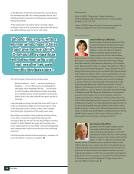
Lorna Goldberg, LCSW, PsyA,
board member and past president of ICSA,
is a psychoanalyst in private practice and
Director at the Institute of Psychoanalytic
Studies. In 1976, she and her husband,
William Goldberg, began facilitating a
support group for former cult members
that continues to meet monthly in their home in Englewood,
New Jersey. Lorna and Bill received the Hall of Fame Award
from the authentic Cult Awareness Network in 1989 and the
Leo J. Ryan Award from the Leo J. Ryan Foundation in 1999. In
2009, Lorna received the Margaret T. Singer Award from ICSA.
Along with Rosanne Henry, she cochaired ICSA’s Mental Health
Committee from 2003 to 2008. Lorna has published numerous
articles about her therapeutic work with former cult members
in professional journals, including, most recently, Goldberg,
L., (2012), “Influence of a Charismatic Antisocial Cult Leader:
Psychotherapy With an Ex-Cultist Prosecuted for Criminal
Behavior,” International Journal of Cultic Studies, Vol. 2, 15–24
and Goldberg, L., (2011), “Diana, Leaving the Cult: Play Therapy
in Childhood and Talk Therapy in Adolescence,” International
Journal of Cultic Studies, Vol. 2, 33–43. She also wrote the
chapter “Guidelines for Therapists” in the book Recovery from
Cults (1993), edited by Michael Langone. She cowrote with Bill
Goldberg the chapter “Psychotherapy With Targeted Parents” in
the book Working With Alienated Children and Families (2013),
edited by Amy J. L. Baker and S. Richard Sauber. Most recently
Lorna co-edited (along with William Goldberg, Rosanne Henry,
and Michael Langone) Cult Recovery: A Clinician’s Guide to
Working With Former Members and Families (2017).
Ann Stamler, MA, MPhil,
graduated from Brooklyn College summa
cum laude and Phi Beta Kappa in 1965,
and earned graduate degrees in Latin from
Columbia University. She was in the Aesthetic
Realism movement from birth until she left at
age 41, in 1985. In 1987 she married Joseph
Stamler, whom she had first met in Aesthetic Realism. From
1985 to 2006 she was a senior executive of a nonprofit agency
in New York that worked with the labor movements in the U.S.
and Israel. She has served on the boards of various civic and
cultural organizations. In 2007 she was elected to the legislative
body of her town in Connecticut, a position she held until 2013.
In 2014 she received ICSA’s Margaret T. Singer Award. She is
Associate Editor of ICSA Today. n
Should I be angry with a
woman who chose a false
god over a true child?
Or should I sympathize
with a woman who could
not resolve her own
conflicting passions?
or like Benedict Arnold, who betrayed his country during
the Revolutionary War? As I retain sympathy for her, am I
blinding myself to meanness and denying a natural, angry
feeling about that?
A few weeks after my mother died, I received a thick
envelope in the mail. It contained a copy of her will, which
her estate attorney sent me as her next of kin.
On the first page of the will, my mother wrote,
My late husband … and I … are not including our
daughter … in our wills because she betrayed the
education which benefitted her life, … besmirched
it and its founder, with deliberate malice spreading
lies. I say this because I must say what is in my heart,
and be true to the ethics which have given my life its
meaning.
I was shocked and stung. She put this in her will? It was as
if she was shaking her finger at me from the grave. Then,
as the language sank in, stilted, archaic, taken straight
from AR jargon, I laughed, and the anger went away.
My mother succeeded in having the last word by talking
to me when I could not respond. But why was this
necessary? Was she sincere? Or was she trying to convince
herself? Or both? Should I be angry with a woman who
chose a false god over a true child? Or should I sympathize
with a woman who could not resolve her own conflicting
passions?
I don’t know the answers to these questions—perhaps it is
yes to all of them. I continue to explore. n
Bibliography
Aktar, S. (2002). “Forgiveness: Origins, dynamics,
Psychopathology, and technical relevance. Psychoanalytic
Quarterly, 71(2), 175–212.
Luskin, F. (2002). Forgive for good: A proven prescription for
health and happiness. New York, NY: HarperCollins.
About the Authors
Lorna Goldberg, LCSW, PsyA,
board member and past president of ICSA,
is a psychoanalyst in private practice and
Director at the Institute of Psychoanalytic
Studies. In 1976, she and her husband,
William Goldberg, began facilitating a
support group for former cult members
that continues to meet monthly in their home in Englewood,
New Jersey. Lorna and Bill received the Hall of Fame Award
from the authentic Cult Awareness Network in 1989 and the
Leo J. Ryan Award from the Leo J. Ryan Foundation in 1999. In
2009, Lorna received the Margaret T. Singer Award from ICSA.
Along with Rosanne Henry, she cochaired ICSA’s Mental Health
Committee from 2003 to 2008. Lorna has published numerous
articles about her therapeutic work with former cult members
in professional journals, including, most recently, Goldberg,
L., (2012), “Influence of a Charismatic Antisocial Cult Leader:
Psychotherapy With an Ex-Cultist Prosecuted for Criminal
Behavior,” International Journal of Cultic Studies, Vol. 2, 15–24
and Goldberg, L., (2011), “Diana, Leaving the Cult: Play Therapy
in Childhood and Talk Therapy in Adolescence,” International
Journal of Cultic Studies, Vol. 2, 33–43. She also wrote the
chapter “Guidelines for Therapists” in the book Recovery from
Cults (1993), edited by Michael Langone. She cowrote with Bill
Goldberg the chapter “Psychotherapy With Targeted Parents” in
the book Working With Alienated Children and Families (2013),
edited by Amy J. L. Baker and S. Richard Sauber. Most recently
Lorna co-edited (along with William Goldberg, Rosanne Henry,
and Michael Langone) Cult Recovery: A Clinician’s Guide to
Working With Former Members and Families (2017).
Ann Stamler, MA, MPhil,
graduated from Brooklyn College summa
cum laude and Phi Beta Kappa in 1965,
and earned graduate degrees in Latin from
Columbia University. She was in the Aesthetic
Realism movement from birth until she left at
age 41, in 1985. In 1987 she married Joseph
Stamler, whom she had first met in Aesthetic Realism. From
1985 to 2006 she was a senior executive of a nonprofit agency
in New York that worked with the labor movements in the U.S.
and Israel. She has served on the boards of various civic and
cultural organizations. In 2007 she was elected to the legislative
body of her town in Connecticut, a position she held until 2013.
In 2014 she received ICSA’s Margaret T. Singer Award. She is
Associate Editor of ICSA Today. n
Should I be angry with a
woman who chose a false
god over a true child?
Or should I sympathize
with a woman who could
not resolve her own
conflicting passions?