22 ICSA TODAY
• In time, can I free myself from continual rumination
and allow myself to move on—again, for my own sake?
To improve your life, you might consider participation in
therapy, where you can learn the multiple meanings of your
anger and acquire different strategies to help you gain more
control over this powerful emotion.
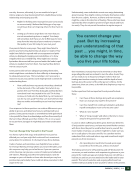
You cannot change your past. But by increasing your
understanding of that past and allowing for all the complex
emotions that you begin to feel after you leave the cult, you
might, in time, be able to change the way you live your life today.
Part 2:
Understanding Intention (by Ann Stamler)
My parents were both children of immigrant families. They were
artists who left their homes in a New York suburb to pursue
their art in Greenwich Village. They met each other and began
studying with Eli Siegel, a poet and philosopher in the Village,
as the United States was becoming engaged in the Second
World War. In fact, my father was on a troop carrier off Normandy
waiting to land in the Allied invasion that helped end the war
when I was born. He did not meet me till I was about a year and
a half old.
In the years after World War II, my parents were part of an
American era called the “period of adjustment,” when soldiers
returned from war to wives and children they barely knew
and tried to pick up lives in a postwar world. Some of my early
memories are of listening from my bedroom late at night as my
parents called Siegel on the telephone to mediate the fierce
arguments the two of them had that almost tore our family
apart.
Siegel’s basic philosophy, which he called Aesthetic Realism (AR),
was that art contained the answers to life problems. In personal
sessions he talked about how what made a poem or painting
beautiful could help people understand their families and also
world events. I think his teaching offered my parents a sense of
rationality and hope in a frightening and tumultuous time in the
world and their own lives. Siegel was not yet, as far as I know,
the demanding narcissist he later became, claiming that he had
discovered the Truth sought by man throughout history. As he
moved in that direction, my parents were caught up by their
early commitment and their sense of indebtedness to him, which
I think blinded them to his growing irrationality.
As I grew up, my mother led efforts to promote Siegel’s
philosophy. She started an art gallery near Greenwich Village
with exhibitions illustrating Siegel’s theory of beauty and public
readings of his work. At one point, she had an exhibition of her
own paintings in the gallery. The New York art critics praised her
paintings, but belittled Siegel they basically said she was better
than Siegel’s philosophy, and that she needed to detach herself
from him in order to get ahead. She realized she had to make a
choice between promoting Siegel and advancing her career as
an artist. She chose to be loyal to Siegel. To me she seemed noble
and courageous. I admired her, almost to the point of worship.
Yet, even though my mother was such an outspoken supporter,
Siegel treated her in ways I could not understand. He would
criticize her scathingly in front of other students. He once
made her read a statement in public about all the ways she had
failed him. He even told her that her efforts in his behalf were
motivated by guilt. When she wanted to start the Aesthetic
Realism Foundation, which she actually did, and which still exits,
he told her it was a substitute for showing her gratitude to him.
What confused me was that she seemed to accept his harshness
as if it were deserved. She seemed to have an underlying
sense that she was inferior. Whenever she spoke about her
childhood, she chose sad incidents that reflected on her family as
suffering. She did grow up during the Depression, and her family
struggled—but they owned their home, her father worked, and
her two younger sisters who faced the same adversity had a
much more positive attitude to life.
To some extent I internalized Siegel’s attitudes and excoriated my
mother for being ungrateful to him. But I also felt, though I could
never say this, that she was horribly mistreated—after all, she
had done more than almost anyone else in his behalf.
At times when Siegel was criticizing me most fiercely, and I
was miserable, I could tell that my mother struggled between
agreeing with him and wanting to protect me. I actually
sometimes had a sense that she was more sympathetic to me
than supportive of him.
During the years just before and after Siegel died, I began to
recognize that people around me, even those I had grown up
alongside, were acting more and more like a cult. There were
meetings about how to protect our school and its beliefs from a
hostile press. People attending public readings of Siegel’s work
were often screened before they could come through the door.
We assumed anyone who criticized Siegel was really driven by
envy of his greatness and wanting to destroy it. Control over our
everyday lives, our work, our families, where we lived, and whom
we talked to was absolute.
I sometimes shared with my mother my feeling that people were
acting irrationally, and she agreed with me. She was a skeptical
…I still find it hard to
accept that she would
renounce the bond we
shared for all those years.
…did she really lose any
sense, however buried, of
the outside world?
• In time, can I free myself from continual rumination
and allow myself to move on—again, for my own sake?
To improve your life, you might consider participation in
therapy, where you can learn the multiple meanings of your
anger and acquire different strategies to help you gain more
control over this powerful emotion.
You cannot change your past. But by increasing your
understanding of that past and allowing for all the complex
emotions that you begin to feel after you leave the cult, you
might, in time, be able to change the way you live your life today.
Part 2:
Understanding Intention (by Ann Stamler)
My parents were both children of immigrant families. They were
artists who left their homes in a New York suburb to pursue
their art in Greenwich Village. They met each other and began
studying with Eli Siegel, a poet and philosopher in the Village,
as the United States was becoming engaged in the Second
World War. In fact, my father was on a troop carrier off Normandy
waiting to land in the Allied invasion that helped end the war
when I was born. He did not meet me till I was about a year and
a half old.
In the years after World War II, my parents were part of an
American era called the “period of adjustment,” when soldiers
returned from war to wives and children they barely knew
and tried to pick up lives in a postwar world. Some of my early
memories are of listening from my bedroom late at night as my
parents called Siegel on the telephone to mediate the fierce
arguments the two of them had that almost tore our family
apart.
Siegel’s basic philosophy, which he called Aesthetic Realism (AR),
was that art contained the answers to life problems. In personal
sessions he talked about how what made a poem or painting
beautiful could help people understand their families and also
world events. I think his teaching offered my parents a sense of
rationality and hope in a frightening and tumultuous time in the
world and their own lives. Siegel was not yet, as far as I know,
the demanding narcissist he later became, claiming that he had
discovered the Truth sought by man throughout history. As he
moved in that direction, my parents were caught up by their
early commitment and their sense of indebtedness to him, which
I think blinded them to his growing irrationality.
As I grew up, my mother led efforts to promote Siegel’s
philosophy. She started an art gallery near Greenwich Village
with exhibitions illustrating Siegel’s theory of beauty and public
readings of his work. At one point, she had an exhibition of her
own paintings in the gallery. The New York art critics praised her
paintings, but belittled Siegel they basically said she was better
than Siegel’s philosophy, and that she needed to detach herself
from him in order to get ahead. She realized she had to make a
choice between promoting Siegel and advancing her career as
an artist. She chose to be loyal to Siegel. To me she seemed noble
and courageous. I admired her, almost to the point of worship.
Yet, even though my mother was such an outspoken supporter,
Siegel treated her in ways I could not understand. He would
criticize her scathingly in front of other students. He once
made her read a statement in public about all the ways she had
failed him. He even told her that her efforts in his behalf were
motivated by guilt. When she wanted to start the Aesthetic
Realism Foundation, which she actually did, and which still exits,
he told her it was a substitute for showing her gratitude to him.
What confused me was that she seemed to accept his harshness
as if it were deserved. She seemed to have an underlying
sense that she was inferior. Whenever she spoke about her
childhood, she chose sad incidents that reflected on her family as
suffering. She did grow up during the Depression, and her family
struggled—but they owned their home, her father worked, and
her two younger sisters who faced the same adversity had a
much more positive attitude to life.
To some extent I internalized Siegel’s attitudes and excoriated my
mother for being ungrateful to him. But I also felt, though I could
never say this, that she was horribly mistreated—after all, she
had done more than almost anyone else in his behalf.
At times when Siegel was criticizing me most fiercely, and I
was miserable, I could tell that my mother struggled between
agreeing with him and wanting to protect me. I actually
sometimes had a sense that she was more sympathetic to me
than supportive of him.
During the years just before and after Siegel died, I began to
recognize that people around me, even those I had grown up
alongside, were acting more and more like a cult. There were
meetings about how to protect our school and its beliefs from a
hostile press. People attending public readings of Siegel’s work
were often screened before they could come through the door.
We assumed anyone who criticized Siegel was really driven by
envy of his greatness and wanting to destroy it. Control over our
everyday lives, our work, our families, where we lived, and whom
we talked to was absolute.
I sometimes shared with my mother my feeling that people were
acting irrationally, and she agreed with me. She was a skeptical
…I still find it hard to
accept that she would
renounce the bond we
shared for all those years.
…did she really lose any
sense, however buried, of
the outside world?