16 ICSA TODAY
stereotyping inevitably leads to polarization, which
reinforces stereotyping.... More useful than labels
are questions followed by good-faith discussion.
“What does he say?” is a more fruitful question than
“In what category does she belong?” (ICSA, 2013)
If we simply view groups as a central indicator of identity,
we can form conclusions about an individual that might be
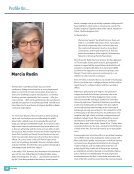
mistaken. I will describe myself as an example of this. I joined
ICSA because I am the older sister of a former cult member. I
am a Jewish clinical social worker and also a psychoanalyst.
I live in New Jersey, and I am a member of the Democratic
Party. My identity has been shaped to some degree by all
of these groups, and I suspect that those of you who don’t
know me may form instant positive or negative impressions
about me based upon what you have just heard. We might
be ready to dismiss the inside of a person and base our
impressions upon outer criteria, but doing this can provide
us with a false understanding of others.
I would say that more important than any of these outward
descriptions is my character, the person who I am on the
inside. It might tell you more about me if you know that
as a young child I spoke with a lisp and in part because
of reactions to this, I became a shy child. This experience
is connected to my anxiety today about public speaking.
I spent my childhood immersed in books, and I reached
out to those books that resonated within me. Reading and
loving all the Nancy Drew books allowed me as a shy girl
to imagine what it would feel like to be an adolescent who
bravely plowed ahead to solve all sorts of mysteries with my
friends. Mysteries taught me problem-solving and sparked
my natural curiosity and wonder about the mysteries of the
human mind. Later, The Diary of Anne Frank provided me with
an example of how ongoing family relationships, and even a
relationship with a diary, can lessen the trauma of a terrifying
world.
After having made friends with different people in literature,
I have been allowed through ICSA to make friends with
people living throughout the United States and throughout
the world. This opportunity has been one of the many
benefits of ICSA for me. Although we might look different
on the outside and speak different languages, we share
many common values and interests. Having friends from a
variety of cultures, religions, and ethnicities (and even some
Republicans) has broadened my perspective in a way that
would have been lost if I simply had made friendships from
my own demographic. Encountering diversity has allowed
me to see myself within others.
I believe that the ICSA community offers the opposite
of ethnocentrism. Although this is a time of increasing
ethnocentrism in the world, we might consider that, instead
of using cultural differences simply as a tool to dehumanize
and claim superiority over others, exploring these differences
can be a starting point for gaining insight into our own
biases and inner beliefs.
An Example of Dialogue Between Subgroups
As many of you know, my husband Bill and I have facilitated
a support group for former cult members at our home for
more than 40 years. Over the years, our support-group
members have included many people born or raised in cultic
groups, and also former cultists who became parents while
they were in the cult. Initially, transference attitudes initiated
strong, unspoken emotions between these two subgroups.
Two of the cult parents who expected to be blamed by the
other group members for cult treatment of their children
described feelings of shame, guilt, despair, and regret for
harm to their children while they were in the cult. Those
born or raised in cults who previously had the transference
expectation that the cult parents would minimize cult harm
instead began to feel empathy for the cult parents. This
discussion helped both former cult-member parents deal
with feelings of shame and former members born in cults
deal with feelings of anger.
Things aren’t always the way we perceive them to be. It takes
time to understand another person, and we have to resist
thinking that we “know” them, when we actually are in the
process of learning. I need to remind myself that if I say,
“She’s a typical…” whatever—mental health professional,
researcher, attorney, or cleric, I am dehumanizing and
stereotyping the person before me, even if I say it with
affection. If I theorize about a cult-related person or
situation too quickly, I am using a shorthand method and
may be missing the boat. Theories may make us feel more
We need diversity and
dialogue because, as
intelligent or educated or
experienced as we may be,
we don’t know everything.
We need to recognize our
vulnerabilities and our blind
spots. We will only be able to
hear one another if we move
past our assumptions and our
self-righteousness. Instead,
we need to be humble,
remembering that we all are
equals who deserve respect.
stereotyping inevitably leads to polarization, which
reinforces stereotyping.... More useful than labels
are questions followed by good-faith discussion.
“What does he say?” is a more fruitful question than
“In what category does she belong?” (ICSA, 2013)
If we simply view groups as a central indicator of identity,
we can form conclusions about an individual that might be
mistaken. I will describe myself as an example of this. I joined
ICSA because I am the older sister of a former cult member. I
am a Jewish clinical social worker and also a psychoanalyst.
I live in New Jersey, and I am a member of the Democratic
Party. My identity has been shaped to some degree by all
of these groups, and I suspect that those of you who don’t
know me may form instant positive or negative impressions
about me based upon what you have just heard. We might
be ready to dismiss the inside of a person and base our
impressions upon outer criteria, but doing this can provide
us with a false understanding of others.
I would say that more important than any of these outward
descriptions is my character, the person who I am on the
inside. It might tell you more about me if you know that
as a young child I spoke with a lisp and in part because
of reactions to this, I became a shy child. This experience
is connected to my anxiety today about public speaking.
I spent my childhood immersed in books, and I reached
out to those books that resonated within me. Reading and
loving all the Nancy Drew books allowed me as a shy girl
to imagine what it would feel like to be an adolescent who
bravely plowed ahead to solve all sorts of mysteries with my
friends. Mysteries taught me problem-solving and sparked
my natural curiosity and wonder about the mysteries of the
human mind. Later, The Diary of Anne Frank provided me with
an example of how ongoing family relationships, and even a
relationship with a diary, can lessen the trauma of a terrifying
world.
After having made friends with different people in literature,
I have been allowed through ICSA to make friends with
people living throughout the United States and throughout
the world. This opportunity has been one of the many
benefits of ICSA for me. Although we might look different
on the outside and speak different languages, we share
many common values and interests. Having friends from a
variety of cultures, religions, and ethnicities (and even some
Republicans) has broadened my perspective in a way that
would have been lost if I simply had made friendships from
my own demographic. Encountering diversity has allowed
me to see myself within others.
I believe that the ICSA community offers the opposite
of ethnocentrism. Although this is a time of increasing
ethnocentrism in the world, we might consider that, instead
of using cultural differences simply as a tool to dehumanize
and claim superiority over others, exploring these differences
can be a starting point for gaining insight into our own
biases and inner beliefs.
An Example of Dialogue Between Subgroups
As many of you know, my husband Bill and I have facilitated
a support group for former cult members at our home for
more than 40 years. Over the years, our support-group
members have included many people born or raised in cultic
groups, and also former cultists who became parents while
they were in the cult. Initially, transference attitudes initiated
strong, unspoken emotions between these two subgroups.
Two of the cult parents who expected to be blamed by the
other group members for cult treatment of their children
described feelings of shame, guilt, despair, and regret for
harm to their children while they were in the cult. Those
born or raised in cults who previously had the transference
expectation that the cult parents would minimize cult harm
instead began to feel empathy for the cult parents. This
discussion helped both former cult-member parents deal
with feelings of shame and former members born in cults
deal with feelings of anger.
Things aren’t always the way we perceive them to be. It takes
time to understand another person, and we have to resist
thinking that we “know” them, when we actually are in the
process of learning. I need to remind myself that if I say,
“She’s a typical…” whatever—mental health professional,
researcher, attorney, or cleric, I am dehumanizing and
stereotyping the person before me, even if I say it with
affection. If I theorize about a cult-related person or
situation too quickly, I am using a shorthand method and
may be missing the boat. Theories may make us feel more
We need diversity and
dialogue because, as
intelligent or educated or
experienced as we may be,
we don’t know everything.
We need to recognize our
vulnerabilities and our blind
spots. We will only be able to
hear one another if we move
past our assumptions and our
self-righteousness. Instead,
we need to be humble,
remembering that we all are
equals who deserve respect.