8 ICSA TODAY
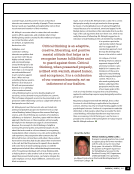
induce false memories in clients. These are all examples of
individual harm related to interpersonal influence. They are all
examples of situations that might understandably arouse the
concern of the harmed person’s family and of ICSA. But these
situations are not necessarily cult situations, even though
they may have a family resemblance to the concept cult. In
contrast, because appearances can deceive, especially in cults,
further investigation of such cases may reveal the presence of
cultic dynamics. The important point to keep in mind is that
classification decisions should be based on the best available
evidence and should always be subject to reevaluation.
Even though the term cult has limited utility, it is so embedded
in popular culture that those of us concerned about helping
people harmed by group involvements or about preventing
people from being so harmed cannot avoid using it.
Whatever the term’s limitations, it points us in a meaningful
direction. And no other term relevant to group psychological
manipulation (e.g., sociopsychological influence, coercive
persuasion, undue influence, exploitative manipulation) has
ever been able to capture and sustain public interest, which is
the sine qua non of public education. If, however, we cannot
realistically avoid the term, let us at least strive to use it
judiciously.
References
Almendros, C., Gamez-Gaudix, M., Rodriguez-Carballiera, A.,
&Carrobles, J. (2011). Assessment of psychological abuse in
manipulative groups. International Journal of Cultic Studies, 2,
61–76.
Chambers, W., Langone, M., Dole, A., &Grice, J. (1994). The
Group Psychological Abuse Scale: A measure of the varieties
of cultic abuse. Cultic Studies Journal, 11(1), 88–117.
Lifton, R. J. (1961). Thought reform and the psychology of
totalism. New York, NY: Norton.
Merriam-Webster’s collegiate dictionary, tenth edition. (1994).
Springfield, MA: Merriam-Webster, Incorporated.
Ofshe, R., &Singer, M. T. (1986). Attacks on peripheral versus
central elements of self and the impact of thought reforming
techniques. Cultic Studies Journal, 3(1), 3–24.
Robbins, T. (1988). Cults, converts, and charisma. London,
England: Sage.
Singer, M. T., &Ofshe, R. (1990). Thought reform programs
and the production of psychiatric casualties. Psychiatric
Annals, 20, 188–193.
Stark, R., &Bainbridge, W. (1985). The future of religion:
Secularization, revival and cult formation. Berkeley, CA:
University of California (cited in Robbins, 1988).
The compact edition of the Oxford English dictionary. (1980).
Oxford, England: Oxford University Press.
West, L. J., &Langone, M. D. (1986). Cultism: A conference for
scholars and policy makers. Cultic Studies Journal, 3, 117–134.
Zablocki, B. (1997). Cults: Theory and treatment issues. Paper
presented to a conference in Philadelphia, Pennsylvania, May
31, 1997.
THE DEFINITIONAL AMBIGUITY OF CULT
AND ICSA’S MISSION
By Michael D. Langone
(This essay is a follow-up to “On Using the Term Cult,” also in
this issue.)
A central component of ICSA’s mission is to study
psychological manipulation and abuse, especially as it
manifests in cultic and other groups. Different people,
however, attach different and usually imprecise meanings
to the term cult (see “On Using the Term Cult”). Those
who have sought information from ICSA have—properly
or improperly—used cult to refer to a wide variety of
phenomena, including, but not limited to
• Groups—religious, political, psychological,
commercial—in which the leader(s) appear(s) to
exert undue influence over followers, usually to the
leader’s(s’) benefit.
• Fanatical religious and political groups, regardless
of whether or not leaders exert a high level of
psychological control.
• Terrorist organizations, such as Bin Laden’s group,
which induce some members to commit horrific acts
of violence.
• Religious groups deemed heretical or socially
deviant by the person attaching the cult label.
• Any unorthodox religious group—benign or
destructive.
• Covert hypnotic inductions.
• Communes that may be physically isolated and
socially unorthodox.
• Groups (religious, New Age, psychotherapeutic,
“healing”) that advocate beliefs in a transcendent
order or actions that may occur through
mechanisms inconsistent with the laws of physics.
• Any group embraced by a family member whose
parents, spouses, or other relatives conclude—
correctly or incorrectly—that the group is
destructive to the involved family member.
• Organizations that employ high-pressure sales and/
or recruitment tactics.
• Authoritarian social groups in which members
exhibit a high level of conformity and compliance to
the expectations and demands of leaders.
• Extremist organizations that advocate violence,
racial separation, bigotry, or overthrow of the
government.
• Familial or dyadic relationships in which one
member exerts an unusually high and apparently
harmful influence over the other member(s) (e.g.,
certain forms of dysfunctional families or battered
women’s syndrome).
induce false memories in clients. These are all examples of
individual harm related to interpersonal influence. They are all
examples of situations that might understandably arouse the
concern of the harmed person’s family and of ICSA. But these
situations are not necessarily cult situations, even though
they may have a family resemblance to the concept cult. In
contrast, because appearances can deceive, especially in cults,
further investigation of such cases may reveal the presence of
cultic dynamics. The important point to keep in mind is that
classification decisions should be based on the best available
evidence and should always be subject to reevaluation.
Even though the term cult has limited utility, it is so embedded
in popular culture that those of us concerned about helping
people harmed by group involvements or about preventing
people from being so harmed cannot avoid using it.
Whatever the term’s limitations, it points us in a meaningful
direction. And no other term relevant to group psychological
manipulation (e.g., sociopsychological influence, coercive
persuasion, undue influence, exploitative manipulation) has
ever been able to capture and sustain public interest, which is
the sine qua non of public education. If, however, we cannot
realistically avoid the term, let us at least strive to use it
judiciously.
References
Almendros, C., Gamez-Gaudix, M., Rodriguez-Carballiera, A.,
&Carrobles, J. (2011). Assessment of psychological abuse in
manipulative groups. International Journal of Cultic Studies, 2,
61–76.
Chambers, W., Langone, M., Dole, A., &Grice, J. (1994). The
Group Psychological Abuse Scale: A measure of the varieties
of cultic abuse. Cultic Studies Journal, 11(1), 88–117.
Lifton, R. J. (1961). Thought reform and the psychology of
totalism. New York, NY: Norton.
Merriam-Webster’s collegiate dictionary, tenth edition. (1994).
Springfield, MA: Merriam-Webster, Incorporated.
Ofshe, R., &Singer, M. T. (1986). Attacks on peripheral versus
central elements of self and the impact of thought reforming
techniques. Cultic Studies Journal, 3(1), 3–24.
Robbins, T. (1988). Cults, converts, and charisma. London,
England: Sage.
Singer, M. T., &Ofshe, R. (1990). Thought reform programs
and the production of psychiatric casualties. Psychiatric
Annals, 20, 188–193.
Stark, R., &Bainbridge, W. (1985). The future of religion:
Secularization, revival and cult formation. Berkeley, CA:
University of California (cited in Robbins, 1988).
The compact edition of the Oxford English dictionary. (1980).
Oxford, England: Oxford University Press.
West, L. J., &Langone, M. D. (1986). Cultism: A conference for
scholars and policy makers. Cultic Studies Journal, 3, 117–134.
Zablocki, B. (1997). Cults: Theory and treatment issues. Paper
presented to a conference in Philadelphia, Pennsylvania, May
31, 1997.
THE DEFINITIONAL AMBIGUITY OF CULT
AND ICSA’S MISSION
By Michael D. Langone
(This essay is a follow-up to “On Using the Term Cult,” also in
this issue.)
A central component of ICSA’s mission is to study
psychological manipulation and abuse, especially as it
manifests in cultic and other groups. Different people,
however, attach different and usually imprecise meanings
to the term cult (see “On Using the Term Cult”). Those
who have sought information from ICSA have—properly
or improperly—used cult to refer to a wide variety of
phenomena, including, but not limited to
• Groups—religious, political, psychological,
commercial—in which the leader(s) appear(s) to
exert undue influence over followers, usually to the
leader’s(s’) benefit.
• Fanatical religious and political groups, regardless
of whether or not leaders exert a high level of
psychological control.
• Terrorist organizations, such as Bin Laden’s group,
which induce some members to commit horrific acts
of violence.
• Religious groups deemed heretical or socially
deviant by the person attaching the cult label.
• Any unorthodox religious group—benign or
destructive.
• Covert hypnotic inductions.
• Communes that may be physically isolated and
socially unorthodox.
• Groups (religious, New Age, psychotherapeutic,
“healing”) that advocate beliefs in a transcendent
order or actions that may occur through
mechanisms inconsistent with the laws of physics.
• Any group embraced by a family member whose
parents, spouses, or other relatives conclude—
correctly or incorrectly—that the group is
destructive to the involved family member.
• Organizations that employ high-pressure sales and/
or recruitment tactics.
• Authoritarian social groups in which members
exhibit a high level of conformity and compliance to
the expectations and demands of leaders.
• Extremist organizations that advocate violence,
racial separation, bigotry, or overthrow of the
government.
• Familial or dyadic relationships in which one
member exerts an unusually high and apparently
harmful influence over the other member(s) (e.g.,
certain forms of dysfunctional families or battered
women’s syndrome).