11 VOLUME 6 |ISSUE 3 |2015
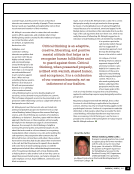
Notes
[1] B. Zablocki, Cults: Theory and Treatment Issues (paper
presented to a conference, May 31, 1997, in Philadelphia,
Pennsylvania).
[2] M. Langone, Cults, Psychological Manipulation, &Society (paper
presented at AFF Annual Conference, University of Minnesota,
St. Paul Campus, May 14, 1999 published in Cultic Studies
Journal, 18, 2001, 1–12, para. 10).
[3] In our Christian history, for example, tens of thousands
were killed for belonging to “heretic” sects/cults such as the
Cathars, a Gnostic branch (Albigensian Crusades, 1209–1220).
And more recently (1993), there were many killings in Waco,
Texas at the siege of the Branch Davidians (led by David
Koresh, whose branch had broken away from the Seventh Day
Adventists).
[4] There are many case studies—e.g., Robert Lifton, Destroying
the World to Save It: Aum Shinrikyo (1999) Jim Guerra, From
Dean’s List to Dumpster: Why I Left Harvard to Join a Cult (2000)
Mark Laxer, Take Me for A Ride: Coming of Age in a Destructive
Cult (1993) Margaret Singer and Janja Lalich, Cults in Our Midst
(1996) Jayanti Tamm, Cartwheels in a Sari (2009) and more.
[5] See, for example, Robert Cialdini, Influence: Science and
Practice (2009), for the six common social influence processes:
reciprocity, consistency, social proof, authority, liking, and
scarcity, which use social influence and peer pressure to
control and modify member behavior. These processes are
often subtle and gradual, reducing followers’ ability to use
conscious cognitive functions such as independent and
critical thinking. Processes such as cognitive dissonance
change our thinking and action to be congruent with each
other at a precognitive level. See especially Leon Festinger,
When Prophecy Fails (1956). There is also an emerging field
of evolutionary psychology, which looks at genetic and
epigenetic changes and the hundred thousands of years of
primate social inheritance.
[6] Janja Lalich, Bounded Choice: True Believers and Charismatic
Cults (2004). See also Steven Hassan, Freedom of Mind (2013),
for an overview of these and other cultic dynamics.
[7] Erik Erikson’s stages of psychosocial development are trust vs.
mistrust (infancy), autonomy vs. shame and doubt (toddler
years), initiative vs. guilt (preschool), industry vs. inferiority
(elementary school), identity vs. role confusion (adolescence),
intimacy vs. isolation (early adulthood), generativity vs.
stagnation (middle adulthood), and integrity vs. despair (late
adulthood) (in The Life Cycle Completed, 1997). John Bowlby,
Attachment and Loss, Vol. I (1982), and Mary Ainsworth, ”Infant-
Mother Attachment,” American Psychologist, 34(10), 932–937
(1979), both find that early caregiver-child attachment
problems can lead to insecure or anxious personality
formation. Erikson’s trust vs. mistrust stage seems to dovetail
nicely with Bowlby-Ainsworth’s attachment theory. In terms
of potential cultic-group involvement, the transition from
each of these life-crisis stages to the next is a stressful time,
and a time when individuals are vulnerable to the intense and
seductive influence processes of cultic groups.
[8] See, for example, Daniel Goleman’s Vital Lies, Simple Truths: The
Psychology of Self-Deception (2005). Individual’s ego-defense
mechanisms may keep them from acknowledging deeply
disturbing contradictions, deceptions, or misdeeds (pp. 117–
123). Freud describes the following mechanisms: repression
(forgetting and forgetting one has forgotten) denial and
reversal (reaction formation: what is so is not the case
the opposite is the case) projection (what is inside is cast
outside) isolation (events without feelings) rationalization
(I give myself a cover story) sublimation (replacing the
threatening with the safe) selective inattention (I don’t see
what I don’t like) and automatism (I don’t notice what I do).
[9] For example, Len Oakes, Prophetic Charisma: The Psychology
of Revolutionary Religious Personalities (1997) see also Charles
Lindholm, Charisma (2002, PDF version online). There is a
whole literature on the congruence between narcissism
and charisma (see Oakes). The classic On Charisma and
Institution Building (1968) by Max Weber describes charisma
as an energizing, galvanizing force and cults as the core of
every religion. Another powerful aspect of social influence is
described in the classic “obedience to authority” experiments
by Prof. Stanley Milgram (1961). He described how a leader
(i.e., “cultic” group leader), once he is perceived as having
authority, tends to be followed blindly (Max Weber described
three types of authority: rational-legal authority, traditional
authority, and especially for our case, charismatic authority).
Once a member is involved in a group, and the leader is
perceived to have authority, there are powerful psychosocial
pressures that come into play, sometimes overriding an
individual’s own impulses or values. The prisoner’s dilemma,
also called the Faustian bargain in game theory (Merrill, Flood,
and Dresher, 1950), and Philip Zimbardo’s Stanford Prison
Experiment (1971), describe as well how readily people may
conform, under the right conditions, to group and leader
pressure and expectations.
[10] For example, Daniel Shaw, Traumatic Narcissism: Relational
Systems of Subjugation (2014).
[11] See, for example, Dr. Eileen Barker, “Ageing in New Religions:
The Variations of Later Experiences” (2013). In K. Baier &
F. Winter (Eds.), Altern in den religion (pp. 227–60). Vienna,
Austria: LIT Verlag. [Also available in E. Barker, “Ageing in New
Religions: The Varieties of Later Experiences” (2013), Diskus,
The Journal of the British Association for the Study of Religions,
12(2011), 1–23 (online access via religiousstudiesproject.
com/DISKUS/index.php/DISKUS/article/view/21/20).]
[12] Dr. Eileen Barker, “Aging in New Religions: The Variations of
Later Experiences” (2013). In K. Baier &F. Winter (Eds.), Altern
in den religion (pp. 227–60). Vienna, Austria: LIT Verlag. [Also
available in E. Barker, “Ageing in new Religions: The Varieties
of Later Experiences” (2013), Diskus, The Journal of the British
Association for the Study of Religions, 12(2011), 1–23 (online
access via religiousstudiesproject.com/DISKUS/index.php/
DISKUS/article/view/21/20).]
Notes
[1] B. Zablocki, Cults: Theory and Treatment Issues (paper
presented to a conference, May 31, 1997, in Philadelphia,
Pennsylvania).
[2] M. Langone, Cults, Psychological Manipulation, &Society (paper
presented at AFF Annual Conference, University of Minnesota,
St. Paul Campus, May 14, 1999 published in Cultic Studies
Journal, 18, 2001, 1–12, para. 10).
[3] In our Christian history, for example, tens of thousands
were killed for belonging to “heretic” sects/cults such as the
Cathars, a Gnostic branch (Albigensian Crusades, 1209–1220).
And more recently (1993), there were many killings in Waco,
Texas at the siege of the Branch Davidians (led by David
Koresh, whose branch had broken away from the Seventh Day
Adventists).
[4] There are many case studies—e.g., Robert Lifton, Destroying
the World to Save It: Aum Shinrikyo (1999) Jim Guerra, From
Dean’s List to Dumpster: Why I Left Harvard to Join a Cult (2000)
Mark Laxer, Take Me for A Ride: Coming of Age in a Destructive
Cult (1993) Margaret Singer and Janja Lalich, Cults in Our Midst
(1996) Jayanti Tamm, Cartwheels in a Sari (2009) and more.
[5] See, for example, Robert Cialdini, Influence: Science and
Practice (2009), for the six common social influence processes:
reciprocity, consistency, social proof, authority, liking, and
scarcity, which use social influence and peer pressure to
control and modify member behavior. These processes are
often subtle and gradual, reducing followers’ ability to use
conscious cognitive functions such as independent and
critical thinking. Processes such as cognitive dissonance
change our thinking and action to be congruent with each
other at a precognitive level. See especially Leon Festinger,
When Prophecy Fails (1956). There is also an emerging field
of evolutionary psychology, which looks at genetic and
epigenetic changes and the hundred thousands of years of
primate social inheritance.
[6] Janja Lalich, Bounded Choice: True Believers and Charismatic
Cults (2004). See also Steven Hassan, Freedom of Mind (2013),
for an overview of these and other cultic dynamics.
[7] Erik Erikson’s stages of psychosocial development are trust vs.
mistrust (infancy), autonomy vs. shame and doubt (toddler
years), initiative vs. guilt (preschool), industry vs. inferiority
(elementary school), identity vs. role confusion (adolescence),
intimacy vs. isolation (early adulthood), generativity vs.
stagnation (middle adulthood), and integrity vs. despair (late
adulthood) (in The Life Cycle Completed, 1997). John Bowlby,
Attachment and Loss, Vol. I (1982), and Mary Ainsworth, ”Infant-
Mother Attachment,” American Psychologist, 34(10), 932–937
(1979), both find that early caregiver-child attachment
problems can lead to insecure or anxious personality
formation. Erikson’s trust vs. mistrust stage seems to dovetail
nicely with Bowlby-Ainsworth’s attachment theory. In terms
of potential cultic-group involvement, the transition from
each of these life-crisis stages to the next is a stressful time,
and a time when individuals are vulnerable to the intense and
seductive influence processes of cultic groups.
[8] See, for example, Daniel Goleman’s Vital Lies, Simple Truths: The
Psychology of Self-Deception (2005). Individual’s ego-defense
mechanisms may keep them from acknowledging deeply
disturbing contradictions, deceptions, or misdeeds (pp. 117–
123). Freud describes the following mechanisms: repression
(forgetting and forgetting one has forgotten) denial and
reversal (reaction formation: what is so is not the case
the opposite is the case) projection (what is inside is cast
outside) isolation (events without feelings) rationalization
(I give myself a cover story) sublimation (replacing the
threatening with the safe) selective inattention (I don’t see
what I don’t like) and automatism (I don’t notice what I do).
[9] For example, Len Oakes, Prophetic Charisma: The Psychology
of Revolutionary Religious Personalities (1997) see also Charles
Lindholm, Charisma (2002, PDF version online). There is a
whole literature on the congruence between narcissism
and charisma (see Oakes). The classic On Charisma and
Institution Building (1968) by Max Weber describes charisma
as an energizing, galvanizing force and cults as the core of
every religion. Another powerful aspect of social influence is
described in the classic “obedience to authority” experiments
by Prof. Stanley Milgram (1961). He described how a leader
(i.e., “cultic” group leader), once he is perceived as having
authority, tends to be followed blindly (Max Weber described
three types of authority: rational-legal authority, traditional
authority, and especially for our case, charismatic authority).
Once a member is involved in a group, and the leader is
perceived to have authority, there are powerful psychosocial
pressures that come into play, sometimes overriding an
individual’s own impulses or values. The prisoner’s dilemma,
also called the Faustian bargain in game theory (Merrill, Flood,
and Dresher, 1950), and Philip Zimbardo’s Stanford Prison
Experiment (1971), describe as well how readily people may
conform, under the right conditions, to group and leader
pressure and expectations.
[10] For example, Daniel Shaw, Traumatic Narcissism: Relational
Systems of Subjugation (2014).
[11] See, for example, Dr. Eileen Barker, “Ageing in New Religions:
The Variations of Later Experiences” (2013). In K. Baier &
F. Winter (Eds.), Altern in den religion (pp. 227–60). Vienna,
Austria: LIT Verlag. [Also available in E. Barker, “Ageing in New
Religions: The Varieties of Later Experiences” (2013), Diskus,
The Journal of the British Association for the Study of Religions,
12(2011), 1–23 (online access via religiousstudiesproject.
com/DISKUS/index.php/DISKUS/article/view/21/20).]
[12] Dr. Eileen Barker, “Aging in New Religions: The Variations of
Later Experiences” (2013). In K. Baier &F. Winter (Eds.), Altern
in den religion (pp. 227–60). Vienna, Austria: LIT Verlag. [Also
available in E. Barker, “Ageing in new Religions: The Varieties
of Later Experiences” (2013), Diskus, The Journal of the British
Association for the Study of Religions, 12(2011), 1–23 (online
access via religiousstudiesproject.com/DISKUS/index.php/
DISKUS/article/view/21/20).]