21 VOLUME 6 |ISSUE 3 |2015
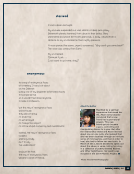
About the Author
William Goldberg, MSW, LCSW, a
therapist in private practice, has co-led
a support group for former members
with his wife, Lorna, for more than
thirty years. He retired in 2008 from
his position as Program Supervisor
for Rehabilitative Services for the
Rockland County (NY) Department
of Mental Health. He is presently
an Adjunct Instructor in the Social Work Department of
Dominican College. n
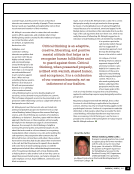
societal fringes, but the point he misses is that those
interests are common to virtually all people. Those common
human needs are magnified and exploited by cults in their
recruitment and retention of their members.
Mr. Melnyk is accurate when he states that cult members
want to affirm, appreciate, and celebrate what critical
thinking brings under scrutiny. But this tendency to bypass
our critical faculties, which
we all have, is exploited by
destructive cults.
Validation- and
connection-seeking
interests are qualities that
we are born with. We are
highly evolved, intuitive
and emotional beings.
Critical thinking has to be
learned. It is a proficiency
that helps us to recognize
our vulnerabilities and
to arm ourselves against
them. When we hear
something that we want to
believe is true because it
fits with our preconceived
notions or is so satisfying
of our emotional needs,
critical thinking teaches us to be doubly skeptical of
ourselves, and to demand more proof before we commit.
This technique safeguards us and can be presented as self-
protective rather than being used as a cudgel with which to
beat people over the head.
Mr. Melnyk points out that recruits who are fooled into
joining manipulative groups have learned not to accept
critical thinking. Indeed, they are often warned that logic,
science, and critical thinking are examples of wickedness,
selfishness, or delusion. I, therefore, agree with him that an
approach that focuses on these qualities will not usually
be helpful in the honeymoon stage of cult involvement.
However, the concept of critical thinking is helpful in
warning the general public and potential targets of cults
about the tactics used in cult recruitment, in recognizing
manipulation when someone is in a cult, and in putting the
cult experience into perspective after someone has left.
Almost all former cult members with whom I have worked
have told me that they had doubts about their involvement
in the cult, but that they learned to squelch those doubts
with some form of mind-numbing activity, or with the
employment of what Lifton called the thought-terminating
cliché. Forearming individuals with critical-thinking skills,
or helping them to take another look at how they came to
adopt their present belief system, can help to mitigate the
cults’ emphasis on trust, hope fulfillment, connection, and
blind acceptance.
Again, much of what Mr. Melnyk writes is valid. He is correct
that people usually do not get involved in these groups
by means of a disciplined process of rational thought but
instead because of a nonrational, emotional appeal. As Mr.
Melnyk states, cult members often rationalize that it was the
logic of the cult arguments that won them over, while it was
really the sense of fellowship. Mr. Melnyk’s suggestion to
introduce critical thinking to the cult member by modeling
it in questions put to the
cult member (which Hassan
also has suggested) is a
constructive approach. And
the way he develops that
theme in his article is useful.
His critique of critical
thinking viewed as rational
argument stripped of all
emotional contexts is also
helpful, for it exposes the
limitations of those who
approach critical thinking
without any psychological
context. Those of us
who work regularly with
families understand this
perspective well, for one
of our major goals in this
work is to help families recognize that critical thinking
applied to relationships requires a psychologically sensitive
perspective.
My primary disagreement with Mr. Melnyk, then, is that
his view of critical thinking is applicable to the physical
sciences, whereas my view of critical thinking applies to the
psychological sciences. I believe it is important to make this
distinction so that readers, when they encounter the term
critical thinking, will realize that the term may have more
than one meaning. Critical thinking, as I use the term, is
pivotal to the creation of the atmosphere of mutual respect
that Mr. Melnyk endorses. n
Critical thinking is an adaptive,
creative, liberating, and positive
mental attitude that helps us to
recognize human fallibilities and
to guard against them. Critical
thinking, when presented properly,
is filled with warmth, shared humor,
and acceptance. It is a celebration
of our common humanity, not an
indictment of our frailties.
About the Author
William Goldberg, MSW, LCSW, a
therapist in private practice, has co-led
a support group for former members
with his wife, Lorna, for more than
thirty years. He retired in 2008 from
his position as Program Supervisor
for Rehabilitative Services for the
Rockland County (NY) Department
of Mental Health. He is presently
an Adjunct Instructor in the Social Work Department of
Dominican College. n
societal fringes, but the point he misses is that those
interests are common to virtually all people. Those common
human needs are magnified and exploited by cults in their
recruitment and retention of their members.
Mr. Melnyk is accurate when he states that cult members
want to affirm, appreciate, and celebrate what critical
thinking brings under scrutiny. But this tendency to bypass
our critical faculties, which
we all have, is exploited by
destructive cults.
Validation- and
connection-seeking
interests are qualities that
we are born with. We are
highly evolved, intuitive
and emotional beings.
Critical thinking has to be
learned. It is a proficiency
that helps us to recognize
our vulnerabilities and
to arm ourselves against
them. When we hear
something that we want to
believe is true because it
fits with our preconceived
notions or is so satisfying
of our emotional needs,
critical thinking teaches us to be doubly skeptical of
ourselves, and to demand more proof before we commit.
This technique safeguards us and can be presented as self-
protective rather than being used as a cudgel with which to
beat people over the head.
Mr. Melnyk points out that recruits who are fooled into
joining manipulative groups have learned not to accept
critical thinking. Indeed, they are often warned that logic,
science, and critical thinking are examples of wickedness,
selfishness, or delusion. I, therefore, agree with him that an
approach that focuses on these qualities will not usually
be helpful in the honeymoon stage of cult involvement.
However, the concept of critical thinking is helpful in
warning the general public and potential targets of cults
about the tactics used in cult recruitment, in recognizing
manipulation when someone is in a cult, and in putting the
cult experience into perspective after someone has left.
Almost all former cult members with whom I have worked
have told me that they had doubts about their involvement
in the cult, but that they learned to squelch those doubts
with some form of mind-numbing activity, or with the
employment of what Lifton called the thought-terminating
cliché. Forearming individuals with critical-thinking skills,
or helping them to take another look at how they came to
adopt their present belief system, can help to mitigate the
cults’ emphasis on trust, hope fulfillment, connection, and
blind acceptance.
Again, much of what Mr. Melnyk writes is valid. He is correct
that people usually do not get involved in these groups
by means of a disciplined process of rational thought but
instead because of a nonrational, emotional appeal. As Mr.
Melnyk states, cult members often rationalize that it was the
logic of the cult arguments that won them over, while it was
really the sense of fellowship. Mr. Melnyk’s suggestion to
introduce critical thinking to the cult member by modeling
it in questions put to the
cult member (which Hassan
also has suggested) is a
constructive approach. And
the way he develops that
theme in his article is useful.
His critique of critical
thinking viewed as rational
argument stripped of all
emotional contexts is also
helpful, for it exposes the
limitations of those who
approach critical thinking
without any psychological
context. Those of us
who work regularly with
families understand this
perspective well, for one
of our major goals in this
work is to help families recognize that critical thinking
applied to relationships requires a psychologically sensitive
perspective.
My primary disagreement with Mr. Melnyk, then, is that
his view of critical thinking is applicable to the physical
sciences, whereas my view of critical thinking applies to the
psychological sciences. I believe it is important to make this
distinction so that readers, when they encounter the term
critical thinking, will realize that the term may have more
than one meaning. Critical thinking, as I use the term, is
pivotal to the creation of the atmosphere of mutual respect
that Mr. Melnyk endorses. n
Critical thinking is an adaptive,
creative, liberating, and positive
mental attitude that helps us to
recognize human fallibilities and
to guard against them. Critical
thinking, when presented properly,
is filled with warmth, shared humor,
and acceptance. It is a celebration
of our common humanity, not an
indictment of our frailties.