38 ICSA TODAY 36
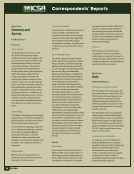
and church leaders had no duty to warn members of the
congregation (known as Witnesses) that another member
had previously molested a child. The plaintiff in the case
sued her abuser, the Witness, her former congregation, and
the Watchtower (the Jehovah’s Witnesses’ corporation),
contending that the Watchtower’s policies permitted the
Witness to molest her repeatedly during church-sponsored
activities over a 2-year period.
The Witness had admitted to his congregation’s elders that he
had sexually abused his stepdaughter. Although the elders
informed the Watchtower, the Watchtower did not notify the
police or warn the congregation. With respect to the punitive
damages claim, the plaintiff argued that the Watchtower acted
despicably and with conscious disregard for the safety of
others by maintaining a “secrecy policy” regarding child sexual
abusers, despite knowing of their high recidivism.
On appeal, the reviewing court found that the alleged
duty to warn could not be justified on the basis of a special
relationship because there is “no authority for any such broad
duty on the part of a church to prevent its members from
harming each other.” The court also applied the factors of
Rowland v. Christian to determine whether a duty existed.
The court concluded that the burden that the duty to warn
would create, and the adverse social consequences that the
duty would produce, outweighed its imposition. Finding that
such a burden would be unworkable, the court remarked,
“The burden would be considerable because the precedent
could require a church to intervene whenever it has reason
to believe that a congregation member is capable of doing
harm, and the scope of that duty could not be limited with
any precision.” The Conti Court nonetheless upheld the
compensatory damages award on the ground that the
congregation and Watchtower failed in their duty to supervise
the Witness and protect the plaintiff during their field service
(a church-sponsored activity in which members go door-to-
door preaching in the community). (JD Supra, 4/20/15)
Pregnant woman’s decision to refuse treatment
“harrowing” for hospital staff
A pregnant Jehovah’s Witnesses woman and her baby have
died after a woman refused a blood transfusion in a Sydney,
Australia hospital. Doctors described the harrowing effect
on staff at the Royal Hospital for Women and Prince of Wales
Hospital in Randwick. The woman refused a transfusion when,
nearly seven months into her pregnancy, she developed
complications related to leukemia. The 28-year-old’s religion
forbade her from accepting the blood transfusion she needed
to save her life and that of her unborn baby. Hematologist
Giselle Kidson-Gerber said her experience treating cancer
patients and her Christian faith had helped her understand
the woman’s choice, but it was difficult, knowing that choice
would affect the unborn child. “They were unable to do a
Caesarean for the sake of the baby without putting her at risk.”
But the baby died, and shortly afterward the woman suffered
a stroke and multiorgan failure.
Sascha Callaghan, an expert in ethics and law at the University
of Sydney, said the law as it stands allowed the mother to
make decisions that would affect the fetus, even if it probably
would have been able to survive outside her body. “This isn’t
to say it isn’t a tragic event … but we live in a society where,
within reason, we let citizens be the authors of their own
lives,” she said. “If you are going to grant women full rights as
citizens, are you going to dilute those rights for women who
are carrying fetuses?” (Sydney Morning Herald, 4/6/15)
Report: Lev Tahor children’s best interests not respected
by public system
A Quebec Human Rights Commission report concluded that
youth-protection officials took far too long to intervene on
behalf of 127 children in the Lev Tahor community in Ste-
Agathe-des-Monts. In November 2013, about 250 members
of the ultra-Orthodox Jewish sect fled from Quebec to avoid a
hearing in youth court concerning allegations of child abuse
and neglect. Charges included corporal punishment in school,
underage marriage, sexual abuse of minors, and squalid living
conditions.
It took 17 months for youth protection officials to seize the
children, and 15 months to get proper schooling for the
children in the community, whose education had been
strictly religious and who spoke neither English nor French.
The president of the human rights commission, however,
acknowledged that even quick action might not have been
able to prevent the group’s flight.
The Lev Tahor members left for Chatham-Kent. There, Ontario
courts ruled against a Quebec court order to place 14 of
the children in foster care. Child services in Chatham-Kent
also refused an order to remove all 127 children from the
community. The report recommended that Quebec act swiftly
to come to an agreement with Ontario so that youth court
cases can be applied in that province, as well. The report also
recommended that the province develop a guide for best
clinical and administrative practices for youth-protection
interventions within sects or “closed communities,” and that
the guide be widely distributed to all those involved. (Montreal
Gazette, 7/9/15)
Mormons win battle to distance themselves from BC
polygamist
The Church of Jesus Christ of Latter-day Saints (LDS) has
succeeded in getting its name back. On January 12, 2015,
the British Columbia Supreme Court, by consent, issued an
order prohibiting Winston Blackmore and his followers
from using the name The Church of Jesus Christ of LDS Inc.
or any similar names. The order also forbids any attention
that would confuse Blackmore’s group or the LDS in anyway.
Furthermore, the order prohibits Blackmore and his followers
from questioning, attacking, challenging, objecting to, or
opposing in any way the Church’s trademarked names. Those
names include The Church of Jesus Christ of Latter-day Saints,
Latter-day Saints, and Mormon. Blackmore was ordered to
immediately change his group’s corporate name to the Church
of Jesus Christ (Original Doctrine) Inc.
In August 2014, Blackmore was criminally charged for
practicing polygamy. He has also “had to pay for back taxes,
and church leaders had no duty to warn members of the
congregation (known as Witnesses) that another member
had previously molested a child. The plaintiff in the case
sued her abuser, the Witness, her former congregation, and
the Watchtower (the Jehovah’s Witnesses’ corporation),
contending that the Watchtower’s policies permitted the
Witness to molest her repeatedly during church-sponsored
activities over a 2-year period.
The Witness had admitted to his congregation’s elders that he
had sexually abused his stepdaughter. Although the elders
informed the Watchtower, the Watchtower did not notify the
police or warn the congregation. With respect to the punitive
damages claim, the plaintiff argued that the Watchtower acted
despicably and with conscious disregard for the safety of
others by maintaining a “secrecy policy” regarding child sexual
abusers, despite knowing of their high recidivism.
On appeal, the reviewing court found that the alleged
duty to warn could not be justified on the basis of a special
relationship because there is “no authority for any such broad
duty on the part of a church to prevent its members from
harming each other.” The court also applied the factors of
Rowland v. Christian to determine whether a duty existed.
The court concluded that the burden that the duty to warn
would create, and the adverse social consequences that the
duty would produce, outweighed its imposition. Finding that
such a burden would be unworkable, the court remarked,
“The burden would be considerable because the precedent
could require a church to intervene whenever it has reason
to believe that a congregation member is capable of doing
harm, and the scope of that duty could not be limited with
any precision.” The Conti Court nonetheless upheld the
compensatory damages award on the ground that the
congregation and Watchtower failed in their duty to supervise
the Witness and protect the plaintiff during their field service
(a church-sponsored activity in which members go door-to-
door preaching in the community). (JD Supra, 4/20/15)
Pregnant woman’s decision to refuse treatment
“harrowing” for hospital staff
A pregnant Jehovah’s Witnesses woman and her baby have
died after a woman refused a blood transfusion in a Sydney,
Australia hospital. Doctors described the harrowing effect
on staff at the Royal Hospital for Women and Prince of Wales
Hospital in Randwick. The woman refused a transfusion when,
nearly seven months into her pregnancy, she developed
complications related to leukemia. The 28-year-old’s religion
forbade her from accepting the blood transfusion she needed
to save her life and that of her unborn baby. Hematologist
Giselle Kidson-Gerber said her experience treating cancer
patients and her Christian faith had helped her understand
the woman’s choice, but it was difficult, knowing that choice
would affect the unborn child. “They were unable to do a
Caesarean for the sake of the baby without putting her at risk.”
But the baby died, and shortly afterward the woman suffered
a stroke and multiorgan failure.
Sascha Callaghan, an expert in ethics and law at the University
of Sydney, said the law as it stands allowed the mother to
make decisions that would affect the fetus, even if it probably
would have been able to survive outside her body. “This isn’t
to say it isn’t a tragic event … but we live in a society where,
within reason, we let citizens be the authors of their own
lives,” she said. “If you are going to grant women full rights as
citizens, are you going to dilute those rights for women who
are carrying fetuses?” (Sydney Morning Herald, 4/6/15)
Report: Lev Tahor children’s best interests not respected
by public system
A Quebec Human Rights Commission report concluded that
youth-protection officials took far too long to intervene on
behalf of 127 children in the Lev Tahor community in Ste-
Agathe-des-Monts. In November 2013, about 250 members
of the ultra-Orthodox Jewish sect fled from Quebec to avoid a
hearing in youth court concerning allegations of child abuse
and neglect. Charges included corporal punishment in school,
underage marriage, sexual abuse of minors, and squalid living
conditions.
It took 17 months for youth protection officials to seize the
children, and 15 months to get proper schooling for the
children in the community, whose education had been
strictly religious and who spoke neither English nor French.
The president of the human rights commission, however,
acknowledged that even quick action might not have been
able to prevent the group’s flight.
The Lev Tahor members left for Chatham-Kent. There, Ontario
courts ruled against a Quebec court order to place 14 of
the children in foster care. Child services in Chatham-Kent
also refused an order to remove all 127 children from the
community. The report recommended that Quebec act swiftly
to come to an agreement with Ontario so that youth court
cases can be applied in that province, as well. The report also
recommended that the province develop a guide for best
clinical and administrative practices for youth-protection
interventions within sects or “closed communities,” and that
the guide be widely distributed to all those involved. (Montreal
Gazette, 7/9/15)
Mormons win battle to distance themselves from BC
polygamist
The Church of Jesus Christ of Latter-day Saints (LDS) has
succeeded in getting its name back. On January 12, 2015,
the British Columbia Supreme Court, by consent, issued an
order prohibiting Winston Blackmore and his followers
from using the name The Church of Jesus Christ of LDS Inc.
or any similar names. The order also forbids any attention
that would confuse Blackmore’s group or the LDS in anyway.
Furthermore, the order prohibits Blackmore and his followers
from questioning, attacking, challenging, objecting to, or
opposing in any way the Church’s trademarked names. Those
names include The Church of Jesus Christ of Latter-day Saints,
Latter-day Saints, and Mormon. Blackmore was ordered to
immediately change his group’s corporate name to the Church
of Jesus Christ (Original Doctrine) Inc.
In August 2014, Blackmore was criminally charged for
practicing polygamy. He has also “had to pay for back taxes,