12 ICSA TODAY
CHARACTERISTICS ASSOCIATED WITH
CULTIC GROUPS
By Michael D. Langone
Concerted efforts at influence and control lie at the core of
cultic groups, programs, and relationships. Many members,
former members, and supporters of cults are not fully aware
of the extent to which members may have been manipulated,
exploited, even abused. The following list of social-structural,
social-psychological, and interpersonal behavioral patterns
commonly found in cultic environments may be helpful in
assessing a particular group or relationship.
Compare these patterns to the situation you were in (or in
which you, a family member, or friend is currently involved).
This list may help you determine whether there is cause for
concern. Bear in mind that this list is not meant to be a “cult
scale” or a definitive checklist to determine whether a specific
group is a cult. This is not so much a diagnostic instrument as it
is an analytical tool.
• The group displays excessively zealous and
unquestioning commitment to its leader and (whether
he is alive or dead) regards his belief system, ideology,
and practices as the Truth, as law.
• Questioning, doubt, and dissent are discouraged or
even punished.
• Mind-altering practices (such as meditation, chanting,
speaking in tongues, denunciation sessions, and
debilitating work routines) are used in excess and serve
to suppress doubts about the group and its leader(s).
• The leadership dictates, sometimes in great detail,
how members should think, act, and feel (for example,
members must get permission to date, change jobs,
marry—or leaders prescribe what types of clothes to
wear, where to live, whether or not to have children,
how to discipline children, and so forth).
• The group is elitist, claiming a special, exalted status for
itself, its leader(s), and its members (for example, the
leader is considered the Messiah, a special being, an
avatar—or the group and/or the leader is on a special
mission to save humanity).
• The group has a polarized us-versus-them mentality,
which may cause conflict with the wider society.
• The leader is not accountable to any authorities
(unlike, for example, teachers, military commanders,
or ministers, priests, monks, and rabbis of mainstream
religious denominations).
• The group teaches or implies that its supposedly
exalted ends justify whatever means it deems
necessary. This may result in members participating
in behaviors or activities they would have considered
reprehensible or unethical before they joined the group
(for example, lying to family or friends, or collecting
money for bogus charities).
• The leadership induces feelings of shame and/or guilt
in order to influence and/or control members. Often,
this is done through peer pressure and subtle forms of
persuasion.
• Subservience to the leader or group requires members
to cut ties with family and friends, and to radically alter
the personal goals and activities they had before they
joined the group.
• The group is preoccupied with bringing in new
members.
• The group is preoccupied with making money.
• Members are expected to devote inordinate amounts of
time to the group and group-related activities.
• Members are encouraged or required to live and/or
socialize only with other group members.
The most loyal members (the “true believers”) feel there can
be no life outside the context of the group. They believe there
is no other way to be and often fear reprisals to themselves or
others if they leave (or even consider leaving) the group.
Note:
This checklist has gone through many revisions since the
author first presented it in the 1990s. Many people have
contributed suggestions and feedback to the various revisions,
in particular Carol Giambalvo, Janja Lalich, Herb Rosedale, and
Patrick Ryan.
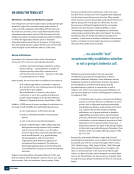
Subservience to the leader or group
requires members to cut ties with
family and friends, and to radically
alter … personal goals…
CHARACTERISTICS ASSOCIATED WITH
CULTIC GROUPS
By Michael D. Langone
Concerted efforts at influence and control lie at the core of
cultic groups, programs, and relationships. Many members,
former members, and supporters of cults are not fully aware
of the extent to which members may have been manipulated,
exploited, even abused. The following list of social-structural,
social-psychological, and interpersonal behavioral patterns
commonly found in cultic environments may be helpful in
assessing a particular group or relationship.
Compare these patterns to the situation you were in (or in
which you, a family member, or friend is currently involved).
This list may help you determine whether there is cause for
concern. Bear in mind that this list is not meant to be a “cult
scale” or a definitive checklist to determine whether a specific
group is a cult. This is not so much a diagnostic instrument as it
is an analytical tool.
• The group displays excessively zealous and
unquestioning commitment to its leader and (whether
he is alive or dead) regards his belief system, ideology,
and practices as the Truth, as law.
• Questioning, doubt, and dissent are discouraged or
even punished.
• Mind-altering practices (such as meditation, chanting,
speaking in tongues, denunciation sessions, and
debilitating work routines) are used in excess and serve
to suppress doubts about the group and its leader(s).
• The leadership dictates, sometimes in great detail,
how members should think, act, and feel (for example,
members must get permission to date, change jobs,
marry—or leaders prescribe what types of clothes to
wear, where to live, whether or not to have children,
how to discipline children, and so forth).
• The group is elitist, claiming a special, exalted status for
itself, its leader(s), and its members (for example, the
leader is considered the Messiah, a special being, an
avatar—or the group and/or the leader is on a special
mission to save humanity).
• The group has a polarized us-versus-them mentality,
which may cause conflict with the wider society.
• The leader is not accountable to any authorities
(unlike, for example, teachers, military commanders,
or ministers, priests, monks, and rabbis of mainstream
religious denominations).
• The group teaches or implies that its supposedly
exalted ends justify whatever means it deems
necessary. This may result in members participating
in behaviors or activities they would have considered
reprehensible or unethical before they joined the group
(for example, lying to family or friends, or collecting
money for bogus charities).
• The leadership induces feelings of shame and/or guilt
in order to influence and/or control members. Often,
this is done through peer pressure and subtle forms of
persuasion.
• Subservience to the leader or group requires members
to cut ties with family and friends, and to radically alter
the personal goals and activities they had before they
joined the group.
• The group is preoccupied with bringing in new
members.
• The group is preoccupied with making money.
• Members are expected to devote inordinate amounts of
time to the group and group-related activities.
• Members are encouraged or required to live and/or
socialize only with other group members.
The most loyal members (the “true believers”) feel there can
be no life outside the context of the group. They believe there
is no other way to be and often fear reprisals to themselves or
others if they leave (or even consider leaving) the group.
Note:
This checklist has gone through many revisions since the
author first presented it in the 1990s. Many people have
contributed suggestions and feedback to the various revisions,
in particular Carol Giambalvo, Janja Lalich, Herb Rosedale, and
Patrick Ryan.
Subservience to the leader or group
requires members to cut ties with
family and friends, and to radically
alter … personal goals…