VOLUME 13 |ISSUE 3 |2022 5
we were obedient (Monson, 2013). It seemed I was the only
person who did not. I had joined the church after having been
promised it would give me a place to belong and a connection
to God that would assure me of His love. I was told Jesus could
make my sins “white as snow” (Isa. 1:18) and yet, I felt the
wrongness lurking within me, like a cancer on my soul.
During my seven-year tenure as a devout Latter-Day Saint, I
did all I could to be a good Mormon girl and hide or disguise
the wrongness in me. There was rarely a day that I did not
have something church-related to attend to. I cleaned the
church buildings, held multiple callings, paid a full tithe, gave
up my love of tea, attended the temple, fasted regularly,
signed up for every service project, served homemade
meals to the missionaries, studied scriptures daily, had a
very popular Mormon blog, prayed many times each day,
and, yes, I wore the special Mormon underwear. When I did
not want to do one of these tasks, I was sure it was Satan
attacking me, exploiting the wrongness within me, luring
me to disobey the church and anger God. I would push the
wrongness, Satan, my emotions and doubts aside, as I dove
deeper into my church service. I held fast to the hope that if
I worked harder and were more obedient to church leaders
and commandments, I could finally absolve myself of the
wrongness I felt inside.
LDS policies against LGBTQ+ people made me realize how
much of myself I had hidden
The pressure to tick all the boxes to be deemed worthy and
keep every commandment was immense. I had daily panic
attacks and frequently contemplated leaving the church, but
the promise of a path to being lovable kept me from straying
too far. However, in 2015, the LDS Church announced several
policies that were openly discriminatory against LGBTQ+
people (Weaver, 2015). In addition to being infuriating, these
policies also made me realize that no one would ever be good
enough within the LDS Church. Mormon policies and doctrine
condemned people for who they are and for failing to reach
the unattainable standards set by the LDS Church.
My mind had long convinced me that there was something
wrong with me, but the policies the LDS Church enacted in
2015 began my realization that Mormon doctrine and culture
were designed to cast all but an extremely select group of
(cisgendered, heterosexual, male) people as fundamentally
inadequate. The LDS Church has long taught that sex is only
acceptable between a married couple. However, the 2015
policies made marriage between people of the same gender a
sin worthy of excommunication. D. Todd Christofferson, of the
Quorum of the Twelve Apostles within the LDS Church (one
of the highest positions in the entire church), called same-sex
marriages “wrong” and a “serious kind of sin” (Weaver, 2015).
Anyone who was in a same-sex relationship would be barred
from the temple, serving in a calling, or participating in sacred
ordinances (Weaver, 2015). I was appalled at the thought that
a gay person would be told they and their children had no
path to God, and no place within the LDS Church, unless they
renounced the most fundamental parts of themselves. This
was completely in contradiction to what I believed about God,
love, and humanity. This was not a path to God I wanted to be
on.
In recognizing the hypocrisy and discrimination the LDS
Church was showing towards LGBTQ+ people, I realized how
much of myself I had hidden since joining the church. I had
forced myself to keep quiet about things I felt were wrong, and
my self-loathing had intensified as I struggled to quiet doubts
and questions that were not acceptable within the LDS Church
or its culture. I still felt the wrongness within me, but I was
finally ready to stop trying to purge it from myself. Perhaps I
was perpetually unlovable, but I was willing to accept this if
doing so allowed me to have my life and my mind back within
my own control.
I came to understand the wrongness I felt through a
psychotherapy training about scrupulosity OCD
I had attained my master’s degree in social work while still an
active member of the LDS Church. I joked that I had chosen
this career because it allowed me to help people for a living.
In truth, I had hoped that having a career helping others
would allow me to further hide the terribleness within me. It
took me a long time, and a lot of psychotherapy, to process
all that led me to join the LDS Church, remain for so long, and
eventually leave. I had been labeled as anxious since I was
a young child, but it was only as I attended psychotherapy
that I truly understood what this meant and how it had
affected my life. I recognized how my anxiety had manifested
in self-loathing, and this had led to my belief that there was
something fundamentally wrong with me that caused me to
be unlovable. This new understanding led me to reconsider
nearly every aspect of my relationship to the world around
me. It was an overwhelming, terrifying, and beautifully freeing
process.
My passion for helping others continued, but I found different
ways of channeling this passion that best suited me. I wanted
to help others struggling to find peace within their own
minds. I pursued my clinical social work licensure and pursued
further education to become a psychotherapist myself.
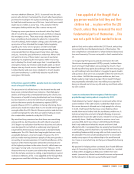
I was appalled at the thought that a
gay person would be told they and their
children had … no place within the LDS
Church, unless they renounced the most
fundamental parts of themselves. …This
was not a path to God I wanted to be on.
we were obedient (Monson, 2013). It seemed I was the only
person who did not. I had joined the church after having been
promised it would give me a place to belong and a connection
to God that would assure me of His love. I was told Jesus could
make my sins “white as snow” (Isa. 1:18) and yet, I felt the
wrongness lurking within me, like a cancer on my soul.
During my seven-year tenure as a devout Latter-Day Saint, I
did all I could to be a good Mormon girl and hide or disguise
the wrongness in me. There was rarely a day that I did not
have something church-related to attend to. I cleaned the
church buildings, held multiple callings, paid a full tithe, gave
up my love of tea, attended the temple, fasted regularly,
signed up for every service project, served homemade
meals to the missionaries, studied scriptures daily, had a
very popular Mormon blog, prayed many times each day,
and, yes, I wore the special Mormon underwear. When I did
not want to do one of these tasks, I was sure it was Satan
attacking me, exploiting the wrongness within me, luring
me to disobey the church and anger God. I would push the
wrongness, Satan, my emotions and doubts aside, as I dove
deeper into my church service. I held fast to the hope that if
I worked harder and were more obedient to church leaders
and commandments, I could finally absolve myself of the
wrongness I felt inside.
LDS policies against LGBTQ+ people made me realize how
much of myself I had hidden
The pressure to tick all the boxes to be deemed worthy and
keep every commandment was immense. I had daily panic
attacks and frequently contemplated leaving the church, but
the promise of a path to being lovable kept me from straying
too far. However, in 2015, the LDS Church announced several
policies that were openly discriminatory against LGBTQ+
people (Weaver, 2015). In addition to being infuriating, these
policies also made me realize that no one would ever be good
enough within the LDS Church. Mormon policies and doctrine
condemned people for who they are and for failing to reach
the unattainable standards set by the LDS Church.
My mind had long convinced me that there was something
wrong with me, but the policies the LDS Church enacted in
2015 began my realization that Mormon doctrine and culture
were designed to cast all but an extremely select group of
(cisgendered, heterosexual, male) people as fundamentally
inadequate. The LDS Church has long taught that sex is only
acceptable between a married couple. However, the 2015
policies made marriage between people of the same gender a
sin worthy of excommunication. D. Todd Christofferson, of the
Quorum of the Twelve Apostles within the LDS Church (one
of the highest positions in the entire church), called same-sex
marriages “wrong” and a “serious kind of sin” (Weaver, 2015).
Anyone who was in a same-sex relationship would be barred
from the temple, serving in a calling, or participating in sacred
ordinances (Weaver, 2015). I was appalled at the thought that
a gay person would be told they and their children had no
path to God, and no place within the LDS Church, unless they
renounced the most fundamental parts of themselves. This
was completely in contradiction to what I believed about God,
love, and humanity. This was not a path to God I wanted to be
on.
In recognizing the hypocrisy and discrimination the LDS
Church was showing towards LGBTQ+ people, I realized how
much of myself I had hidden since joining the church. I had
forced myself to keep quiet about things I felt were wrong, and
my self-loathing had intensified as I struggled to quiet doubts
and questions that were not acceptable within the LDS Church
or its culture. I still felt the wrongness within me, but I was
finally ready to stop trying to purge it from myself. Perhaps I
was perpetually unlovable, but I was willing to accept this if
doing so allowed me to have my life and my mind back within
my own control.
I came to understand the wrongness I felt through a
psychotherapy training about scrupulosity OCD
I had attained my master’s degree in social work while still an
active member of the LDS Church. I joked that I had chosen
this career because it allowed me to help people for a living.
In truth, I had hoped that having a career helping others
would allow me to further hide the terribleness within me. It
took me a long time, and a lot of psychotherapy, to process
all that led me to join the LDS Church, remain for so long, and
eventually leave. I had been labeled as anxious since I was
a young child, but it was only as I attended psychotherapy
that I truly understood what this meant and how it had
affected my life. I recognized how my anxiety had manifested
in self-loathing, and this had led to my belief that there was
something fundamentally wrong with me that caused me to
be unlovable. This new understanding led me to reconsider
nearly every aspect of my relationship to the world around
me. It was an overwhelming, terrifying, and beautifully freeing
process.
My passion for helping others continued, but I found different
ways of channeling this passion that best suited me. I wanted
to help others struggling to find peace within their own
minds. I pursued my clinical social work licensure and pursued
further education to become a psychotherapist myself.
I was appalled at the thought that a
gay person would be told they and their
children had … no place within the LDS
Church, unless they renounced the most
fundamental parts of themselves. …This
was not a path to God I wanted to be on.