VOLUME 13 |ISSUE 3 |2022 11
Dreams
of
ISKCON
F
rom 1978 to 1988, I lived in the Los Angeles
headquarters of the International Society for Krishna
Consciousness (ISKCON). ISKCON is a Hindu-based
group that came to America in 1965. When I was new there
the authority figures did not allow me to keep a journal.
However, in 1979 they gave me permission to write about my
prayers and spiritual realizations, and to record dreams—if
they were about god. Eventually, I got permission to record
all my dreams, and by the time I left ISKCON, I had recorded
1,369 dreams.
In 2016, when I turned sixty, I
wanted a new writing project
I could commit to for a long
time. When I thought about my
dream journal, I realized it could
open doors to a new area of
study. Soon after my birthday,
I discovered an obscure, but
well-established, branch
of psychology that studies
dreams. I met some of the top
people in the field, and they
became my mentors.
Quantitative Dream Content Analysis started in the 1960s
when Drs. Calvin S. Hall and Robert Van de Castle set forth
their categories for statistical dream analysis: characters,
settings, plots, social interactions, activities, objects, and
emotions.1
Dream content analysis is also known as the Continuity
Hypothesis (CH) since researchers investigate three
continuities:
• continuity between daytime and dream
experiences,
• continuity of one person’s dreams over time, and
• continuity of all people’s dreams.
Researchers in this field compare daytime and dream
experiences. For example, if the dreamer has multiple dreams
about a particular relative, the researchers may predict that
this relative is a concern in the dreamer’s daytime life. If
someone frequently dreams about travel, the researchers may
predict the person travels a lot in
daytime life.
When I learned about content
analysis, I finally understood
why I frequently dreamed about
travel: I traveled a lot. During
the pandemic, I had fewer travel
dreams because I didn’t travel for
two years. I used to interpret my
dreams using symbolism, but the
way I see it now, most dreams
refer to literal daytime concerns.
Then, like other stories, dreams may also include symbols and
metaphors.
My dream research mentors encouraged me to digitize my
journal so I could study it for science. From 2018 to 2021,
I typed nearly three hundred journal notebooks. Since
completing the typing, my research has centered around the
first continuity, comparing my dreams to events and people in
my waking life. For example, I have counted the dreams and
daytime notations that mention the most important people in
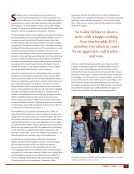
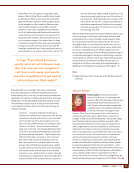
There I was forty years
later, setting out to type
the ISKCON years of my
journal. It took four weeks,
typing eight hours a day…
By Nori Muster
Photo
by
Nori
Muster
Dreams
of
ISKCON
F
rom 1978 to 1988, I lived in the Los Angeles
headquarters of the International Society for Krishna
Consciousness (ISKCON). ISKCON is a Hindu-based
group that came to America in 1965. When I was new there
the authority figures did not allow me to keep a journal.
However, in 1979 they gave me permission to write about my
prayers and spiritual realizations, and to record dreams—if
they were about god. Eventually, I got permission to record
all my dreams, and by the time I left ISKCON, I had recorded
1,369 dreams.
In 2016, when I turned sixty, I
wanted a new writing project
I could commit to for a long
time. When I thought about my
dream journal, I realized it could
open doors to a new area of
study. Soon after my birthday,
I discovered an obscure, but
well-established, branch
of psychology that studies
dreams. I met some of the top
people in the field, and they
became my mentors.
Quantitative Dream Content Analysis started in the 1960s
when Drs. Calvin S. Hall and Robert Van de Castle set forth
their categories for statistical dream analysis: characters,
settings, plots, social interactions, activities, objects, and
emotions.1
Dream content analysis is also known as the Continuity
Hypothesis (CH) since researchers investigate three
continuities:
• continuity between daytime and dream
experiences,
• continuity of one person’s dreams over time, and
• continuity of all people’s dreams.
Researchers in this field compare daytime and dream
experiences. For example, if the dreamer has multiple dreams
about a particular relative, the researchers may predict that
this relative is a concern in the dreamer’s daytime life. If
someone frequently dreams about travel, the researchers may
predict the person travels a lot in
daytime life.
When I learned about content
analysis, I finally understood
why I frequently dreamed about
travel: I traveled a lot. During
the pandemic, I had fewer travel
dreams because I didn’t travel for
two years. I used to interpret my
dreams using symbolism, but the
way I see it now, most dreams
refer to literal daytime concerns.
Then, like other stories, dreams may also include symbols and
metaphors.
My dream research mentors encouraged me to digitize my
journal so I could study it for science. From 2018 to 2021,
I typed nearly three hundred journal notebooks. Since
completing the typing, my research has centered around the
first continuity, comparing my dreams to events and people in
my waking life. For example, I have counted the dreams and
daytime notations that mention the most important people in
There I was forty years
later, setting out to type
the ISKCON years of my
journal. It took four weeks,
typing eight hours a day…
By Nori Muster
Photo
by
Nori
Muster