VOLUME 13 |ISSUE 3 |2022 13
My original connection with UCSB was completing my
Bachelor of Arts degree there in 1978. I met devotees
when they opened a preaching center in an apartment
in Isla Vista, the college town adjacent to campus. I
spent a lot of time at the preaching center learning the
philosophy, then joined the Los Angeles temple the day
after graduation.
There I was forty years later, setting out to type the ISKCON
years of my journal. It took four weeks, typing eight hours
a day in the UCSB Special Research Collections reading
room. During my free time, I walked around Isla Vista
revisiting landmarks from my senior year. I walked to the
apartment building where I had lived and noticed the pool
was gone. The man in the office told me my $90 studio
apartment now rented for $1,500 a month.
I found the old preaching center and was dismayed at how
rundown the building looked. It reminded me of ISKCON,
and how broken down it had become, still pitifully trying
to hide its history of child abuse, murder, etc. I knew about
some of their crimes all along, but after leaving, and doing
the research for my memoir, I realized ISKCON was like a
building that became a money pit. The more I looked, the
more problems I found.
I felt reluctant to revisit my ISKCON years because I knew
it would bring back bad memories. But as it turned out,
typing the notebooks was therapeutic. For one thing,
I realized I had valid reasons for joining and staying so
long. I was alienated from my family as a teenager, so I still
wanted to experience growing up in a family. ISKCON gave
me that. The people in the public affairs office cared about
me and made me feel like I belonged. I worked my way up
from secretary to my position as associate editor of The
ISKCON World Review newspaper.
The best part was to find out I was the hero of my own
story. In 1987 the organization started to unravel, and
there was little more the public affairs office could do. By
that time my husband and I had started our own company
doing freelance typesetting, so we walked away in 1988
when we were both ready to leave. Instead of feeling
traumatized about leaving, I realized it was not up to me
to fix ISKCON. I felt proud of myself for getting on my
own two feet. Uncovering the true story of my life set the
record straight. I could forgive myself and let go of my self-
hatred and guilt for the first time. That left me with a sense
of gratitude for everything I remembered. n
Notes
[1] Calvin Hall’s and Robert Van de Castle’s dream content
analysis is explained in further detail in G. William
Domhoff’s article, “If we don’t interpret dreams, what do
we do?” Go to https://dreams.ucsc.edu/Info/content_
analysis.html
[2] Bulkeley, K. (2018). The meaningful continuities between
dreaming and waking: Results of a blind analysis of a
woman’s 30-year dream journal. Dreaming, 28(4), 337–350.
https://doi.org/10.1037/drm0000083
[3] Nori’s pandemic dreams are referenced in G. William
Domhoff’s new book, The neurocognitive theory of
dreaming: The where, how, when, what, and why of dreams
(MIT Press, 2022). See the section on Beverly: A frequent
pandemic dreamer, pp. 133-136.
[4] Nori Muster on a panel on Dreams About God (2018,
June 19). Dreams of ten years with the Hare Krishnas,
Conference of the International Association for the Study
of Dreams (IASD), Scottsdale, Arizona. See: surrealist.org/
dreams/dreamsaboutgod.html
[5] Muster, N. (1997). Betrayal of the spirit: My life behind the
headlines of the Hare Krishna movement, University of
Illinois Press.
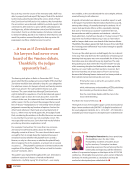
About the Author
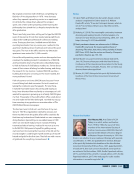
Nori Muster, MS, Arts Editor of ICSA
Today, is an artist, writer, and teacher.
From 1978 to 1988, she was a full-time
member of the International Society of
Krishna Consciousness (ISKCON), then left
and earned her Master of Science degree
at Western Oregon University in 1991. Her
thesis is on whether to use creative art therapy with juvenile
sex offenders. In 1997, she published her memoir, Betrayal
of the spirit: My life behind the headlines of the Hare Krishna
movement (University of Illinois Press, 1997, paperback 2001,
e-book 2014), then Cult survivors handbook: Seven paths to
an authentic life (first edition, 2000 Kindle Paperback edition,
2017), and Child of the cult (2012 revised edition, 2015 Kindle
Paperback edition, 2017). Her web page for cultic-studies
information is surrealist.org/cults/ n
My original connection with UCSB was completing my
Bachelor of Arts degree there in 1978. I met devotees
when they opened a preaching center in an apartment
in Isla Vista, the college town adjacent to campus. I
spent a lot of time at the preaching center learning the
philosophy, then joined the Los Angeles temple the day
after graduation.
There I was forty years later, setting out to type the ISKCON
years of my journal. It took four weeks, typing eight hours
a day in the UCSB Special Research Collections reading
room. During my free time, I walked around Isla Vista
revisiting landmarks from my senior year. I walked to the
apartment building where I had lived and noticed the pool
was gone. The man in the office told me my $90 studio
apartment now rented for $1,500 a month.
I found the old preaching center and was dismayed at how
rundown the building looked. It reminded me of ISKCON,
and how broken down it had become, still pitifully trying
to hide its history of child abuse, murder, etc. I knew about
some of their crimes all along, but after leaving, and doing
the research for my memoir, I realized ISKCON was like a
building that became a money pit. The more I looked, the
more problems I found.
I felt reluctant to revisit my ISKCON years because I knew
it would bring back bad memories. But as it turned out,
typing the notebooks was therapeutic. For one thing,
I realized I had valid reasons for joining and staying so
long. I was alienated from my family as a teenager, so I still
wanted to experience growing up in a family. ISKCON gave
me that. The people in the public affairs office cared about
me and made me feel like I belonged. I worked my way up
from secretary to my position as associate editor of The
ISKCON World Review newspaper.
The best part was to find out I was the hero of my own
story. In 1987 the organization started to unravel, and
there was little more the public affairs office could do. By
that time my husband and I had started our own company
doing freelance typesetting, so we walked away in 1988
when we were both ready to leave. Instead of feeling
traumatized about leaving, I realized it was not up to me
to fix ISKCON. I felt proud of myself for getting on my
own two feet. Uncovering the true story of my life set the
record straight. I could forgive myself and let go of my self-
hatred and guilt for the first time. That left me with a sense
of gratitude for everything I remembered. n
Notes
[1] Calvin Hall’s and Robert Van de Castle’s dream content
analysis is explained in further detail in G. William
Domhoff’s article, “If we don’t interpret dreams, what do
we do?” Go to https://dreams.ucsc.edu/Info/content_
analysis.html
[2] Bulkeley, K. (2018). The meaningful continuities between
dreaming and waking: Results of a blind analysis of a
woman’s 30-year dream journal. Dreaming, 28(4), 337–350.
https://doi.org/10.1037/drm0000083
[3] Nori’s pandemic dreams are referenced in G. William
Domhoff’s new book, The neurocognitive theory of
dreaming: The where, how, when, what, and why of dreams
(MIT Press, 2022). See the section on Beverly: A frequent
pandemic dreamer, pp. 133-136.
[4] Nori Muster on a panel on Dreams About God (2018,
June 19). Dreams of ten years with the Hare Krishnas,
Conference of the International Association for the Study
of Dreams (IASD), Scottsdale, Arizona. See: surrealist.org/
dreams/dreamsaboutgod.html
[5] Muster, N. (1997). Betrayal of the spirit: My life behind the
headlines of the Hare Krishna movement, University of
Illinois Press.
About the Author
Nori Muster, MS, Arts Editor of ICSA
Today, is an artist, writer, and teacher.
From 1978 to 1988, she was a full-time
member of the International Society of
Krishna Consciousness (ISKCON), then left
and earned her Master of Science degree
at Western Oregon University in 1991. Her
thesis is on whether to use creative art therapy with juvenile
sex offenders. In 1997, she published her memoir, Betrayal
of the spirit: My life behind the headlines of the Hare Krishna
movement (University of Illinois Press, 1997, paperback 2001,
e-book 2014), then Cult survivors handbook: Seven paths to
an authentic life (first edition, 2000 Kindle Paperback edition,
2017), and Child of the cult (2012 revised edition, 2015 Kindle
Paperback edition, 2017). Her web page for cultic-studies
information is surrealist.org/cults/ n