ICSA TODAY 26
Has Our Son Come to Grips?
My 32-year-old son was involved with a cult for a year and left it
about four months ago, after my husband and I convinced him to
speak to someone who is knowledgeable about cults. He seems
to have moved on in some ways. For example, he has reconnected
with old friends, has a new job, and has a new, positive, romantic
relationship with someone. Our concern is that he will not discuss
the cult with us. We can speak about other topics, but when we
bring up the cult and his behavior when he was part of it, he
becomes defensive and angry. He is still friends with some people
who are members of the cult. He becomes particularly defensive
when we try to discuss the cult leader, and he sometimes defends
her. He refuses to join a support group and will not read articles
on cults. We’re fearful that he hasn’t come to grips with how
destructive the cult is and that he may rejoin the cult.
I understand your fear that your son may be sucked back into
the cult. However, you seem focused on one aspect of his
reaction and see this as a gauge of his recognition of the cult’s
harmfulness. It would be understandably reassuring for you
if he denounced the cult and joined your and your husband’s
censure of the cult leader. However, his aversion to doing so
may not indicate that he’s softening in his decision to leave the
cult.
There are several possible explanations for his behavior other
than that he is vulnerable to reconsidering his decision to
leave. While involved, he probably saw joining the cult as
the most correct decision he ever made. It’s embarrassing to
acknowledge that you (and almost everyone else in his pre-cult
life) were right about the cult. Your son had entered a stage of
life when he assumed that he would successfully manage on his
own, and if he hadn’t met the cult, he probably would have. The
fact that you convinced him to speak to another person and
leave may have awakened adolescent struggles from earlier
years about autonomy and mastery.
Parents are often the last to hear from their adult children that
they, the parents, were right. Remember that one of your most
triumphant moments, convincing your adult son that the cult
was harmful, was not seen as a triumph by him. It probably had
an element of embarrassment and humilitiation attached to
it. It may have been your finest hour, but it wasn’t his. Perhaps
that’s why he doesn’t want to discuss the negatives of the cult
so much with you.
It would probably be helpful to him if you emphasized the fact
that, since the cult was deceptive in its recruiting tactics, you
understand that anyone could be receptive to its message at a
vulnerable time of life. With time, he might come to appreciate
and even openly acknowledge that you helped him by
intervening in a harmful situation.
Other factors indicate that he has left the cult: You write that he
has reconnected with old friends, has a job, and has a romantic
relationship. All these factors indicate that he has moved on
from the cult. These factors are more significant than the fact
that he doesn’t want to articulate the reasons for his decision to
leave the cult with you now. n
About the Editor
William Goldberg, LCSW, PsyA, ICSA Today’s
Point of View Editor, is a clinical social worker
and psychoanalyst with more than forty
years’ experience working with former cult
members. He and his wife, Lorna, co-lead a
support group for former cult members. This
group has been meeting for more than forty
years and is the oldest group of its kind in the world. In 2007,
Bill retired from the Rockland County, New York Department of
Mental Health, where he directed several programs and clinics.
He is presently an adjunct professor in the social work and
social science departments of Dominican University, and he is
on the faculty of the Institute for Psychoanalytic Studies. Bill is
a frequent speaker at ICSA conferences, and he and Lorna have
been the recipients of the Authentic CAN Hall of Fame Award
and the Leo J. Ryan Award. In 2010, Bill was the recipient of
ICSA’s Lifetime Achievement Award. n
Point of View – Q&A By William Goldberg
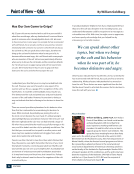
We can speak about other
topics, but when we bring
up the cult and his behavior
when he was part of it, he
becomes defensive and angry.
Has Our Son Come to Grips?
My 32-year-old son was involved with a cult for a year and left it
about four months ago, after my husband and I convinced him to
speak to someone who is knowledgeable about cults. He seems
to have moved on in some ways. For example, he has reconnected
with old friends, has a new job, and has a new, positive, romantic
relationship with someone. Our concern is that he will not discuss
the cult with us. We can speak about other topics, but when we
bring up the cult and his behavior when he was part of it, he
becomes defensive and angry. He is still friends with some people
who are members of the cult. He becomes particularly defensive
when we try to discuss the cult leader, and he sometimes defends
her. He refuses to join a support group and will not read articles
on cults. We’re fearful that he hasn’t come to grips with how
destructive the cult is and that he may rejoin the cult.
I understand your fear that your son may be sucked back into
the cult. However, you seem focused on one aspect of his
reaction and see this as a gauge of his recognition of the cult’s
harmfulness. It would be understandably reassuring for you
if he denounced the cult and joined your and your husband’s
censure of the cult leader. However, his aversion to doing so
may not indicate that he’s softening in his decision to leave the
cult.
There are several possible explanations for his behavior other
than that he is vulnerable to reconsidering his decision to
leave. While involved, he probably saw joining the cult as
the most correct decision he ever made. It’s embarrassing to
acknowledge that you (and almost everyone else in his pre-cult
life) were right about the cult. Your son had entered a stage of
life when he assumed that he would successfully manage on his
own, and if he hadn’t met the cult, he probably would have. The
fact that you convinced him to speak to another person and
leave may have awakened adolescent struggles from earlier
years about autonomy and mastery.
Parents are often the last to hear from their adult children that
they, the parents, were right. Remember that one of your most
triumphant moments, convincing your adult son that the cult
was harmful, was not seen as a triumph by him. It probably had
an element of embarrassment and humilitiation attached to
it. It may have been your finest hour, but it wasn’t his. Perhaps
that’s why he doesn’t want to discuss the negatives of the cult
so much with you.
It would probably be helpful to him if you emphasized the fact
that, since the cult was deceptive in its recruiting tactics, you
understand that anyone could be receptive to its message at a
vulnerable time of life. With time, he might come to appreciate
and even openly acknowledge that you helped him by
intervening in a harmful situation.
Other factors indicate that he has left the cult: You write that he
has reconnected with old friends, has a job, and has a romantic
relationship. All these factors indicate that he has moved on
from the cult. These factors are more significant than the fact
that he doesn’t want to articulate the reasons for his decision to
leave the cult with you now. n
About the Editor
William Goldberg, LCSW, PsyA, ICSA Today’s
Point of View Editor, is a clinical social worker
and psychoanalyst with more than forty
years’ experience working with former cult
members. He and his wife, Lorna, co-lead a
support group for former cult members. This
group has been meeting for more than forty
years and is the oldest group of its kind in the world. In 2007,
Bill retired from the Rockland County, New York Department of
Mental Health, where he directed several programs and clinics.
He is presently an adjunct professor in the social work and
social science departments of Dominican University, and he is
on the faculty of the Institute for Psychoanalytic Studies. Bill is
a frequent speaker at ICSA conferences, and he and Lorna have
been the recipients of the Authentic CAN Hall of Fame Award
and the Leo J. Ryan Award. In 2010, Bill was the recipient of
ICSA’s Lifetime Achievement Award. n
Point of View – Q&A By William Goldberg
We can speak about other
topics, but when we bring
up the cult and his behavior
when he was part of it, he
becomes defensive and angry.