The views expressed in ICSA Today are solely those of the authors and do not necessarily
reflect the views of ICSA Today’s editors or editorial boards or of ICSA’s directors, advisors, or
staff. Groups analyzed or mentioned in ICSA Today are not necessarily cults, nor are they neces-
sarily harmful.
Note to our readers regarding website addresses (URLs): For all http website addresses, such
as http://www.icsahome.com, ICSA Today uses only the shortened address form (icsahome.
com). In all instances when the basic address is other than http, such as https or ftp, we give the
full address. Please keep this in mind when exploring sites mentioned in ICSA Today.
Table of Contents
30
News Desk
20
Arts and Poetry
Jen Kiaba
2
Desperate People
Do Desperate Things
Katherine M. Schneider
8
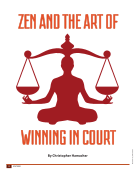
Zen and the Art of
WInning in Court
Christopher Hamacher
26
Point of View – Q&A
William Goldberg
11
Dreams of ISKCON
Nori Muster
ICSA Today, Volume 13, No. 3, 2022
Managing Editor
Ann Stamler, MA, MPhil
Arts Editor
Nori Muster, MS
Family Editor
Lois Svoboda, MD, LMFT
Mental Health Editor
Gillie Jenkinson, PhD
Research Coeditors
Linda Dubrow-Marshall, PhD
Rod Dubrow-Marshall, PhD
Book Review Consultant
Joseph Szimhart
Point of View -Q&A
William Goldberg, MSW, LCSW
Correspondents
Paul Lennon
Piotr T. Nowakowski, PhD
Luis Santamaria, SThL
Erika Toren, MSEd
Joni Valkila, PhD
News Desk
Ana Rodriguez
Patrick Ryan
Writing Consultant
Laura Lynch, MA
Bios of ICSA Today editors can be found at
icsahome.com/elibrary/people-profiles
International Cultic Studies Association
P.O. Box 2265 • Bonita Springs, FL 34133
Website: icsahome.com
Email: mail@icsamail.com
Phone: 786-509-9746
ISSN: 2154-820X
Printed in the USA
Artists and poets retain copyright
of their works and grant ICSA permission
to reproduce them. Unless otherwise
indicated, all other material copyright
International Cultic Studies Association.
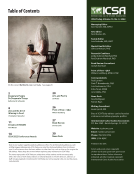
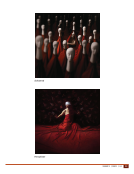
On the cover: My Mind Is a Lie, Jen Kiaba. See page 20.
14
ICSA 2022 Conference Awards
27
Book Review
Donna Lamb
reflect the views of ICSA Today’s editors or editorial boards or of ICSA’s directors, advisors, or
staff. Groups analyzed or mentioned in ICSA Today are not necessarily cults, nor are they neces-
sarily harmful.
Note to our readers regarding website addresses (URLs): For all http website addresses, such
as http://www.icsahome.com, ICSA Today uses only the shortened address form (icsahome.
com). In all instances when the basic address is other than http, such as https or ftp, we give the
full address. Please keep this in mind when exploring sites mentioned in ICSA Today.
Table of Contents
30
News Desk
20
Arts and Poetry
Jen Kiaba
2
Desperate People
Do Desperate Things
Katherine M. Schneider
8
Zen and the Art of
WInning in Court
Christopher Hamacher
26
Point of View – Q&A
William Goldberg
11
Dreams of ISKCON
Nori Muster
ICSA Today, Volume 13, No. 3, 2022
Managing Editor
Ann Stamler, MA, MPhil
Arts Editor
Nori Muster, MS
Family Editor
Lois Svoboda, MD, LMFT
Mental Health Editor
Gillie Jenkinson, PhD
Research Coeditors
Linda Dubrow-Marshall, PhD
Rod Dubrow-Marshall, PhD
Book Review Consultant
Joseph Szimhart
Point of View -Q&A
William Goldberg, MSW, LCSW
Correspondents
Paul Lennon
Piotr T. Nowakowski, PhD
Luis Santamaria, SThL
Erika Toren, MSEd
Joni Valkila, PhD
News Desk
Ana Rodriguez
Patrick Ryan
Writing Consultant
Laura Lynch, MA
Bios of ICSA Today editors can be found at
icsahome.com/elibrary/people-profiles
International Cultic Studies Association
P.O. Box 2265 • Bonita Springs, FL 34133
Website: icsahome.com
Email: mail@icsamail.com
Phone: 786-509-9746
ISSN: 2154-820X
Printed in the USA
Artists and poets retain copyright
of their works and grant ICSA permission
to reproduce them. Unless otherwise
indicated, all other material copyright
International Cultic Studies Association.
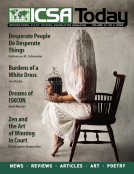
On the cover: My Mind Is a Lie, Jen Kiaba. See page 20.
14
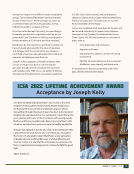
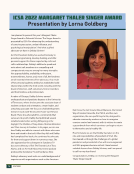
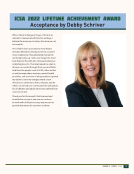
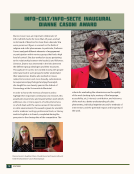
ICSA 2022 Conference Awards
27
Book Review
Donna Lamb