Cultic Studies Review, Vol. 1, No. 1, 2002, Page 9
more on the psychology of social influence than so-called ―brainwashing‖ models, laid the
groundwork for AFF‘s future theoretical developments.
The grants also enabled them to set up systems for responding to the mounting number of
information requests from families, former group members, helping professionals, and the
media. By 1985 AFF was responding to several thousand information requests (mostly from
families and former members) and providing background information to dozens and
sometimes more than 100 journalists annually. AFF‘s capacity to respond effectively to
inquiries has improved over the years as we have learned more and produced practical
books, articles, and other resources. Today, most of our communications occur thorugh e-
mail, although the effectiveness of telephone consultations should not be underestimated.
Dr. Clark also set out early on to establish an advisory board of professionals and scholars.
The first advisory board meeting, attended by several dozen people, was held in 1981. (An
advisory board meeting has been held every year since 1981.) Advisors included, and
continue to include, mental health professionals, attorneys, academicians, clergy,
educators, executives, and former members and family members active in cult education.
Advisors help establish goals and objectives for the organization, advise staff on research
and publications, write articles and books, and speak to professional and lay groups. Since
the first advisory board meeting, AFF advisors have written among the most prominent
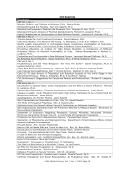
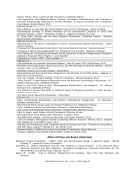
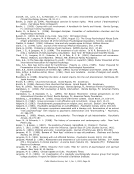
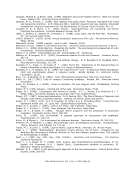
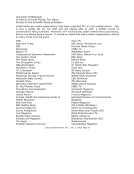
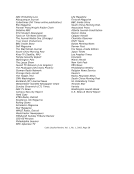
books in this field, many of which are available through AFF‘s bookstore. Appendix A
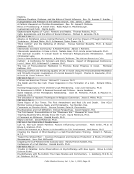
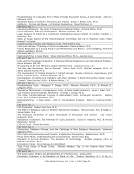
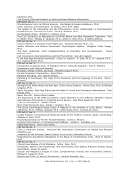
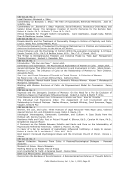
includes a partial list of articles and books published by AFF and its advisors.
The first advisory board meeting in 1981 identified AFF‘s three-tiered mission of research,
education, and victim assistance. Budget limitations have necessitated that the
organization develop these areas in a cyclic manner: sometimes the development focus has
been on research other times on education or victim assistance. But attention has been
paid to all three areas throughout AFF‘s history.
AFF‘s first research survey, conducted in 1983, had a practical focus, as has most of the
research conducted since then. This survey collected quantifiable data on one of the
questions that most troubled parents and mental health professionals at that time, many of
whom had serious reservations about the deprogramming that was often depicted as the
way to get people out of cults: How often does deprogramming work? To answer this
question, AFF‘s Dr. Michael Langone surveyed 94 parents who had had their children
deprogrammed. Deprogramming failed in 37% of the cases, a significant percentage given
the legal and psychological risks of the procedure. The study concluded that
―deprogramming is but one of several helping options and should not be viewed as the
`cure‘ for cult involvement.‖
In 1983 Drs. Clark and Langone contributed to a symposium sponsored by Section K
(Social, Economic and Political Sciences) of the Pacific Division, American Association for the
Advancement of Science, entitled, ―Scientific Research and New Religions.‖ Their paper‘s
title was: ―New Religions and Public Policy: Research Implications for Social and Behavioral
Scientists.‖ This symposium was one of the few gatherings that brought together
academicians and professionals from what was already viewed as the two ―camps‖ of ―pro‖
and ―anti‖ cultists. Communication between these two ―camps‖ decreased markedly in the
1980s as members of both ―camps‖ were hired as expert witnesses in the growing number
of lawsuits against and by cultic groups. In the late 1990s, however, AFF reopened dialogue
between the two ―camps,‖ trying as much as possible to encourage openness to
methodological differences among disciplines and to diverse theoretical orientations, while
remaining focused on the irrefutable fact under girding AFF‘s mission: some groups harm
some people sometimes.
In 1984 AFF markedly advanced the quality of its publishing efforts by founding the Cult
Observer and Cultic Studies Journal (CSJ). The former succeeded The Advisor and focused
more on the psychology of social influence than so-called ―brainwashing‖ models, laid the
groundwork for AFF‘s future theoretical developments.
The grants also enabled them to set up systems for responding to the mounting number of
information requests from families, former group members, helping professionals, and the
media. By 1985 AFF was responding to several thousand information requests (mostly from
families and former members) and providing background information to dozens and
sometimes more than 100 journalists annually. AFF‘s capacity to respond effectively to
inquiries has improved over the years as we have learned more and produced practical
books, articles, and other resources. Today, most of our communications occur thorugh e-
mail, although the effectiveness of telephone consultations should not be underestimated.
Dr. Clark also set out early on to establish an advisory board of professionals and scholars.
The first advisory board meeting, attended by several dozen people, was held in 1981. (An
advisory board meeting has been held every year since 1981.) Advisors included, and
continue to include, mental health professionals, attorneys, academicians, clergy,
educators, executives, and former members and family members active in cult education.
Advisors help establish goals and objectives for the organization, advise staff on research
and publications, write articles and books, and speak to professional and lay groups. Since
the first advisory board meeting, AFF advisors have written among the most prominent
books in this field, many of which are available through AFF‘s bookstore. Appendix A
includes a partial list of articles and books published by AFF and its advisors.
The first advisory board meeting in 1981 identified AFF‘s three-tiered mission of research,
education, and victim assistance. Budget limitations have necessitated that the
organization develop these areas in a cyclic manner: sometimes the development focus has
been on research other times on education or victim assistance. But attention has been
paid to all three areas throughout AFF‘s history.
AFF‘s first research survey, conducted in 1983, had a practical focus, as has most of the
research conducted since then. This survey collected quantifiable data on one of the
questions that most troubled parents and mental health professionals at that time, many of
whom had serious reservations about the deprogramming that was often depicted as the
way to get people out of cults: How often does deprogramming work? To answer this
question, AFF‘s Dr. Michael Langone surveyed 94 parents who had had their children
deprogrammed. Deprogramming failed in 37% of the cases, a significant percentage given
the legal and psychological risks of the procedure. The study concluded that
―deprogramming is but one of several helping options and should not be viewed as the
`cure‘ for cult involvement.‖
In 1983 Drs. Clark and Langone contributed to a symposium sponsored by Section K
(Social, Economic and Political Sciences) of the Pacific Division, American Association for the
Advancement of Science, entitled, ―Scientific Research and New Religions.‖ Their paper‘s
title was: ―New Religions and Public Policy: Research Implications for Social and Behavioral
Scientists.‖ This symposium was one of the few gatherings that brought together
academicians and professionals from what was already viewed as the two ―camps‖ of ―pro‖
and ―anti‖ cultists. Communication between these two ―camps‖ decreased markedly in the
1980s as members of both ―camps‖ were hired as expert witnesses in the growing number
of lawsuits against and by cultic groups. In the late 1990s, however, AFF reopened dialogue
between the two ―camps,‖ trying as much as possible to encourage openness to
methodological differences among disciplines and to diverse theoretical orientations, while
remaining focused on the irrefutable fact under girding AFF‘s mission: some groups harm
some people sometimes.
In 1984 AFF markedly advanced the quality of its publishing efforts by founding the Cult
Observer and Cultic Studies Journal (CSJ). The former succeeded The Advisor and focused