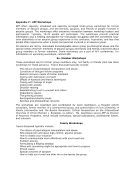
Appendix C: AFF Workshops
AFF offers regularly scheduled and specially arranged small-group workshops for former
members of abusive groups, and the families, spouses, and friends of people involved in
abusive groups. The workshops offer extensive interaction between workshop leaders and
participants. Typically, 10-25 people will participate. The workshops provide practical
information and a healing atmosphere for individuals struggling with the sometimes long-
term aftereffects of an abusive group experience or the confusion, frustration, and fear that
people often experience when a loved one becomes involved in an abusive group.
All sessions are led by individuals knowledgeable about group psychological abuse and the
special needs of former members of abusive groups and family and friends concerned about
group members or former members. Some workshops are a part of AFF conferences. For
information on upcoming workshops, contact AFF.
Ex- Member Workshops
These workshops are for former group members only, not family or friends (AFF has other
workshops for these persons). Topics discussed typically include:
The nature of psychological manipulation and abuse
Conditions of thought reform programs
General recovery needs of former members
Coping with depression and guilt
Effects of hypnosis and trance techniques
Coping with feelings of anger
Coping with anxiety
Decision-making
Reestablishing trust in yourself and others
Dependency issues
The grieving process
Reintegration/identity issues
Spiritual and philosophical concerns
The workshops are organized and coordinated by Carol Giambalvo, a thought reform
consultant, former member of a controversial group, and author/editor of Exit Counseling: A
Family Intervention and The Boston Movement: Critical Perspectives on the International
Churches of Christ (Herbert L. Rosedale, co-editor). Ms. Giambalvo serves AFF as Director
of Recovery Programs, which include workshops, special publications, professional liaison,
and outreach.
Family Workshops
Topics discussed typically include:
The nature of psychological manipulation and abuse
Why people join and leave high-control, abusive groups
How to assess your situation
How to communicate more effectively with your loved one
Problem-solving
Formulating a helping strategy
When exit counseling might be appropriate and how to prepare
Ethical issues
Special concerns of spouses
How to help your loved one after he or she leaves the group
AFF offers regularly scheduled and specially arranged small-group workshops for former
members of abusive groups, and the families, spouses, and friends of people involved in
abusive groups. The workshops offer extensive interaction between workshop leaders and
participants. Typically, 10-25 people will participate. The workshops provide practical
information and a healing atmosphere for individuals struggling with the sometimes long-
term aftereffects of an abusive group experience or the confusion, frustration, and fear that
people often experience when a loved one becomes involved in an abusive group.
All sessions are led by individuals knowledgeable about group psychological abuse and the
special needs of former members of abusive groups and family and friends concerned about
group members or former members. Some workshops are a part of AFF conferences. For
information on upcoming workshops, contact AFF.
Ex- Member Workshops
These workshops are for former group members only, not family or friends (AFF has other
workshops for these persons). Topics discussed typically include:
The nature of psychological manipulation and abuse
Conditions of thought reform programs
General recovery needs of former members
Coping with depression and guilt
Effects of hypnosis and trance techniques
Coping with feelings of anger
Coping with anxiety
Decision-making
Reestablishing trust in yourself and others
Dependency issues
The grieving process
Reintegration/identity issues
Spiritual and philosophical concerns
The workshops are organized and coordinated by Carol Giambalvo, a thought reform
consultant, former member of a controversial group, and author/editor of Exit Counseling: A
Family Intervention and The Boston Movement: Critical Perspectives on the International
Churches of Christ (Herbert L. Rosedale, co-editor). Ms. Giambalvo serves AFF as Director
of Recovery Programs, which include workshops, special publications, professional liaison,
and outreach.
Family Workshops
Topics discussed typically include:
The nature of psychological manipulation and abuse
Why people join and leave high-control, abusive groups
How to assess your situation
How to communicate more effectively with your loved one
Problem-solving
Formulating a helping strategy
When exit counseling might be appropriate and how to prepare
Ethical issues
Special concerns of spouses
How to help your loved one after he or she leaves the group