Cultic Studies Review, Vol. 1, No. 1, 2002, Page 54
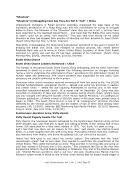
118. Id. § 7105(b) &(e).
119. Id. § 7105(b)(2).
120. Id. § 7105(c).
121. Id. § 7105(c)(1)(C)(i).
122. Id. § 7107(a).
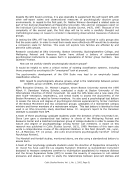
123. ―Minimum Standards‖ is defined as: (1)The government of the country should prohibit
severe forms of trafficking in persons and punish acts of such trafficking. (2) For the knowing
commission of any act of sex trafficking involving force, fraud, coercion, or in which the victim
of sex trafficking is a child incapable of giving meaningful consent, or of trafficking which
includes rape or kidnapping or which causes a death, the government of the country should
prescribe punishment commensurate with that for grave crimes, such as forcible sexual
assault. (3) For the knowing commission of any act of a severe form of trafficking in persons,
the government of the country should prescribe punishment that is sufficiently stringent to
deter and that adequately reflects the heinous nature of the offense. (4) The government of
the country should make serious and sustained efforts to eliminate severe forms of trafficking
in persons.
Id. § 7106(a). This requirement does not go into effect until 2003.
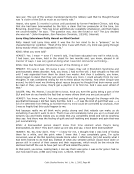
124. Id. § 7107(a)(1).
125. Id. § 7109(a).
126. Boyle, Emancipation, supra note 1, at 10-11.
127. See id.
128. See id.
129. 22 U.S.C.A. § 7109(a).
130. It reads: ―Whoever knowingly (1) or in affecting interstate commerce ....‖ Id.
131. Id.
132. Id. §1591 (a).
133. Id. §1591 (b).
134. See Boyle, Three Avenues, supra note 1, at 28-31 (describing developments in the
antistalking laws).
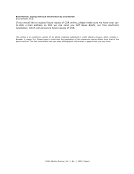
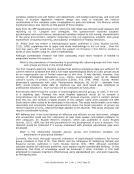
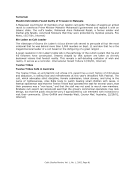
Acknowledgements
The preceding is derived from a speech delivered by Robin Boyle, Panel Participant for the
Workshop entitled Cults and the Law: Practical Issues, which was held in May 2001 at the
annual AFF conference in Newark, New Jersey. The author thanks her husband, Paul Skip
Laisure, Esq., and her Teaching Assistant, Nicole Fusilli, for their editorial assistance.
Additionally, she thanks the American Family Foundation and its President, Herbert
Rosedale, for providing a forum for these issues to be heard.
**********
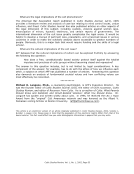
Robin Boyle, Esq. teaches legal research and writing at St. John‘s University School of
Law, and she lectures on topics concerning cults and the law. Two of her articles have
appeared in the Cultic Studies Journal described in supra note 1.
This article is an electronic version of an article originally published in Cultic Studies Review, 2002, Volume 1,
Number 1, pages 65-89. Please keep in mind that the pagination of this electronic reprint differs from that of the
bound volume. This fact could affect how you enter bibliographic information in papers that you may write.
118. Id. § 7105(b) &(e).
119. Id. § 7105(b)(2).
120. Id. § 7105(c).
121. Id. § 7105(c)(1)(C)(i).
122. Id. § 7107(a).
123. ―Minimum Standards‖ is defined as: (1)The government of the country should prohibit
severe forms of trafficking in persons and punish acts of such trafficking. (2) For the knowing
commission of any act of sex trafficking involving force, fraud, coercion, or in which the victim
of sex trafficking is a child incapable of giving meaningful consent, or of trafficking which
includes rape or kidnapping or which causes a death, the government of the country should
prescribe punishment commensurate with that for grave crimes, such as forcible sexual
assault. (3) For the knowing commission of any act of a severe form of trafficking in persons,
the government of the country should prescribe punishment that is sufficiently stringent to
deter and that adequately reflects the heinous nature of the offense. (4) The government of
the country should make serious and sustained efforts to eliminate severe forms of trafficking
in persons.
Id. § 7106(a). This requirement does not go into effect until 2003.
124. Id. § 7107(a)(1).
125. Id. § 7109(a).
126. Boyle, Emancipation, supra note 1, at 10-11.
127. See id.
128. See id.
129. 22 U.S.C.A. § 7109(a).
130. It reads: ―Whoever knowingly (1) or in affecting interstate commerce ....‖ Id.
131. Id.
132. Id. §1591 (a).
133. Id. §1591 (b).
134. See Boyle, Three Avenues, supra note 1, at 28-31 (describing developments in the
antistalking laws).
Acknowledgements
The preceding is derived from a speech delivered by Robin Boyle, Panel Participant for the
Workshop entitled Cults and the Law: Practical Issues, which was held in May 2001 at the
annual AFF conference in Newark, New Jersey. The author thanks her husband, Paul Skip
Laisure, Esq., and her Teaching Assistant, Nicole Fusilli, for their editorial assistance.
Additionally, she thanks the American Family Foundation and its President, Herbert
Rosedale, for providing a forum for these issues to be heard.
**********
Robin Boyle, Esq. teaches legal research and writing at St. John‘s University School of
Law, and she lectures on topics concerning cults and the law. Two of her articles have
appeared in the Cultic Studies Journal described in supra note 1.
This article is an electronic version of an article originally published in Cultic Studies Review, 2002, Volume 1,
Number 1, pages 65-89. Please keep in mind that the pagination of this electronic reprint differs from that of the
bound volume. This fact could affect how you enter bibliographic information in papers that you may write.