Cultic Studies Review, Vol. 1, No. 1, 2002, Page 7
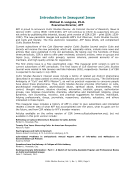
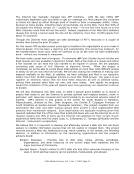
History of the American Family Foundation
Michael D. Langone, Ph.D.
Executive Director, AFF
Abstract
This paper reviews the achievements of AFF (American Family Foundation), a
tax-exempt research and educational organization founded in 1979 to study
cultic groups and processes, to help people adversely affected by groups and
psychological manipulation, and to educate professionals, youth, and the
public. The early years of the organization‘s work focused on developing a
network of volunteer professionals, articulating a more nuanced perspective
on the issue than was available at the time, and developing resources for
inquirers. Subsequent work has elaborated upon these research and
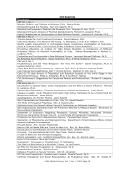
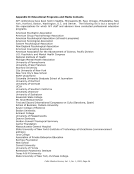
educational themes. Several appendices detail the organization‘s
achievements in these areas.
The American Family Foundation (AFF) was founded in Massachusetts in 1979 by Mr. Kay
Barney, an engineer and business executive whose daughter had become involved with the
Unification Church. During the late 1970s several dozen parents‘ groups had formed around
the U.S. Other countries also had parents‘ groups, although there was little international
communication at that time. Many of the U.S. organizations became affiliates of the
Citizens Freedom Foundation (CFF), which was chartered around the same time as AFF. In
the early 1980s CFF became the Cult Awareness Network (CAN), which was ultimately taken
over by individuals associated with the Church of Scientology in 1996, when CAN was driven
into bankruptcy because of litigation. CAN had been the object of nearly 50 lawsuits, most
filed by individuals associated with the Church of Scientology.
These organizations came into existence when parents of usually college-age cult members
discovered their mutual concern and decided to take concerted action. Some of these
parents lobbied for legislation that would make it easier for parents of cult members to force
their adult children to submit to psychiatric observation (―conservatorship‖ legislation)
others focused on public and preventive education by speaking to schools, churches,
synagogues, and civic groups and by telling their stories to journalists. Many also became
proponents of ―deprogramming,‖ a process in which an adult child would be ―snatched‖ from
the street, for example, or lured to a secure place away from the group‘s pressures so that
he/she could be forced to listen to people tell about the negative side of his/her group.
Because so many parents had seen similarities between their children‘s behavior and
brainwashed prisoners of war in Korea, cult members came to be viewed as brainwashed, or
―programmed.‖ Hence, they coined the term ―deprogramming‖ to describe the process of
bringing somebody out of a cult. Although initially ―deprogramming‖ referred to involuntary
and voluntary interventions, by the late 1990s most people used the term to describe
involuntary interventions only, using ―exit counseling‖ to describe interventions that the
group member voluntarily agreed to participate in.
In the late 1970s there were also dozens of Evangelical ministries concerned about cults,
mainly the Mormons and the Jehovah‘s Witnesses. Some of these organizations had more
than a dozen staff members (e.g., Christian Research Institute), but most were ―mom-and-
pop,‖ volunteer organizations. They tended to define ―cult‖ in theological terms, so that any
group that was deviant from orthodox Christianity was considered a cult. Many of the
mainstream organizations rested on the pioneering work of Evangelical scholar, Dr. Walter
Martin, author of The Kingdom of the Cults.
History of the American Family Foundation
Michael D. Langone, Ph.D.
Executive Director, AFF
Abstract
This paper reviews the achievements of AFF (American Family Foundation), a
tax-exempt research and educational organization founded in 1979 to study
cultic groups and processes, to help people adversely affected by groups and
psychological manipulation, and to educate professionals, youth, and the
public. The early years of the organization‘s work focused on developing a
network of volunteer professionals, articulating a more nuanced perspective
on the issue than was available at the time, and developing resources for
inquirers. Subsequent work has elaborated upon these research and
educational themes. Several appendices detail the organization‘s
achievements in these areas.
The American Family Foundation (AFF) was founded in Massachusetts in 1979 by Mr. Kay
Barney, an engineer and business executive whose daughter had become involved with the
Unification Church. During the late 1970s several dozen parents‘ groups had formed around
the U.S. Other countries also had parents‘ groups, although there was little international
communication at that time. Many of the U.S. organizations became affiliates of the
Citizens Freedom Foundation (CFF), which was chartered around the same time as AFF. In
the early 1980s CFF became the Cult Awareness Network (CAN), which was ultimately taken
over by individuals associated with the Church of Scientology in 1996, when CAN was driven
into bankruptcy because of litigation. CAN had been the object of nearly 50 lawsuits, most
filed by individuals associated with the Church of Scientology.
These organizations came into existence when parents of usually college-age cult members
discovered their mutual concern and decided to take concerted action. Some of these
parents lobbied for legislation that would make it easier for parents of cult members to force
their adult children to submit to psychiatric observation (―conservatorship‖ legislation)
others focused on public and preventive education by speaking to schools, churches,
synagogues, and civic groups and by telling their stories to journalists. Many also became
proponents of ―deprogramming,‖ a process in which an adult child would be ―snatched‖ from
the street, for example, or lured to a secure place away from the group‘s pressures so that
he/she could be forced to listen to people tell about the negative side of his/her group.
Because so many parents had seen similarities between their children‘s behavior and
brainwashed prisoners of war in Korea, cult members came to be viewed as brainwashed, or
―programmed.‖ Hence, they coined the term ―deprogramming‖ to describe the process of
bringing somebody out of a cult. Although initially ―deprogramming‖ referred to involuntary
and voluntary interventions, by the late 1990s most people used the term to describe
involuntary interventions only, using ―exit counseling‖ to describe interventions that the
group member voluntarily agreed to participate in.
In the late 1970s there were also dozens of Evangelical ministries concerned about cults,
mainly the Mormons and the Jehovah‘s Witnesses. Some of these organizations had more
than a dozen staff members (e.g., Christian Research Institute), but most were ―mom-and-
pop,‖ volunteer organizations. They tended to define ―cult‖ in theological terms, so that any
group that was deviant from orthodox Christianity was considered a cult. Many of the
mainstream organizations rested on the pioneering work of Evangelical scholar, Dr. Walter
Martin, author of The Kingdom of the Cults.