Cultic Studies Review, Vol. 1, No. 1, 2002, Page 30
How to cope with apparent helplessness without losing hope
AFF Family Workshops are organized and coordinated by Livia Bardin, M.S.W., a therapist in
private practice. Ms. Bardin serves on AFF‘s Social Work Committee and Family Education
Service Advisory Board and is editor of the newsletter of the Greater Washington Society of
Clinical Social Workers. She is author of Coping with Cult Involvement: A Handbook for
Families and Friends.
Appendix D: Research Plan
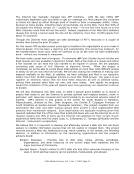
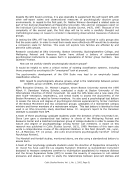
One of AFF‘s most important goals is to inspire, encourage, coordinate, support and
contribute to research initiated by AFF staff, volunteer professionals, and others who are
interested in the cult problem. In September 1994 AFF‘s Dr. Michael Langone organized a
two-day research-planning meeting in which 16 professionals convened to discuss ongoing
and planned research. A second meeting took place in April 1995. Wellspring Retreat and
Resource Center hosted both meetings. The research outline below summarizes the results
of these meetings and subsequent discussions with AFF research advisors. This outline
continues to guide our research work. (In order to enhance scientific clarity the term,
―psychologically abusive group,‖ is used instead of ―cult,‖ with which considerable ambiguity
and controversy is associated.) Although much useful research has been conducted, fully
implementing this ambitious research plan will take many years. Those interested in
contributing to the research program outlined below should contact Dr. Langone (AFF, P.O.
Box 2265, Bonita Springs, FL 34133 aff@affcultinfoserve.com).
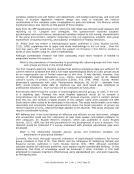
The questions that guide our research follow:
1. How can we productively conceptualize the term ―psychologically abusive group‖ and
the relevance of certain types of ―harm,‖ ―group variables,‖ and ―person variables‖ to
psychologically abusive groups?
Answering this question will require a series of conceptual essays [one of which, Dr.
Langone‘s essay ―Psychological Abuse,‖ has already been published in Cultic Studies
Journal, 9(2), 1992] that will lay the groundwork for a psychological theory of group-
perpetrated psychological abuse. This theory should clearly imply empirical studies that can
test the theory‘s validity.
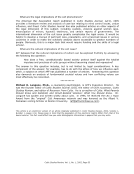
How can we productively measure group psychological abuse and relevant group,
person, and harm variables?
Drs. William Chambers, Michael Langone, and Arthur Dole developed the 28-item Group
Psychological Abuse Scale (GPA Scale) from a factor analysis of the responses of 308
subjects rating their groups on 112 questions [Cultic Studies Journal, 11(1), 1994]. The
GPA Scale needs to undergo a full course of psychometric development, including reliability
and validity studies and the collection of data from a wide range of cultic and noncultic
groups. If the GPA Scale lives up to its promise, it should prove useful in distinguishing
cultic from noncultic groups and in differentiating various types of cultic groups. It will
provide, for the first time, an objective measure of the ―cultishness‖ of a group.
Drs. Langone and Chambers presented a paper with Ohio University graduate student, Peter
Malinoski to the American Psychological Association. This paper, which is available from AFF,
summarizes research with the Group Psychological Abuse Scale (GPA) through 1996.
Dr. Rod Marshall and Lois Kendall of Buckinghamshire College in London gave an updated
report on their research, which used the GPA along with other instruments, at AFF‘s annual
conference in Seattle, April 28-29, 2000 (they gave a report at the 1999 conference as
well). Other researchers are also collecting or analyzing data involving the GPA.
How to cope with apparent helplessness without losing hope
AFF Family Workshops are organized and coordinated by Livia Bardin, M.S.W., a therapist in
private practice. Ms. Bardin serves on AFF‘s Social Work Committee and Family Education
Service Advisory Board and is editor of the newsletter of the Greater Washington Society of
Clinical Social Workers. She is author of Coping with Cult Involvement: A Handbook for
Families and Friends.
Appendix D: Research Plan
One of AFF‘s most important goals is to inspire, encourage, coordinate, support and
contribute to research initiated by AFF staff, volunteer professionals, and others who are
interested in the cult problem. In September 1994 AFF‘s Dr. Michael Langone organized a
two-day research-planning meeting in which 16 professionals convened to discuss ongoing
and planned research. A second meeting took place in April 1995. Wellspring Retreat and
Resource Center hosted both meetings. The research outline below summarizes the results
of these meetings and subsequent discussions with AFF research advisors. This outline
continues to guide our research work. (In order to enhance scientific clarity the term,
―psychologically abusive group,‖ is used instead of ―cult,‖ with which considerable ambiguity
and controversy is associated.) Although much useful research has been conducted, fully
implementing this ambitious research plan will take many years. Those interested in
contributing to the research program outlined below should contact Dr. Langone (AFF, P.O.
Box 2265, Bonita Springs, FL 34133 aff@affcultinfoserve.com).
The questions that guide our research follow:
1. How can we productively conceptualize the term ―psychologically abusive group‖ and
the relevance of certain types of ―harm,‖ ―group variables,‖ and ―person variables‖ to
psychologically abusive groups?
Answering this question will require a series of conceptual essays [one of which, Dr.
Langone‘s essay ―Psychological Abuse,‖ has already been published in Cultic Studies
Journal, 9(2), 1992] that will lay the groundwork for a psychological theory of group-
perpetrated psychological abuse. This theory should clearly imply empirical studies that can
test the theory‘s validity.
How can we productively measure group psychological abuse and relevant group,
person, and harm variables?
Drs. William Chambers, Michael Langone, and Arthur Dole developed the 28-item Group
Psychological Abuse Scale (GPA Scale) from a factor analysis of the responses of 308
subjects rating their groups on 112 questions [Cultic Studies Journal, 11(1), 1994]. The
GPA Scale needs to undergo a full course of psychometric development, including reliability
and validity studies and the collection of data from a wide range of cultic and noncultic
groups. If the GPA Scale lives up to its promise, it should prove useful in distinguishing
cultic from noncultic groups and in differentiating various types of cultic groups. It will
provide, for the first time, an objective measure of the ―cultishness‖ of a group.
Drs. Langone and Chambers presented a paper with Ohio University graduate student, Peter
Malinoski to the American Psychological Association. This paper, which is available from AFF,
summarizes research with the Group Psychological Abuse Scale (GPA) through 1996.
Dr. Rod Marshall and Lois Kendall of Buckinghamshire College in London gave an updated
report on their research, which used the GPA along with other instruments, at AFF‘s annual
conference in Seattle, April 28-29, 2000 (they gave a report at the 1999 conference as
well). Other researchers are also collecting or analyzing data involving the GPA.