Cultic Studies Review, Vol. 1, No. 1, 2002, Page 15
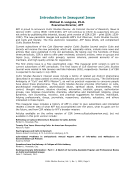
The Internet has markedly changed how AFF functions. Until the late 1990s AFF
traditionally depended upon journalists to get our message out. Most people who contacted
us found out about us either through word of mouth or from a newspaper article. Today,
because so many people, including nearly all journalists, are on the Web, more than 90% of
the people who directly contact us --usually by e-mail --for the first time found us on the
Web. Inquirers come from all over the world. Indeed, inspection of our Web site‘s statistics
reveals that during a typical week the site will be visited by more than 10,000 people from
about 70 countries.
Through the Internet more people can take advantage of AFF‘s resources in a couple of
months than during the prior 20 years.
For this reason AFF decided several years ago to transform the organization so as to make it
Internet-based. This has been a daunting and unpredictably time-consuming endeavor, for
the transformation must occur while we continue to do all the work we have traditionally
done – without any increase in manpower.
We have made a great deal of progress. For example, all Cultic Studies Journal articles and
book reviews are now available in electronic format. With a few clicks of a mouse and within
a few seconds we can send five CSJ reprints to an inquirer in Ceylon. We are gradually
converting past issues of Cult Observer to electronic format. When this project is
completed, we will be able to e-mail about 4000 articles on more than 1000 different groups
as easily as we can now send CSJ articles. We are also looking into methods of making such
material available on the Web. In addition, we have collected and filed in our electronic
folders more than 15,000 newspaper articles on more than 2000 groups. Our goal is to put
together an electronic library that will have these resources as well as selected books,
articles from journals other than our own, and even videos. How rapidly we progress
toward the completion of this goal will depend upon how generously our supporters continue
to donate.
We are also developing new Web sites. In 2000 a special grant enabled us to launch a
project that seeks to use the Internet to provide spiritual and religious seekers, youth in
particular, with resources reviewed and recommended by an ecumenical advisory board of
experts. AFF‘s partner in this project is the Center for Youth Studies in Hamilton,
Massachusetts, directed by Rev. Dean Borgman, the Charles E. Culpepper Professor of
Youth Ministries at Gordon-Conwell Theological Seminary. This project resulted from our
observation that cultic and other dubious groups often project a more sophisticated Web
presence than mainstream religions. Such observations are especially troubling given that
research indicates that 4% of the more than 8,000,000 teens who use the Internet do so for
religious reasons and 16% of teens say the Internet will substitute for their current church
experiences within the next five years (Lutz, A., &Borgman, D. Teenage Spirituality and the
Internet -manuscript in preparation).
We believe that it is important to develop and effectively market a Web site that will direct
seekers to credible information sources that will not exploit or mislead them. This project
revolves around a Web site, faithresource.org, which contains, or will contain, the following
sections, in addition to information on the sponsoring organizations and the project‘s
advisory board:
Religion Showcase -Provides lists of Web sites, books, articles, periodicals,
organizations, and other resources on the world‘s major faith traditions and the
major branches of Christianity.
Spiritual Abuse -Directs visitors to AFF‘s Web site and other resources focusing on the
ways in which spiritual seekers can be exploited, manipulated, and abused.
The Internet has markedly changed how AFF functions. Until the late 1990s AFF
traditionally depended upon journalists to get our message out. Most people who contacted
us found out about us either through word of mouth or from a newspaper article. Today,
because so many people, including nearly all journalists, are on the Web, more than 90% of
the people who directly contact us --usually by e-mail --for the first time found us on the
Web. Inquirers come from all over the world. Indeed, inspection of our Web site‘s statistics
reveals that during a typical week the site will be visited by more than 10,000 people from
about 70 countries.
Through the Internet more people can take advantage of AFF‘s resources in a couple of
months than during the prior 20 years.
For this reason AFF decided several years ago to transform the organization so as to make it
Internet-based. This has been a daunting and unpredictably time-consuming endeavor, for
the transformation must occur while we continue to do all the work we have traditionally
done – without any increase in manpower.
We have made a great deal of progress. For example, all Cultic Studies Journal articles and
book reviews are now available in electronic format. With a few clicks of a mouse and within
a few seconds we can send five CSJ reprints to an inquirer in Ceylon. We are gradually
converting past issues of Cult Observer to electronic format. When this project is
completed, we will be able to e-mail about 4000 articles on more than 1000 different groups
as easily as we can now send CSJ articles. We are also looking into methods of making such
material available on the Web. In addition, we have collected and filed in our electronic
folders more than 15,000 newspaper articles on more than 2000 groups. Our goal is to put
together an electronic library that will have these resources as well as selected books,
articles from journals other than our own, and even videos. How rapidly we progress
toward the completion of this goal will depend upon how generously our supporters continue
to donate.
We are also developing new Web sites. In 2000 a special grant enabled us to launch a
project that seeks to use the Internet to provide spiritual and religious seekers, youth in
particular, with resources reviewed and recommended by an ecumenical advisory board of
experts. AFF‘s partner in this project is the Center for Youth Studies in Hamilton,
Massachusetts, directed by Rev. Dean Borgman, the Charles E. Culpepper Professor of
Youth Ministries at Gordon-Conwell Theological Seminary. This project resulted from our
observation that cultic and other dubious groups often project a more sophisticated Web
presence than mainstream religions. Such observations are especially troubling given that
research indicates that 4% of the more than 8,000,000 teens who use the Internet do so for
religious reasons and 16% of teens say the Internet will substitute for their current church
experiences within the next five years (Lutz, A., &Borgman, D. Teenage Spirituality and the
Internet -manuscript in preparation).
We believe that it is important to develop and effectively market a Web site that will direct
seekers to credible information sources that will not exploit or mislead them. This project
revolves around a Web site, faithresource.org, which contains, or will contain, the following
sections, in addition to information on the sponsoring organizations and the project‘s
advisory board:
Religion Showcase -Provides lists of Web sites, books, articles, periodicals,
organizations, and other resources on the world‘s major faith traditions and the
major branches of Christianity.
Spiritual Abuse -Directs visitors to AFF‘s Web site and other resources focusing on the
ways in which spiritual seekers can be exploited, manipulated, and abused.