Cultic Studies Review, Vol. 1, No. 1, 2002, Page 12
Rosedale also gave a talk on new age training programs and business to the annual meeting
of the Association of Private Enterprise Education in Las Vegas, Nevada in 1996.
In the late 1980s AFF witnessed a spate of Satanism inquiries arising from what in hindsight
was a media craze. In order to provide guidance to young people and educators, AFF‘s Dr.
Michael Langone and Linda Blood began work on a paper. This manuscript, however, soon
grew into a book, Satanism and Occult-Related Violence, which AFF published in 1990. The
book‘s goal was to give some professional balance to the subject. The authors reviewed the
relevant professional literature, provided some historical background, and offered concrete
advice for families and mental health professionals. The book also addressed the credibility
issue with regard to adult survivors of ritualistic abuse --what was to grow into the false
memory controversy.
Throughout its history AFF staff and advisors have given talks at universities and
professional associations in order to educate academicians, students, and helping
professionals. They have also consulted with journalists on hundreds, if not thousands, of
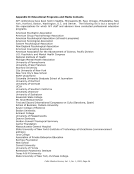
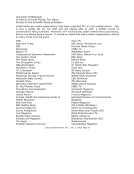
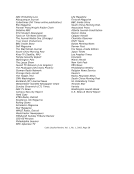
occasions. Appendix B provides a list of some of the more noteworthy educational programs
and media outlets to which AFF has contributed.
Project Recovery
In 1990 AFF turned its research focus from families to former group members, for it had
become clear that the majority of former members approaching AFF for help had left their
groups on their own without any parental intervention. Many of these individuals were
seriously distressed and needed guidance and support. In response to this need AFF
initiated a series of study groups, composed of AFF‘s volunteer professionals (i.e., members
of its advisory board, which numbered about 120 by 1990) under the rubric ―Project
Recovery.‖
The following are merely the more noteworthy achievements that resulted from the work of
these study groups:
Dr. Edward Lottick‘s survey of 1396 primary care physicians in Pennsylvania, conducted
under the auspices of the Pennsylvania Medical Society. Among other findings, this
study reported that 2.2% of subjects said that either they or an immediate family
member had been involved in a cultic group. Pennsylvania Medicine (February, 1993)
published the results of Dr. Edward Lottick‘s survey. This study, combined with other
research data, suggests that approximately one percent, or about two to three
million Americans have had cultic involvements. Since other research suggests that
people stay in their groups an average of about six years, we estimate that several
tens of thousands of individuals enter and leave cultic groups each year.
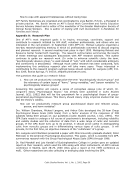
In 1992 AFF conducted its first weekend workshop for former group members at the
Stony Point Retreat Center, Stony Point, New York. At least one weekend workshop
has been held every year since, and one-day ex-member workshops are typically
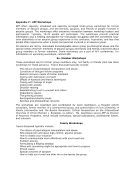
held prior to AFF‘s annual conference. See Appendix C for a description of AFF
workshops.
In 1990 Dr. Langone surveyed 308 former group members from 101 different groups.
The Group Psychological Abuse Scale (GPA), the first measure of ―cultishness,‖ was
derived from these subjects‘ responses to a segment of the questionnaire. CSJ
published a report on the development of the GPA in 1994. A series of studies in the
U.S., England, and most recently Spain have used or are using the GPA as a
measure.
Dr. Langone and Dr. William Chambers conducted another survey of 108 ex-members in
order to evaluate how they related to different terms and discovered that ex-
Rosedale also gave a talk on new age training programs and business to the annual meeting
of the Association of Private Enterprise Education in Las Vegas, Nevada in 1996.
In the late 1980s AFF witnessed a spate of Satanism inquiries arising from what in hindsight
was a media craze. In order to provide guidance to young people and educators, AFF‘s Dr.
Michael Langone and Linda Blood began work on a paper. This manuscript, however, soon
grew into a book, Satanism and Occult-Related Violence, which AFF published in 1990. The
book‘s goal was to give some professional balance to the subject. The authors reviewed the
relevant professional literature, provided some historical background, and offered concrete
advice for families and mental health professionals. The book also addressed the credibility
issue with regard to adult survivors of ritualistic abuse --what was to grow into the false
memory controversy.
Throughout its history AFF staff and advisors have given talks at universities and
professional associations in order to educate academicians, students, and helping
professionals. They have also consulted with journalists on hundreds, if not thousands, of
occasions. Appendix B provides a list of some of the more noteworthy educational programs
and media outlets to which AFF has contributed.
Project Recovery
In 1990 AFF turned its research focus from families to former group members, for it had
become clear that the majority of former members approaching AFF for help had left their
groups on their own without any parental intervention. Many of these individuals were
seriously distressed and needed guidance and support. In response to this need AFF
initiated a series of study groups, composed of AFF‘s volunteer professionals (i.e., members
of its advisory board, which numbered about 120 by 1990) under the rubric ―Project
Recovery.‖
The following are merely the more noteworthy achievements that resulted from the work of
these study groups:
Dr. Edward Lottick‘s survey of 1396 primary care physicians in Pennsylvania, conducted
under the auspices of the Pennsylvania Medical Society. Among other findings, this
study reported that 2.2% of subjects said that either they or an immediate family
member had been involved in a cultic group. Pennsylvania Medicine (February, 1993)
published the results of Dr. Edward Lottick‘s survey. This study, combined with other
research data, suggests that approximately one percent, or about two to three
million Americans have had cultic involvements. Since other research suggests that
people stay in their groups an average of about six years, we estimate that several
tens of thousands of individuals enter and leave cultic groups each year.
In 1992 AFF conducted its first weekend workshop for former group members at the
Stony Point Retreat Center, Stony Point, New York. At least one weekend workshop
has been held every year since, and one-day ex-member workshops are typically
held prior to AFF‘s annual conference. See Appendix C for a description of AFF
workshops.
In 1990 Dr. Langone surveyed 308 former group members from 101 different groups.
The Group Psychological Abuse Scale (GPA), the first measure of ―cultishness,‖ was
derived from these subjects‘ responses to a segment of the questionnaire. CSJ
published a report on the development of the GPA in 1994. A series of studies in the
U.S., England, and most recently Spain have used or are using the GPA as a
measure.
Dr. Langone and Dr. William Chambers conducted another survey of 108 ex-members in
order to evaluate how they related to different terms and discovered that ex-