VOLUME 9 |ISSUE 2 |2018 79
G
roup dynamics are powerful, and history has
shown that they can be used to harm or to heal.
Human beings are social animals and, historically,
have consistently formed themselves into groups.
Group behavior tends to be contagious (LeBon, as discussed in
Freud, 1921/1986, pp. 72–81). Experimental psychologists and
sociologists have time and again proven that the whole of the
group is greater than the sum of the individual group members,
and that people in a group tend to act differently than they
would act as isolated individuals (Asch, 1952 Festinger, 1956).
Cult leaders are aware of this fact, and they use both the power
of the group and the idealization of the cult leader (Freud, 1921)
to infantilize and disempower their victims. They establish the
norm that only sycophantic, child-like behavior is tolerated
within the cult, and the cult group is used to monitor and
regulate that behavior. All cults use group dynamics to control
their members.
Of course, group dynamics that were used to induce cult
members to relinquish their autonomy can also be used to
help former cult members to regain their autonomy. Groups
are a particularly valuable method of helping former members
because groups give them the opportunity to relate to others
who have been through similar experiences, and to dispel the
sense that only the members of their cult were experiencing
the mystical singularity that they felt while they were in the cult.
Everything that happened to the former members happened to
other people in other cults, but they had different words for it.
Two of the major tasks that former cult members must
accomplish are regaining a sense of mastery over their
environment and a sense of trust in their own instincts. A
nurturing group can help them to feel more comfortable in
assuming a mature, independent, and self-directing stance, and
it can help them to trust others again. In a nurturing group, the
group facilitators encourage the members to grow by, in turn,
helping and being helped by one another.
In this section, we examine the use of groups in the healing
process for former cult members, and we present two recovery
models: a secular support group, described by Lorna Goldberg
and myself, and a faith-based support group, described by
Patrick Knapp.
The group that Lorna and I lead uses an open-ended discussion
model. Although we do not discourage discussions of spirituality
and faith, ours is a secular group, and we do not emphasize any
creed. There is no set agenda. The role of the group leaders is to
encourage the group to go in its own direction this direction
changes from month to month depending upon the makeup of
the group, how many people are attending, and which topics
are uppermost in the members’ minds that particular month.
Our group is, in most instances, limited to former cult members
although on occasion, with the group members’ permission, we
have opened the group to significant others.
The independent, faith-based support and recovery groups
that Patrick and Heidi Knapp cofacilitate, in contrast, place
more emphasis on covering a set agenda. The group leaders
present a curriculum with built-in flexibility and, if the members
of the group request it and can benefit from it, they will focus
on biblical passages and how scripture was distorted by the
members’ cults. The support-group members contract for a
12-week period. The facilitators suggest reading material and
homework. The Knapps’ groups serve two cohorts of clientele: (a)
former members and (b) friends and family members of current
or former members.
Characteristics that are common to both approaches are a
respect for the dignity of each group member, recognition that
there is no single path to recovery, and an appreciation of the
fact that the other group members who are struggling with
similar issues or who have struggled in the past with these issues
can offer invaluable comfort and hope to the other members of
the group. n
References
Asch, Solomon E. (1952). Social psychology (pp. 450–501). Englewood
Cliffs, NJ: Prentice Hall.
Festinger, Leon, Riecken, H. W., &Schacter, S. (1956) When prophecy
fails: A social and psychological study of a modern group that
predicted the destruction of the world. Minneapolis, MN: University of
Minnesota Press.
Freud, S. (1986). Group psychology and the analysis of the ego. In
J. Strachey (Ed. and Trans.), The standard edition of the complete
psychological works of Sigmund Freud (Vol. 18, pp. 67–134). London,
UK New York, NY: Hogarth Press. (Original work published 1921.)
About the Author
William Goldberg, LCSW, PsyA, is a clinical
social worker and psychoanalyst with more
than forty years’ experience working with
former cult members. He and his wife, Lorna,
colead a support group for former cult
members. This group has been meeting for
more than thirty-five years and is the oldest
group of its kind in the world. In 2007, Bill
retired from the Rockland County, New York Department of
Mental Health, where he directed several programs and clinics.
He is presently an adjunct professor in the social work and social
science departments of Dominican College, and he is on the
faculty of the Institute for Psychoanalytic Studies. Bill is a frequent
speaker at ICSA conferences, and he and Lorna have been the
recipients of the Authentic CAN Hall of Fame Award and the Leo
J. Ryan Award. In 2010, Bill was the recipient of ICSA’s Lifetime
Achievement Award. n
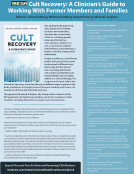
The following overview was originally published in Cult Recovery: A Clinician’s Guide to Working With Former Members and Families (2017, pp.
261–262), edited by Lorna Golderg, William Goldberg, Rosanne Henry, and Michael Langone (published by the International Cultic Studies
Association).
G
roup dynamics are powerful, and history has
shown that they can be used to harm or to heal.
Human beings are social animals and, historically,
have consistently formed themselves into groups.
Group behavior tends to be contagious (LeBon, as discussed in
Freud, 1921/1986, pp. 72–81). Experimental psychologists and
sociologists have time and again proven that the whole of the
group is greater than the sum of the individual group members,
and that people in a group tend to act differently than they
would act as isolated individuals (Asch, 1952 Festinger, 1956).
Cult leaders are aware of this fact, and they use both the power
of the group and the idealization of the cult leader (Freud, 1921)
to infantilize and disempower their victims. They establish the
norm that only sycophantic, child-like behavior is tolerated
within the cult, and the cult group is used to monitor and
regulate that behavior. All cults use group dynamics to control
their members.
Of course, group dynamics that were used to induce cult
members to relinquish their autonomy can also be used to
help former cult members to regain their autonomy. Groups
are a particularly valuable method of helping former members
because groups give them the opportunity to relate to others
who have been through similar experiences, and to dispel the
sense that only the members of their cult were experiencing
the mystical singularity that they felt while they were in the cult.
Everything that happened to the former members happened to
other people in other cults, but they had different words for it.
Two of the major tasks that former cult members must
accomplish are regaining a sense of mastery over their
environment and a sense of trust in their own instincts. A
nurturing group can help them to feel more comfortable in
assuming a mature, independent, and self-directing stance, and
it can help them to trust others again. In a nurturing group, the
group facilitators encourage the members to grow by, in turn,
helping and being helped by one another.
In this section, we examine the use of groups in the healing
process for former cult members, and we present two recovery
models: a secular support group, described by Lorna Goldberg
and myself, and a faith-based support group, described by
Patrick Knapp.
The group that Lorna and I lead uses an open-ended discussion
model. Although we do not discourage discussions of spirituality
and faith, ours is a secular group, and we do not emphasize any
creed. There is no set agenda. The role of the group leaders is to
encourage the group to go in its own direction this direction
changes from month to month depending upon the makeup of
the group, how many people are attending, and which topics
are uppermost in the members’ minds that particular month.
Our group is, in most instances, limited to former cult members
although on occasion, with the group members’ permission, we
have opened the group to significant others.
The independent, faith-based support and recovery groups
that Patrick and Heidi Knapp cofacilitate, in contrast, place
more emphasis on covering a set agenda. The group leaders
present a curriculum with built-in flexibility and, if the members
of the group request it and can benefit from it, they will focus
on biblical passages and how scripture was distorted by the
members’ cults. The support-group members contract for a
12-week period. The facilitators suggest reading material and
homework. The Knapps’ groups serve two cohorts of clientele: (a)
former members and (b) friends and family members of current
or former members.
Characteristics that are common to both approaches are a
respect for the dignity of each group member, recognition that
there is no single path to recovery, and an appreciation of the
fact that the other group members who are struggling with
similar issues or who have struggled in the past with these issues
can offer invaluable comfort and hope to the other members of
the group. n
References
Asch, Solomon E. (1952). Social psychology (pp. 450–501). Englewood
Cliffs, NJ: Prentice Hall.
Festinger, Leon, Riecken, H. W., &Schacter, S. (1956) When prophecy
fails: A social and psychological study of a modern group that
predicted the destruction of the world. Minneapolis, MN: University of
Minnesota Press.
Freud, S. (1986). Group psychology and the analysis of the ego. In
J. Strachey (Ed. and Trans.), The standard edition of the complete
psychological works of Sigmund Freud (Vol. 18, pp. 67–134). London,
UK New York, NY: Hogarth Press. (Original work published 1921.)
About the Author
William Goldberg, LCSW, PsyA, is a clinical
social worker and psychoanalyst with more
than forty years’ experience working with
former cult members. He and his wife, Lorna,
colead a support group for former cult
members. This group has been meeting for
more than thirty-five years and is the oldest
group of its kind in the world. In 2007, Bill
retired from the Rockland County, New York Department of
Mental Health, where he directed several programs and clinics.
He is presently an adjunct professor in the social work and social
science departments of Dominican College, and he is on the
faculty of the Institute for Psychoanalytic Studies. Bill is a frequent
speaker at ICSA conferences, and he and Lorna have been the
recipients of the Authentic CAN Hall of Fame Award and the Leo
J. Ryan Award. In 2010, Bill was the recipient of ICSA’s Lifetime
Achievement Award. n
The following overview was originally published in Cult Recovery: A Clinician’s Guide to Working With Former Members and Families (2017, pp.
261–262), edited by Lorna Golderg, William Goldberg, Rosanne Henry, and Michael Langone (published by the International Cultic Studies
Association).