7 VOLUME 9 |ISSUE 2 |2018
Their needs may be extensive, and they may lack the
customary support of friends or family members who remain
in the group.
Misinterpretation of harmless spiritual behavior. Realize
that spiritual abuse victims may perceive the enthusiasm you
feel for your faith as “pushiness,” “pressure,” or “manipulation.”
They may view your good intentions through a mental filter
clouded by years of abuse.
What You Can Do for Victims of Spiritual
Abuse
Be patient. Give them space and time to feel comfortable
with you. If they rebuff you or show ingratitude, keep in mind
that their response may be related to sometimes horrendous
abuse of which you may have no knowledge.
Be gentle. Many spiritual-abuse victims continue to be very
hard on themselves, as they were taught to be in their groups.
Being gentle with them may help them be gentle with
themselves. Earn their trust through patience, kindness, and
understanding.
Listen to them. Encourage them to talk to you, rather than
to listen to you. Avoid a lecturing tone. Even if they may
criticize individuals, groups, or organizations that you respect,
hear them out. Often, it is more important that someone
abused spiritually speak honestly, not correctly. The pressing
challenge for them is to overcome the fear of speaking their
mind, not to figure out which opinion is correct.
Encourage, encourage, encourage! The self-esteem of a
spiritually abused person may be at rock bottom. You have
the opportunity to foster a more positive self-concept via
encouragement. If you must criticize, be tactful.
Encourage them also to get information and assistance
from resources that specialize in this area (e.g.,
International Cultic Studies Association).
Encourage them to ask questions. Help them find their own
answers. Respect their views, even when you disagree.
Laugh with them. Encouraging and joining former members
in humor can be a great antidote for their experiences
because in many groups humor may have been forbidden.
Be confidential. Former members of some abusive groups
are accustomed to having others seek to acquire and
then misuse personal information. For this reason, they
are understandably sensitive to perceived violations of
confidentiality. Explain the exact limits of confidentiality
under which you work. You should not share information with
others unless the spiritually abused person knows that you
will do so.
Let go! However good their intentions, helpers should be
vigilant about how their own needs may sometimes cause
them to hold onto a helper-helpee relationship when
they should let go. Spiritually abused persons may begin
a relationship as emotionally needy however, if they have
been genuinely helped, they will become independent and
self-confident. Helpers should be careful not to deceive
themselves and unintentionally try to maintain a relationship
that has come to bring more benefits to the helper than the
helpee. If you’ve done your job, you should let go and permit
the helpee to go on with her life. n
About the Author
Michael D. Langone, PhD, received a
doctorate in Counseling Psychology from
the University of California, Santa Barbara
in 1979. Since 1981 he has been Executive
Director of International Cultic Studies
Association (ICSA). He was the founding
editor of Cultic Studies Journal (CSJ) the
editor of CSJ’s successor, Cultic Studies Review and editor
of Recovery From Cults: Help for Victims of Psychological and
Spiritual Abuse (an alternate of the Behavioral Science Book
Service). He is coauthor of Cults: What Parents Should Know
and Satanism and Occult-Related Violence: What You Should
Know. Dr. Langone, ICSA Today’s Editor-in-Chief, has been
the chief designer and coordinator of ICSA’s international
conferences. In 1995, he was honored as the Albert V.
Danielsen visiting Scholar at Boston University. He has
authored numerous articles in professional journals and
books, and spoken widely to dozens of lay and professional
groups, various university audiences, and numerous radio
and television stations. In 2017, he was coeditor of ICSA’s
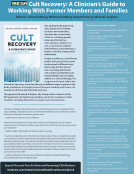
book Cult Recovery: A Clinician’s Guide to Working With Former
Members and Families. n
…helpers should be
vigilant about how their
own needs may sometimes
cause them to hold onto a
helper-helpee relationship
when they should let go.
Their needs may be extensive, and they may lack the
customary support of friends or family members who remain
in the group.
Misinterpretation of harmless spiritual behavior. Realize
that spiritual abuse victims may perceive the enthusiasm you
feel for your faith as “pushiness,” “pressure,” or “manipulation.”
They may view your good intentions through a mental filter
clouded by years of abuse.
What You Can Do for Victims of Spiritual
Abuse
Be patient. Give them space and time to feel comfortable
with you. If they rebuff you or show ingratitude, keep in mind
that their response may be related to sometimes horrendous
abuse of which you may have no knowledge.
Be gentle. Many spiritual-abuse victims continue to be very
hard on themselves, as they were taught to be in their groups.
Being gentle with them may help them be gentle with
themselves. Earn their trust through patience, kindness, and
understanding.
Listen to them. Encourage them to talk to you, rather than
to listen to you. Avoid a lecturing tone. Even if they may
criticize individuals, groups, or organizations that you respect,
hear them out. Often, it is more important that someone
abused spiritually speak honestly, not correctly. The pressing
challenge for them is to overcome the fear of speaking their
mind, not to figure out which opinion is correct.
Encourage, encourage, encourage! The self-esteem of a
spiritually abused person may be at rock bottom. You have
the opportunity to foster a more positive self-concept via
encouragement. If you must criticize, be tactful.
Encourage them also to get information and assistance
from resources that specialize in this area (e.g.,
International Cultic Studies Association).
Encourage them to ask questions. Help them find their own
answers. Respect their views, even when you disagree.
Laugh with them. Encouraging and joining former members
in humor can be a great antidote for their experiences
because in many groups humor may have been forbidden.
Be confidential. Former members of some abusive groups
are accustomed to having others seek to acquire and
then misuse personal information. For this reason, they
are understandably sensitive to perceived violations of
confidentiality. Explain the exact limits of confidentiality
under which you work. You should not share information with
others unless the spiritually abused person knows that you
will do so.
Let go! However good their intentions, helpers should be
vigilant about how their own needs may sometimes cause
them to hold onto a helper-helpee relationship when
they should let go. Spiritually abused persons may begin
a relationship as emotionally needy however, if they have
been genuinely helped, they will become independent and
self-confident. Helpers should be careful not to deceive
themselves and unintentionally try to maintain a relationship
that has come to bring more benefits to the helper than the
helpee. If you’ve done your job, you should let go and permit
the helpee to go on with her life. n
About the Author
Michael D. Langone, PhD, received a
doctorate in Counseling Psychology from
the University of California, Santa Barbara
in 1979. Since 1981 he has been Executive
Director of International Cultic Studies
Association (ICSA). He was the founding
editor of Cultic Studies Journal (CSJ) the
editor of CSJ’s successor, Cultic Studies Review and editor
of Recovery From Cults: Help for Victims of Psychological and
Spiritual Abuse (an alternate of the Behavioral Science Book
Service). He is coauthor of Cults: What Parents Should Know
and Satanism and Occult-Related Violence: What You Should
Know. Dr. Langone, ICSA Today’s Editor-in-Chief, has been
the chief designer and coordinator of ICSA’s international
conferences. In 1995, he was honored as the Albert V.
Danielsen visiting Scholar at Boston University. He has
authored numerous articles in professional journals and
books, and spoken widely to dozens of lay and professional
groups, various university audiences, and numerous radio
and television stations. In 2017, he was coeditor of ICSA’s
book Cult Recovery: A Clinician’s Guide to Working With Former
Members and Families. n
…helpers should be
vigilant about how their
own needs may sometimes
cause them to hold onto a
helper-helpee relationship
when they should let go.