10 ICSA TODAY 11 VOLUME 10 |ISSUE 3 |2019
Undue Influence, Fraud and Misrepresentation. This report reflected
AFF’s desire to support legal research with practical implications for
former group members (Hominek, 1995).
• In 1996, AFF published The Boston Movement: Critical Perspectives
on the International Churches of Christ (second edition published in
1998). Edited by AFF’s Carol Giambalvo and Herbert Rosedale, this
book provided historical background, personal accounts, and analytical
chapters on the group about which AFF had received more inquiries
than any other during the 1990s.
Though during this era AFF’s focus shifted to former members, the organization
continued to address the needs of families. Cults: What Parents Should Know,
published in 1988, was written by a former group member, Joan Carol Ross,
and counselor Dr. Michael Langone. This book addressed issues of assessment,
defining the problem, communication, planning, and dealing with postcult
difficulties. In 1992, AFF published the first edition of Carol Giambalvo’s Exit
Counseling: A Family Intervention. This book complemented Cults: What Parents
Should Know by providing practical details and advice for families considering an
exit counseling. The book’s publication was a landmark event in the supplanting
of deprogramming by noncoercive exit counseling approaches. A revised, second
edition of this book was published in 1996 (Giambalvo, 1996). And in 1996,
Livia Bardin, MSW, led AFF’s first workshop for families (these have been held
nearly every year since in conjunction with the annual conference). In 2000, Livia
completed a book based on her workshops, Coping with Cult Involvement:
A Handbook for Families and Friends (Bardin, 2000). This book helps families
achieve a level of understanding far deeper than that provided by other written
resources.
A major initiative during this era was to pay attention not just to recovery, but also
to education about cults and cultic dynamics. In 1987, AFF initiated a preventive
educational program, the International Cult Education Program (ICEP). ICEP’s
goals were to develop educational resources for the general public, young people,
educators, and clergy to encourage educational programs for youth and to
provide support and guidance to those conducting such programs. Founded
and directed by Marcia Rudin until her retirement in 1998, ICEP produced
two videotapes, Cults: Saying “No” Under Pressure and After the Cult: Recovering
Together a book, Cultism on Campus: Commentaries and Guidelines for College
and University Administrators (revised in 1996 under the title Cults on Campus:
Continuing Challenge) a lesson plan a collection of pseudoscience fact sheets
four educational flyers and the semiannual newsletter, Young People and Cults.
ICEP made hundreds of contacts with press, TV, and radio media, and gave many
lectures to the general public, universities, and other organizations. Funding cuts
prevented AFF from maintaining ICEP as a distinct program, although its functions
continue to the extent resources permit.
That many people held AFF’s educational activities in high esteem became evident
in June 1995, when Herbert Rosedale was asked to deliver a commencement
address to the graduating class of the State University of New York’s Institute of
Technology at Utica/Rome, “Promises and Illusions” (Rosedale, 1994).
“Family intervention
specialists knowledgeable
about cults and mind
control have inherited the
label ‘exit counselors’ from
the network of individuals
and organizations providing
information on cults.
The term exit counselor
originally came into favor
in order to distinguish
voluntary interventions
with cult members from
‘deprogramming,’ which
was associated with
physical restraint ...Exit
counseling, however,
does not adequately
describe most voluntary
interventions today.
Counseling often connotes
a systematic attempt
to help clients change
their behavior. Most exit
counselors, on the other
hand, focus on sharing
information rather than
changing behavior,
although clients may
change their behavior as
a result of the information
they receive....”
[From Giambalvo, C. (1992). Exit
Counseling: A Family Intervention
(p. ix). Bonita Springs, FL:
American Family Foundation.]
AFF’s website was first posted on the Internet in 1995. Launched initially
through the volunteer efforts of Patrick Ryan, the site received high ratings and
some awards by both Internet and health-ratings sites. The site has changed
and grown considerably over the years to include, among other resources, an
e-library of more than twenty thousand articles. Today, the Internet is ICSA’s
primary communication venue.
AFF/ICSA has organized conferences since its founding. The organization did
not begin annual conferences until 1999, when the conference was held at
the University of Minnesota. In 2005, the annual conference was held for the
first time outside the USA at the Autonomous University of Madrid. Since then,
the annual conference has alternated between North America and Europe (see
ICSA’s events archive, available online at https://www.icsahome.com/events/
eventsarchive).
The Board of Directors Era:
2004–Present
Herb Rosedale died in November 2003. In December 2003, two other AFF
directors—also pioneers in the cult awareness movement—died: Dr. David
Halperin and Dr. Margaret Singer.
Michael Langone, AFF’s Executive Director, realized that no individual could step
into Herb Rosedale’s shoes, so it was vital that the organization put together
an active Board of Directors that would guide the organization into the future.
Discussions with key people in the AFF network made clear that the Board must
consist of individuals with a deep understanding of the issues and a capacity to
work cooperatively.
In 2004, Alan Scheflin, Professor of Law at Santa Clara University Law School,
was elected the first President of the new Board.
One of the first challenges the new Board undertook was the question of
changing the name of AFF—American Family Foundation. In 1979, this was
a reasonable name for the organization. By 2004, however, the organization
was mainly focused on former cult members, not parents, and had become
international in its reach. Moreover, the AFF name had taken on a right-wing
political connotation in the minds of many.
Several dozen people carefully deliberated for several months. Because AFF had
become international in scope and was a growing and coordinated network
of interested individuals, and since research, or study, formed the bedrock
of AFF’s helping and educational endeavors, the current name seemed to fit:
International Cultic Studies Association (ICSA).
Since Herb Rosedale’s death, four persons have been elected to the ICSA
presidency: Alan Scheflin, Phil Elberg, Lorna Goldberg, and Steve Eichel, the
current President. The changes in leadership have occurred without rancor, as
have changes in the Board. Though Board members do not always agree, they
disagree respectfully and, after rational discussion, have been able to attain a
consensus, or at least a lack of opposition, on all decisions.
The new Board quickly realized that the children born into cults in the 1970s,
1980s, and 1990s were leaving cults in large numbers when they reached
adulthood. The term second-generation adult (SGA) was first used to describe
people born or raised in cultic groups. The Board also realized, as a result of
ICSA’s former-member workshops, which had included increasing numbers of
SGAs, that the SGA population had some needs that differed from those who
had joined groups as adults. Hence, in 2006, ICSA began weekend workshops
focusing on the distinct issues faced by people born or raised in cultic groups
Carol Giambalvo also ran reFOCUS, a
resource for former group members, and
cofounded ICSA’s annual Connecticut
Workshop for Those Born or Raised in
Cultic Groups.
Dr. Paul Martin founded and until his death
directed Wellspring, the longest-surviving
center devoted to people transitioning out
of destructive cultic groups.
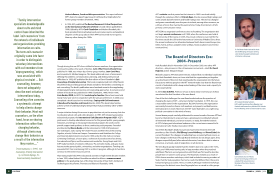
2015 Colorado Workshop Facilitators
(Left to right) Leona Furnari, Nancy Miquelon, Carol
Giambalvo, and Rosanne Henry facilitated ICSA’s Colorado
Recovery Workshop, which was held annually for 25 years.
Undue Influence, Fraud and Misrepresentation. This report reflected
AFF’s desire to support legal research with practical implications for
former group members (Hominek, 1995).
• In 1996, AFF published The Boston Movement: Critical Perspectives
on the International Churches of Christ (second edition published in
1998). Edited by AFF’s Carol Giambalvo and Herbert Rosedale, this
book provided historical background, personal accounts, and analytical
chapters on the group about which AFF had received more inquiries
than any other during the 1990s.
Though during this era AFF’s focus shifted to former members, the organization
continued to address the needs of families. Cults: What Parents Should Know,
published in 1988, was written by a former group member, Joan Carol Ross,
and counselor Dr. Michael Langone. This book addressed issues of assessment,
defining the problem, communication, planning, and dealing with postcult
difficulties. In 1992, AFF published the first edition of Carol Giambalvo’s Exit
Counseling: A Family Intervention. This book complemented Cults: What Parents
Should Know by providing practical details and advice for families considering an
exit counseling. The book’s publication was a landmark event in the supplanting
of deprogramming by noncoercive exit counseling approaches. A revised, second
edition of this book was published in 1996 (Giambalvo, 1996). And in 1996,
Livia Bardin, MSW, led AFF’s first workshop for families (these have been held
nearly every year since in conjunction with the annual conference). In 2000, Livia
completed a book based on her workshops, Coping with Cult Involvement:
A Handbook for Families and Friends (Bardin, 2000). This book helps families
achieve a level of understanding far deeper than that provided by other written
resources.
A major initiative during this era was to pay attention not just to recovery, but also
to education about cults and cultic dynamics. In 1987, AFF initiated a preventive
educational program, the International Cult Education Program (ICEP). ICEP’s
goals were to develop educational resources for the general public, young people,
educators, and clergy to encourage educational programs for youth and to
provide support and guidance to those conducting such programs. Founded
and directed by Marcia Rudin until her retirement in 1998, ICEP produced
two videotapes, Cults: Saying “No” Under Pressure and After the Cult: Recovering
Together a book, Cultism on Campus: Commentaries and Guidelines for College
and University Administrators (revised in 1996 under the title Cults on Campus:
Continuing Challenge) a lesson plan a collection of pseudoscience fact sheets
four educational flyers and the semiannual newsletter, Young People and Cults.
ICEP made hundreds of contacts with press, TV, and radio media, and gave many
lectures to the general public, universities, and other organizations. Funding cuts
prevented AFF from maintaining ICEP as a distinct program, although its functions
continue to the extent resources permit.
That many people held AFF’s educational activities in high esteem became evident
in June 1995, when Herbert Rosedale was asked to deliver a commencement
address to the graduating class of the State University of New York’s Institute of
Technology at Utica/Rome, “Promises and Illusions” (Rosedale, 1994).
“Family intervention
specialists knowledgeable
about cults and mind
control have inherited the
label ‘exit counselors’ from
the network of individuals
and organizations providing
information on cults.
The term exit counselor
originally came into favor
in order to distinguish
voluntary interventions
with cult members from
‘deprogramming,’ which
was associated with
physical restraint ...Exit
counseling, however,
does not adequately
describe most voluntary
interventions today.
Counseling often connotes
a systematic attempt
to help clients change
their behavior. Most exit
counselors, on the other
hand, focus on sharing
information rather than
changing behavior,
although clients may
change their behavior as
a result of the information
they receive....”
[From Giambalvo, C. (1992). Exit
Counseling: A Family Intervention
(p. ix). Bonita Springs, FL:
American Family Foundation.]
AFF’s website was first posted on the Internet in 1995. Launched initially
through the volunteer efforts of Patrick Ryan, the site received high ratings and
some awards by both Internet and health-ratings sites. The site has changed
and grown considerably over the years to include, among other resources, an
e-library of more than twenty thousand articles. Today, the Internet is ICSA’s
primary communication venue.
AFF/ICSA has organized conferences since its founding. The organization did
not begin annual conferences until 1999, when the conference was held at
the University of Minnesota. In 2005, the annual conference was held for the
first time outside the USA at the Autonomous University of Madrid. Since then,
the annual conference has alternated between North America and Europe (see
ICSA’s events archive, available online at https://www.icsahome.com/events/
eventsarchive).
The Board of Directors Era:
2004–Present
Herb Rosedale died in November 2003. In December 2003, two other AFF
directors—also pioneers in the cult awareness movement—died: Dr. David
Halperin and Dr. Margaret Singer.
Michael Langone, AFF’s Executive Director, realized that no individual could step
into Herb Rosedale’s shoes, so it was vital that the organization put together
an active Board of Directors that would guide the organization into the future.
Discussions with key people in the AFF network made clear that the Board must
consist of individuals with a deep understanding of the issues and a capacity to
work cooperatively.
In 2004, Alan Scheflin, Professor of Law at Santa Clara University Law School,
was elected the first President of the new Board.
One of the first challenges the new Board undertook was the question of
changing the name of AFF—American Family Foundation. In 1979, this was
a reasonable name for the organization. By 2004, however, the organization
was mainly focused on former cult members, not parents, and had become
international in its reach. Moreover, the AFF name had taken on a right-wing
political connotation in the minds of many.
Several dozen people carefully deliberated for several months. Because AFF had
become international in scope and was a growing and coordinated network
of interested individuals, and since research, or study, formed the bedrock
of AFF’s helping and educational endeavors, the current name seemed to fit:
International Cultic Studies Association (ICSA).
Since Herb Rosedale’s death, four persons have been elected to the ICSA
presidency: Alan Scheflin, Phil Elberg, Lorna Goldberg, and Steve Eichel, the
current President. The changes in leadership have occurred without rancor, as
have changes in the Board. Though Board members do not always agree, they
disagree respectfully and, after rational discussion, have been able to attain a
consensus, or at least a lack of opposition, on all decisions.
The new Board quickly realized that the children born into cults in the 1970s,
1980s, and 1990s were leaving cults in large numbers when they reached
adulthood. The term second-generation adult (SGA) was first used to describe
people born or raised in cultic groups. The Board also realized, as a result of
ICSA’s former-member workshops, which had included increasing numbers of
SGAs, that the SGA population had some needs that differed from those who
had joined groups as adults. Hence, in 2006, ICSA began weekend workshops
focusing on the distinct issues faced by people born or raised in cultic groups
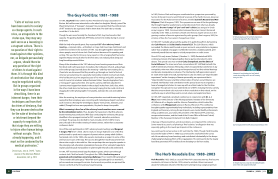
Carol Giambalvo also ran reFOCUS, a
resource for former group members, and
cofounded ICSA’s annual Connecticut
Workshop for Those Born or Raised in
Cultic Groups.
Dr. Paul Martin founded and until his death
directed Wellspring, the longest-surviving
center devoted to people transitioning out
of destructive cultic groups.
2015 Colorado Workshop Facilitators
(Left to right) Leona Furnari, Nancy Miquelon, Carol
Giambalvo, and Rosanne Henry facilitated ICSA’s Colorado
Recovery Workshop, which was held annually for 25 years.