8 ICSA TODAY 9 VOLUME 10 |ISSUE 3 |2019 6
Chappaqua, New York. This was the first of innumerable pro bono services that
benefited thousands of people during his lifetime. He spent countless hours over
the years advising families, former group members, clergy, helping professionals,
and others, sometimes going to his office on weekends to meet with people.
During the 1980s, Herb’s ability and dedication to the cause of AFF became more
and more apparent at annual advisory board meetings, and he was asked to
become President in 1988.
When Herb died on November 4, 2003, emails kept appearing in the AFF inbox
from people expressing their gratitude to him. These emails, which kept coming
for more than a month, were so numerous that we put together a special
Rosedale Memorial Collection (2003), the first 26 pages of which were the
spontaneous tributes of people touched by him. Over the years, Herb must have
given several million dollars of pro bono assistance to the people who sought his
help. His impact on AFF cannot be overestimated.
The closing paragraph of Michael Langone’s eulogy in the memorial collection
summarizes how Herb’s character affected AFF:
Herb has left a permanent imprint on AFF. The fundamental mission
of the organization reflects his good will: to help people hurt by cultic
groups. Our fundamental methods reflect his pursuit of truth: we study
the phenomenon scientifically and professionally to help people, to
the degree we are able, with truth and not illusion. And our governing
attitude reflects, I hope, his courage: We must remain open to dialogue,
to learning, to change, and we must be strong enough to stand against
those who hurt people with lies while standing up for those whom lies
have savaged. (Rosedale Memorial Collection, 2003)
All the cult educational organizations had been founded by concerned parents,
who during the 1980s were focused on “getting people out.” Herb was not stuck
in that box. He recognized that the future of the movement lay with former
members, more and more of whom were walking away from cultic groups and
entering the AFF network. These former members were not “kids.” They were
adults who wanted to help others affected by or potentially affected by the
exploitative manipulation that had caused them so much pain.
Because of this perspective, AFF in 1990 formally founded Project Recovery,
which reflected AFF’s increasing focus on former members. Project Recovery was
organized around task forces focused on research and assistance. The following
major achievements of AFF in the 1990s all arose from the task forces of Project
Recovery:
Research Studies
• Dr. Edward Lottick (1935–2015) surveyed 1,396 primary-care
physicians in Pennsylvania, under the auspices of the Pennsylvania
Medical Society. Among other findings, this study reported that 2.2%
of subjects said that either they or an immediate family member
had been involved in a cultic group. Pennsylvania Medicine (Lottick,
February, 1993) published the results of Dr. Lottick’s survey. This study,
combined with other research data, suggests that approximately 1%,
or about two to three million Americans, have had cultic involvements.
Since other research suggests that people stay in their groups an
average of about six years, we estimate that at least several tens of
thousands of individuals enter and leave cultic groups each year.
• In 1990, Dr. Michael Langone surveyed 308 former group members
from 101 different groups. The Group Psychological Abuse Scale
(GPA), the first measure of “cultishness,” was derived from these
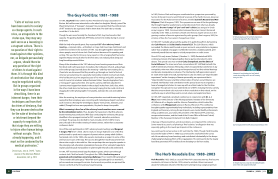
Louis Jolyon West, MD, Director of the UCLA
Neuropsychiatric Institute and pioneer in the cultic studies
field, was an AFF Advisor and chief organizer of the
Wingspread conference.
Herb Rosedale gave countless hours of service, personal
and professional time, and leadership to ICSA.
Dr. Edward Lottick gathered data helping
estimate the number of people who enter
and leave cults each year.
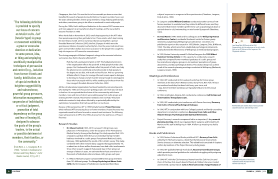
“The following definition
is provided to specify
our focus of concern
on totalist cults. Cult
(totalist type): A group
or movement exhibiting
a great or excessive
devotion or dedication
to some person, idea,
or thing and employing
unethically manipulative
techniques of persuasion
and control (e.g., isolation
from former friends and
family, debilitation, use
of special methods to
heighten suggestibility
and subservience,
powerful group pressures,
information management,
suspension of individuality
or critical judgment,
promotion of total
dependency on the group
and fear of leaving it),
designed to advance
the goals of the group’s
leaders, to the actual
or possible detriment of
members, their families, or
the community.”
[From West, L. J., &Langone, M. D.
(1986). “Cultism: A Conference for
Scholars and Policy Makers,” Cultic
Studies Journal, 3 (1), p. 87.]
subjects’ responses to a segment of the questionnaire (Chambers, Langone,
Dole, &Grice, 1994).
• Dr. Langone and Dr. William Chambers conducted another survey of 108
former members to evaluate how they related to different terms, and they
discovered that former members prefer terms such as psychological abuse or
spiritual abuse to cult, brainwashing, or mind control (Langone &Chambers,
1991).
• Dr. Paul Martin (1946–2009) and his colleagues at the Wellspring Retreat
and Resource Center (a residential treatment center for former group
members) analyzed data Wellspring had collected on 124 clients. CSJ
published a report on this research in 1992 (Martin, Langone, Dole, &Wiltrout,
1992). The data, which came from established psychological instruments,
clearly showed the effectiveness of Wellspring’s 2-week standard program.
• In 1995, Boston University named Dr. Michael Langone the 1995 Albert
Danielsen Visiting Scholar. In this capacity, he conducted a research
study that compared former members/graduates of a cultic group and
two mainstream religious groups on (a) members’ perceptions of group
abusiveness, and (b) psychological distress. This study’s design was a direct
result of the research planning meetings conducted at Wellspring (Malinoski,
Langone, &Lynn, 1999).
Meetings and Conferences
• In 1992, AFF conducted its first weekend workshop for former group
members at the Stony Point Retreat Center, Stony Point, New York. At least
one weekend workshop has been held every year since, and
1-day, former-member workshops are typically held prior to the annual
conference.
• In 1992, in Arlington, Virginia, AFF conducted a conference, Cult Victims and
Their Families: Therapeutic Issues.
• In 1995, AFF conducted a joint conference with Denver Seminary, Recovery
from Cults: A Pastoral/Psychological Dialogue.
• In 1996, AFF, in conjunction with Iona College’s pastoral and family counseling
department, conducted a conference, Recovery From Cults and Other
Abusive Groups: Psychological and Spiritual Dimensions.
• Project Recovery’s research component led to an important, 3-day research
planning meeting, which was organized by Dr. Langone and hosted by Dr.
Martin and his staff at Wellspring in 1994. A follow-up meeting was held a
year later.
Books and Publications
• In 1993, Norton Professional Books published AFF’s Recovery From Cults,
edited by Dr. Michael Langone, a book that the Behavioral Science Book
Service chose as an alternate selection. This edited book consisted of chapters
written by members of the Project Recovery study groups.
• In 1993, AFF published Wendy Ford’s book, Recovery From Abusive Groups,
which provides practical guidelines for individuals struggling with postgroup
adjustment issues.
• In 1994, AFF, with the Cult Awareness Network and the Cult Hot Line and
Clinic of the New York Jewish Board of Family &Children’s Services, funded
and received a special report: Cults in American Society: A Legal Analysis of
Chappaqua, New York. This was the first of innumerable pro bono services that
benefited thousands of people during his lifetime. He spent countless hours over
the years advising families, former group members, clergy, helping professionals,
and others, sometimes going to his office on weekends to meet with people.
During the 1980s, Herb’s ability and dedication to the cause of AFF became more
and more apparent at annual advisory board meetings, and he was asked to
become President in 1988.
When Herb died on November 4, 2003, emails kept appearing in the AFF inbox
from people expressing their gratitude to him. These emails, which kept coming
for more than a month, were so numerous that we put together a special
Rosedale Memorial Collection (2003), the first 26 pages of which were the
spontaneous tributes of people touched by him. Over the years, Herb must have
given several million dollars of pro bono assistance to the people who sought his
help. His impact on AFF cannot be overestimated.
The closing paragraph of Michael Langone’s eulogy in the memorial collection
summarizes how Herb’s character affected AFF:
Herb has left a permanent imprint on AFF. The fundamental mission
of the organization reflects his good will: to help people hurt by cultic
groups. Our fundamental methods reflect his pursuit of truth: we study
the phenomenon scientifically and professionally to help people, to
the degree we are able, with truth and not illusion. And our governing
attitude reflects, I hope, his courage: We must remain open to dialogue,
to learning, to change, and we must be strong enough to stand against
those who hurt people with lies while standing up for those whom lies
have savaged. (Rosedale Memorial Collection, 2003)
All the cult educational organizations had been founded by concerned parents,
who during the 1980s were focused on “getting people out.” Herb was not stuck
in that box. He recognized that the future of the movement lay with former
members, more and more of whom were walking away from cultic groups and
entering the AFF network. These former members were not “kids.” They were
adults who wanted to help others affected by or potentially affected by the
exploitative manipulation that had caused them so much pain.
Because of this perspective, AFF in 1990 formally founded Project Recovery,
which reflected AFF’s increasing focus on former members. Project Recovery was
organized around task forces focused on research and assistance. The following
major achievements of AFF in the 1990s all arose from the task forces of Project
Recovery:
Research Studies
• Dr. Edward Lottick (1935–2015) surveyed 1,396 primary-care
physicians in Pennsylvania, under the auspices of the Pennsylvania
Medical Society. Among other findings, this study reported that 2.2%
of subjects said that either they or an immediate family member
had been involved in a cultic group. Pennsylvania Medicine (Lottick,
February, 1993) published the results of Dr. Lottick’s survey. This study,
combined with other research data, suggests that approximately 1%,
or about two to three million Americans, have had cultic involvements.
Since other research suggests that people stay in their groups an
average of about six years, we estimate that at least several tens of
thousands of individuals enter and leave cultic groups each year.
• In 1990, Dr. Michael Langone surveyed 308 former group members
from 101 different groups. The Group Psychological Abuse Scale
(GPA), the first measure of “cultishness,” was derived from these
Louis Jolyon West, MD, Director of the UCLA
Neuropsychiatric Institute and pioneer in the cultic studies
field, was an AFF Advisor and chief organizer of the
Wingspread conference.
Herb Rosedale gave countless hours of service, personal
and professional time, and leadership to ICSA.
Dr. Edward Lottick gathered data helping
estimate the number of people who enter
and leave cults each year.
“The following definition
is provided to specify
our focus of concern
on totalist cults. Cult
(totalist type): A group
or movement exhibiting
a great or excessive
devotion or dedication
to some person, idea,
or thing and employing
unethically manipulative
techniques of persuasion
and control (e.g., isolation
from former friends and
family, debilitation, use
of special methods to
heighten suggestibility
and subservience,
powerful group pressures,
information management,
suspension of individuality
or critical judgment,
promotion of total
dependency on the group
and fear of leaving it),
designed to advance
the goals of the group’s
leaders, to the actual
or possible detriment of
members, their families, or
the community.”
[From West, L. J., &Langone, M. D.
(1986). “Cultism: A Conference for
Scholars and Policy Makers,” Cultic
Studies Journal, 3 (1), p. 87.]
subjects’ responses to a segment of the questionnaire (Chambers, Langone,
Dole, &Grice, 1994).
• Dr. Langone and Dr. William Chambers conducted another survey of 108
former members to evaluate how they related to different terms, and they
discovered that former members prefer terms such as psychological abuse or
spiritual abuse to cult, brainwashing, or mind control (Langone &Chambers,
1991).
• Dr. Paul Martin (1946–2009) and his colleagues at the Wellspring Retreat
and Resource Center (a residential treatment center for former group
members) analyzed data Wellspring had collected on 124 clients. CSJ
published a report on this research in 1992 (Martin, Langone, Dole, &Wiltrout,
1992). The data, which came from established psychological instruments,
clearly showed the effectiveness of Wellspring’s 2-week standard program.
• In 1995, Boston University named Dr. Michael Langone the 1995 Albert
Danielsen Visiting Scholar. In this capacity, he conducted a research
study that compared former members/graduates of a cultic group and
two mainstream religious groups on (a) members’ perceptions of group
abusiveness, and (b) psychological distress. This study’s design was a direct
result of the research planning meetings conducted at Wellspring (Malinoski,
Langone, &Lynn, 1999).
Meetings and Conferences
• In 1992, AFF conducted its first weekend workshop for former group
members at the Stony Point Retreat Center, Stony Point, New York. At least
one weekend workshop has been held every year since, and
1-day, former-member workshops are typically held prior to the annual
conference.
• In 1992, in Arlington, Virginia, AFF conducted a conference, Cult Victims and
Their Families: Therapeutic Issues.
• In 1995, AFF conducted a joint conference with Denver Seminary, Recovery
from Cults: A Pastoral/Psychological Dialogue.
• In 1996, AFF, in conjunction with Iona College’s pastoral and family counseling
department, conducted a conference, Recovery From Cults and Other
Abusive Groups: Psychological and Spiritual Dimensions.
• Project Recovery’s research component led to an important, 3-day research
planning meeting, which was organized by Dr. Langone and hosted by Dr.
Martin and his staff at Wellspring in 1994. A follow-up meeting was held a
year later.
Books and Publications
• In 1993, Norton Professional Books published AFF’s Recovery From Cults,
edited by Dr. Michael Langone, a book that the Behavioral Science Book
Service chose as an alternate selection. This edited book consisted of chapters
written by members of the Project Recovery study groups.
• In 1993, AFF published Wendy Ford’s book, Recovery From Abusive Groups,
which provides practical guidelines for individuals struggling with postgroup
adjustment issues.
• In 1994, AFF, with the Cult Awareness Network and the Cult Hot Line and
Clinic of the New York Jewish Board of Family &Children’s Services, funded
and received a special report: Cults in American Society: A Legal Analysis of