It makes sense, I suppose, that the music and words of the
finale, Make Our Garden Grow, from Leonard Bernstein’s
operetta, Candide, come unbidden to my mind: “I thought the
world was sugar cake/For so our Master said…”
I’m passing Lincoln Center in New York City, on my way to meet
with Cynthia Lilley, a longtime ICSA member, at the Kaufman
Center, a few steps from where the #104 bus trundles up and
down Broadway. The Kaufman Center is where Cynthia, a
teacher for 40 years, now teaches on a part-time basis.
The operetta is about people who have fallen under the
influence of a professor who instructs them in a utopian vision
of the world. They go through various experiences in which this
philosophy fails miserably to support their real lives. In the end,
having been made painfully aware of their own failings, they
embrace the dignity of their flawed humanity and determine
to make a life that is authentic and grounded in what is real.
Cynthia’s daughter, Cathryn, endured a similar experience with
a group, the Unification Church, which purported to be creating
a better world.
Cynthia is a specialist in the Dalcroze method, a system, I learn,
that utilizes eurhythmics, a gentle, holistic approach to music
instruction. The method seems to induce pure joy: Adult classes
in session reveal people of all ages and body types, shoeless,
moving unselfconsciously around the room, smiling and
relaxed.
Cynthia’s classes today will be with kindergarteners and first
through third graders. Sitting at the piano in the large recital
hall, Cynthia greets her students and calls them to attention.
Wearing an off-white, loose-fitting, tunic top that flows
around her with each movement, and black pants and jazz
shoes—exactly the kind of teacher you hope to find waiting for
you—she seems calm in the midst of the mini storm that is the
gathered energy of the 5- and 6-year-olds. But calmness was
not always her state of mind.
~
In 1993, Cynthia’s daughter, Cathryn, disappeared.
Cathryn was 18 years old and had just completed her freshman
year at Sarah Lawrence College. Cynthia lived in Los Angeles
at the time and was looking forward to seeing her daughter
during the summer. Instead, she received only a letter from
Cathryn, who informed her mother in an unfamiliar, formal
style that she would be working with a group to help alcohol-
and drug-addicted people. Cathryn didn’t identify the group
or say exactly where she would be going or how she could be
contacted. Cynthia’s initial attempts to reach her met a dead
end.
Frantic, Cynthia immediately began calling anyone she could
think of to find news about where her young daughter might
be. It seemed she had been abducted. “I say abducted because
that’s the way it felt at the time. She just vanished. I had no idea
where she was,” Cynthia later relates in a program in which both
she and Cathryn participated, produced by Rachel Bernstein on
Ms. Bernstein’s excellent weekly podcast, IndoctriNation.
Cynthia contacted her own therapist, who knew about the
Cult Clinic in New York. “So one of my first calls was to the Cult
Clinic. I spoke to Arnie Markowitz, who said, ‘It sounds like the
Moonies.’ In 24 hours, I was on a plane to New York. I went to
the police and told them, ‘My daughter is missing.’”
Cynthia had been advised not to tell the police that this was
cult-related because the police had no jurisdiction over groups.
But the police detective she spoke to sensed she was holding
something back. When he pressed her on it, “I got down on my
hands and knees and begged him to help. I said to him, ‘Please
help me. I have nowhere else to turn.’ I was weeping.”
The detective said, “Yes, I’ll help you.”
Through the Cult Clinic, Cynthia had been put in touch with Pat
Ryan and Joe Kelly. She has the highest praise and gratitude
for them. They gave her lots of training concerning how to
assemble a team, talk to the group members and her daughter,
and explain things to various authorities.
Part of Cynthia’s networking led to a contact at the Today show,
which became interested in the story. The producers wanted
to film the team’s movements but let Cynthia know that some
acting would be required. Cynthia’s response to that was “I don’t
want an Academy Award I just want my daughter back.”
Watching the footage of the proceedings is difficult. When the
family goes to a house in Douglaston, Queens, where they think
Cathryn is, they are rebuffed in the coldest fashion. Cynthia is so
distraught she can hardly stand, yet the group members treat
her with abject arrogance.
Doggedly following the most circuitous route, they find Cathryn
in Manhattan at a group site called Columbia House. The group
attempts to control the interaction, insisting that the media
speak to Cathryn first. When they finally allow Cynthia in to see
her child, the two are filmed through the window, and Cynthia
can be seen hugging her daughter closely and passionately,
almost pouring herself over her, as if she were trying to pour life
back into her.
Still, Cathryn was not to leave that day. Months and months
of legal wrangling, more networking, phone calls, and letters
followed. Months of agony. About this time, Cynthia says, “I
couldn’t eat or sleep or function very well. Couldn’t go to a
movie… My husband, Peter, was incredibly helpful. But I was
not easy to live with. There were times when I just despaired. I
had to rally myself every day.” She explains that the only things
that helped were her teaching and keeping busy by being
constantly on the phone.
After the months of pressure from many sides, including
attorneys, Cathryn became something of a liability to the
Unification Church. Steven Hassan had appeared on the
Today episode that aired Cathryn’s story. Seated alongside the
American leader of the Unification Church, James Baughman,
the brilliant, young, and brash Steve was formidable in his
defense of innocent victims of the cult. He thoroughly trounced
every false claim Baughman made.
As a result of all this, the group began to loosen its grip on
Cathryn. At the same time, as Cathryn recounts in the podcast,
her ability to function was failing. “I kept looking longingly at
phone booths and thinking, I could just make a call.”
One day, she did make the call. Her mother told her there was
a plane ticket waiting for her, and she should just go to the
airport. The Church was eager to be rid of her, and one member
actually drove her to the airport.
Family members gathered at a house they had in Michigan.
Cynthia recalls, “Cathryn was broken. She was just shattered.
She was disoriented. She could barely talk. She had a terrorized
look in her eyes. We worried about suicide and would not leave
her alone for a minute.” The cult, with its insistence on “purity,”
had filled her with terrifying thoughts. She was convinced she
would be executed because she had “betrayed the Messiah.”
Pat and Joe arrived the next day. When Cathryn lay eyes on
them, “I did feel instantly reassured… simply because of who
they were. They were sensible and calm, not hysterical… Almost
instantly I felt it was going to be okay. I was going to survive.”
10 1125 20
Profile On...
Edited by Mary O’Connell
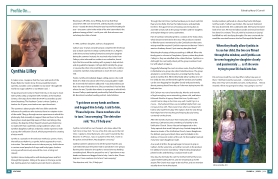
Cynthia Lilley
ICSA TODAY VOLUME 10 |ISSUE 3 |2019
“I got down on my hands and knees
and begged him to help. I said to him,
‘Please help me. I have nowhere else
to turn.’ I was weeping.” The detective
said, “Yes, I’ll help you.”
When they finally allow Cynthia in
to see her child, the two are filmed
through the window, and Cynthia can
be seen hugging her daughter closely
and passionately … as if she were
trying to pour life back into her.
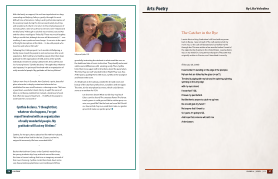
Cathryn and Cynthia, 2010
finale, Make Our Garden Grow, from Leonard Bernstein’s
operetta, Candide, come unbidden to my mind: “I thought the
world was sugar cake/For so our Master said…”
I’m passing Lincoln Center in New York City, on my way to meet
with Cynthia Lilley, a longtime ICSA member, at the Kaufman
Center, a few steps from where the #104 bus trundles up and
down Broadway. The Kaufman Center is where Cynthia, a
teacher for 40 years, now teaches on a part-time basis.
The operetta is about people who have fallen under the
influence of a professor who instructs them in a utopian vision
of the world. They go through various experiences in which this
philosophy fails miserably to support their real lives. In the end,
having been made painfully aware of their own failings, they
embrace the dignity of their flawed humanity and determine
to make a life that is authentic and grounded in what is real.
Cynthia’s daughter, Cathryn, endured a similar experience with
a group, the Unification Church, which purported to be creating
a better world.
Cynthia is a specialist in the Dalcroze method, a system, I learn,
that utilizes eurhythmics, a gentle, holistic approach to music
instruction. The method seems to induce pure joy: Adult classes
in session reveal people of all ages and body types, shoeless,
moving unselfconsciously around the room, smiling and
relaxed.
Cynthia’s classes today will be with kindergarteners and first
through third graders. Sitting at the piano in the large recital
hall, Cynthia greets her students and calls them to attention.
Wearing an off-white, loose-fitting, tunic top that flows
around her with each movement, and black pants and jazz
shoes—exactly the kind of teacher you hope to find waiting for
you—she seems calm in the midst of the mini storm that is the
gathered energy of the 5- and 6-year-olds. But calmness was
not always her state of mind.
~
In 1993, Cynthia’s daughter, Cathryn, disappeared.
Cathryn was 18 years old and had just completed her freshman
year at Sarah Lawrence College. Cynthia lived in Los Angeles
at the time and was looking forward to seeing her daughter
during the summer. Instead, she received only a letter from
Cathryn, who informed her mother in an unfamiliar, formal
style that she would be working with a group to help alcohol-
and drug-addicted people. Cathryn didn’t identify the group
or say exactly where she would be going or how she could be
contacted. Cynthia’s initial attempts to reach her met a dead
end.
Frantic, Cynthia immediately began calling anyone she could
think of to find news about where her young daughter might
be. It seemed she had been abducted. “I say abducted because
that’s the way it felt at the time. She just vanished. I had no idea
where she was,” Cynthia later relates in a program in which both
she and Cathryn participated, produced by Rachel Bernstein on
Ms. Bernstein’s excellent weekly podcast, IndoctriNation.
Cynthia contacted her own therapist, who knew about the
Cult Clinic in New York. “So one of my first calls was to the Cult
Clinic. I spoke to Arnie Markowitz, who said, ‘It sounds like the
Moonies.’ In 24 hours, I was on a plane to New York. I went to
the police and told them, ‘My daughter is missing.’”
Cynthia had been advised not to tell the police that this was
cult-related because the police had no jurisdiction over groups.
But the police detective she spoke to sensed she was holding
something back. When he pressed her on it, “I got down on my
hands and knees and begged him to help. I said to him, ‘Please
help me. I have nowhere else to turn.’ I was weeping.”
The detective said, “Yes, I’ll help you.”
Through the Cult Clinic, Cynthia had been put in touch with Pat
Ryan and Joe Kelly. She has the highest praise and gratitude
for them. They gave her lots of training concerning how to
assemble a team, talk to the group members and her daughter,
and explain things to various authorities.
Part of Cynthia’s networking led to a contact at the Today show,
which became interested in the story. The producers wanted
to film the team’s movements but let Cynthia know that some
acting would be required. Cynthia’s response to that was “I don’t
want an Academy Award I just want my daughter back.”
Watching the footage of the proceedings is difficult. When the
family goes to a house in Douglaston, Queens, where they think
Cathryn is, they are rebuffed in the coldest fashion. Cynthia is so
distraught she can hardly stand, yet the group members treat
her with abject arrogance.
Doggedly following the most circuitous route, they find Cathryn
in Manhattan at a group site called Columbia House. The group
attempts to control the interaction, insisting that the media
speak to Cathryn first. When they finally allow Cynthia in to see
her child, the two are filmed through the window, and Cynthia
can be seen hugging her daughter closely and passionately,
almost pouring herself over her, as if she were trying to pour life
back into her.
Still, Cathryn was not to leave that day. Months and months
of legal wrangling, more networking, phone calls, and letters
followed. Months of agony. About this time, Cynthia says, “I
couldn’t eat or sleep or function very well. Couldn’t go to a
movie… My husband, Peter, was incredibly helpful. But I was
not easy to live with. There were times when I just despaired. I
had to rally myself every day.” She explains that the only things
that helped were her teaching and keeping busy by being
constantly on the phone.
After the months of pressure from many sides, including
attorneys, Cathryn became something of a liability to the
Unification Church. Steven Hassan had appeared on the
Today episode that aired Cathryn’s story. Seated alongside the
American leader of the Unification Church, James Baughman,
the brilliant, young, and brash Steve was formidable in his
defense of innocent victims of the cult. He thoroughly trounced
every false claim Baughman made.
As a result of all this, the group began to loosen its grip on
Cathryn. At the same time, as Cathryn recounts in the podcast,
her ability to function was failing. “I kept looking longingly at
phone booths and thinking, I could just make a call.”
One day, she did make the call. Her mother told her there was
a plane ticket waiting for her, and she should just go to the
airport. The Church was eager to be rid of her, and one member
actually drove her to the airport.
Family members gathered at a house they had in Michigan.
Cynthia recalls, “Cathryn was broken. She was just shattered.
She was disoriented. She could barely talk. She had a terrorized
look in her eyes. We worried about suicide and would not leave
her alone for a minute.” The cult, with its insistence on “purity,”
had filled her with terrifying thoughts. She was convinced she
would be executed because she had “betrayed the Messiah.”
Pat and Joe arrived the next day. When Cathryn lay eyes on
them, “I did feel instantly reassured… simply because of who
they were. They were sensible and calm, not hysterical… Almost
instantly I felt it was going to be okay. I was going to survive.”
10 1125 20
Profile On...
Edited by Mary O’Connell
Cynthia Lilley
ICSA TODAY VOLUME 10 |ISSUE 3 |2019
“I got down on my hands and knees
and begged him to help. I said to him,
‘Please help me. I have nowhere else
to turn.’ I was weeping.” The detective
said, “Yes, I’ll help you.”
When they finally allow Cynthia in
to see her child, the two are filmed
through the window, and Cynthia can
be seen hugging her daughter closely
and passionately … as if she were
trying to pour life back into her.
Cathryn and Cynthia, 2010