Cultic Studies Review, Vol. 5, No. 6, 2006, Page 67
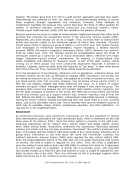
some ways, however small? Many Zen teachers in the West put on a façade impossible to
live up to, hide behind their role, and discourage students‘ reading and study about Zen.
That learning, though, is a necessary element for them to place the Zen institution and the
teachers who represent it in an appropriate historical and cultural context.
Intense, long-term idealization is rarely sustainable, and one would expect that sooner or
later it would come to an end, or at least be compromised. As Goldberg explains,
Eventually, as the teacher-student relationship matures, the student
manifests these [projected spiritual] qualities herself and learns to stand on
her own two feet. The projections are reclaimed.... We close the gap between
who we think the teacher is and who we think we are not. We become whole.
(p. 91)
One would hope. Goldberg describes the best-case scenario, and rightfully points out the
student‘s role in growing up spiritually. But spiritual teachers themselves have a part to
play, as well. Zen teachers, for example, would do well to provide opportunities for students
to air their concerns, to disagree with them, and to solve problems with both teachers and
fellow practitioners in a fashion agreeable to all concerned parties. Unfortunately, these
opportunities are rare in most American Zen Centers. Many longstanding Western Zen
students are unable to acknowledge and work through their projections, precisely because
their Zen teachers, perhaps threatened by such acknowledgement, prefer to ignore,
invalidate, or dismiss them in true authoritarian fashion.
Goldberg describes her struggles with deep loneliness and lack of a sense of purpose after
having lost her Zen teacher and her father. Years after the death of Katagiri Roshi, she
realizes that the ―regimented practice‖ of formal Zen meditation no longer fit her (p. 97)
and, eventually, turns to writing as spiritual practice. Goldberg goes on to share her ongoing
process of making peace with her Zen teacher‘s and her father‘s past, a process that she is
clearly committed to, despite its difficulty.
Although at times Goldberg leans a bit too heavily on the individual student‘s role in
idealization and subsequent disappointment in Zen teachers, The Great Failure offers solid
insights into the often problematic transferences that develop in students with respect to
their spiritual teachers. Written with honesty and sensitivity, this book is recommended
reading for anyone who has ever left a spiritual teacher for any reason, and for those who
wish to understand the nature of the relationships between spiritual teachers and their
students.
Katherine V. Masís
I Can’t Hear God Anymore
Wendy Duncan, Rowlett, Texas: VM Life Resources, LLC, 2006, 228 pages. ISBN: 0-
977660-0-X.
Ms. Duncan‘s first person account of her seven-year experience as a member of The Trinity
Foundation of Dallas, Texas, an outwardly reputable Christian organization set up to model
Christian living at its best, ranks along side of Hassan‘s Combating Cult Mind Control and
other first person cult narratives. For years I have searched for a book that could clarify
from a Christian perspective both the scripture twisting and the theological distortions that
quasi-Christian cults inflict on their members. This book fits such a niche. When I Can’t
Hear God Anymore arrived in the mail I picked it up curiously, intending to look it over. It
proved to be a page turner, and I finished it the day it arrived. I couldn‘t put it down.
some ways, however small? Many Zen teachers in the West put on a façade impossible to
live up to, hide behind their role, and discourage students‘ reading and study about Zen.
That learning, though, is a necessary element for them to place the Zen institution and the
teachers who represent it in an appropriate historical and cultural context.
Intense, long-term idealization is rarely sustainable, and one would expect that sooner or
later it would come to an end, or at least be compromised. As Goldberg explains,
Eventually, as the teacher-student relationship matures, the student
manifests these [projected spiritual] qualities herself and learns to stand on
her own two feet. The projections are reclaimed.... We close the gap between
who we think the teacher is and who we think we are not. We become whole.
(p. 91)
One would hope. Goldberg describes the best-case scenario, and rightfully points out the
student‘s role in growing up spiritually. But spiritual teachers themselves have a part to
play, as well. Zen teachers, for example, would do well to provide opportunities for students
to air their concerns, to disagree with them, and to solve problems with both teachers and
fellow practitioners in a fashion agreeable to all concerned parties. Unfortunately, these
opportunities are rare in most American Zen Centers. Many longstanding Western Zen
students are unable to acknowledge and work through their projections, precisely because
their Zen teachers, perhaps threatened by such acknowledgement, prefer to ignore,
invalidate, or dismiss them in true authoritarian fashion.
Goldberg describes her struggles with deep loneliness and lack of a sense of purpose after
having lost her Zen teacher and her father. Years after the death of Katagiri Roshi, she
realizes that the ―regimented practice‖ of formal Zen meditation no longer fit her (p. 97)
and, eventually, turns to writing as spiritual practice. Goldberg goes on to share her ongoing
process of making peace with her Zen teacher‘s and her father‘s past, a process that she is
clearly committed to, despite its difficulty.
Although at times Goldberg leans a bit too heavily on the individual student‘s role in
idealization and subsequent disappointment in Zen teachers, The Great Failure offers solid
insights into the often problematic transferences that develop in students with respect to
their spiritual teachers. Written with honesty and sensitivity, this book is recommended
reading for anyone who has ever left a spiritual teacher for any reason, and for those who
wish to understand the nature of the relationships between spiritual teachers and their
students.
Katherine V. Masís
I Can’t Hear God Anymore
Wendy Duncan, Rowlett, Texas: VM Life Resources, LLC, 2006, 228 pages. ISBN: 0-
977660-0-X.
Ms. Duncan‘s first person account of her seven-year experience as a member of The Trinity
Foundation of Dallas, Texas, an outwardly reputable Christian organization set up to model
Christian living at its best, ranks along side of Hassan‘s Combating Cult Mind Control and
other first person cult narratives. For years I have searched for a book that could clarify
from a Christian perspective both the scripture twisting and the theological distortions that
quasi-Christian cults inflict on their members. This book fits such a niche. When I Can’t
Hear God Anymore arrived in the mail I picked it up curiously, intending to look it over. It
proved to be a page turner, and I finished it the day it arrived. I couldn‘t put it down.