2319
6), the section on mentors (in Chapter 9), and the section
on grandparents (also in Chapter 9). One of the theoretic
orientations Dr. Kendall uses to discuss postsect concerns of
this population is Bandura’s social learning theory. Bandura’s
theory developed out of behaviorism but surpassed it in
his examinations of more complex, multifaceted ways in
which we learn (Bandura, 1974). Instead of viewing learning,
personality development, and morality development
under strictly conditioning influences, he looked at other
mechanisms through which children learn, such as modeling
and thoughtful reflection. Thoughtful reflection or decision
making has to do with the ability of human beings to
symbolize future events and reenact them in their minds in
such a way that they are then able to make a decision about
how their choices might impact the future (Bandura, 1974).
Newer advances in neuroscience seem to have affirmed much
of Bandura’s research on learning. For example, modeling is
supported by the discovery of mirror neurons in the brain.
These mirror neurons were discovered first in experiments
with monkeys, which indicated that the same areas of the
brain were activated when a monkey was watching another
perform a task as when that monkey was himself performing
the task (di Pellegrino, Fadiga, Fogassi, Gallese, &Rizzolatti,
1992). These mirror neurons provide another powerful means
through which we learn, particularly how we learn and
develop such things as aggression and empathy (Iacoboni,
2009). The links between social learning theory and current
advances in neuroscience are substantial. Dr. Kendall’s insight
both in bringing these topics into the cultic-studies field
and using them as a way to conceptualize areas of postsect
distress for those born or raised in sects is fascinating. This
approach opens up new areas of research with this group and
new ways of understanding the postsect experience.
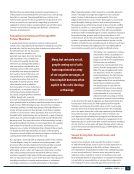
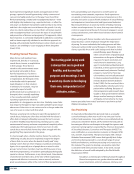
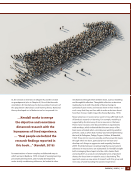
…Kendall works to merge
the objective and sometimes
distanced research with the
humanness of lived experience.
… “Real people are behind the
research findings reported in
this book…” (Kendall, 2016)
VOLUME 8 |ISSUE 3 |2017
6), the section on mentors (in Chapter 9), and the section
on grandparents (also in Chapter 9). One of the theoretic
orientations Dr. Kendall uses to discuss postsect concerns of
this population is Bandura’s social learning theory. Bandura’s
theory developed out of behaviorism but surpassed it in
his examinations of more complex, multifaceted ways in
which we learn (Bandura, 1974). Instead of viewing learning,
personality development, and morality development
under strictly conditioning influences, he looked at other
mechanisms through which children learn, such as modeling
and thoughtful reflection. Thoughtful reflection or decision
making has to do with the ability of human beings to
symbolize future events and reenact them in their minds in
such a way that they are then able to make a decision about
how their choices might impact the future (Bandura, 1974).
Newer advances in neuroscience seem to have affirmed much
of Bandura’s research on learning. For example, modeling is
supported by the discovery of mirror neurons in the brain.
These mirror neurons were discovered first in experiments
with monkeys, which indicated that the same areas of the
brain were activated when a monkey was watching another
perform a task as when that monkey was himself performing
the task (di Pellegrino, Fadiga, Fogassi, Gallese, &Rizzolatti,
1992). These mirror neurons provide another powerful means
through which we learn, particularly how we learn and
develop such things as aggression and empathy (Iacoboni,
2009). The links between social learning theory and current
advances in neuroscience are substantial. Dr. Kendall’s insight
both in bringing these topics into the cultic-studies field
and using them as a way to conceptualize areas of postsect
distress for those born or raised in sects is fascinating. This
approach opens up new areas of research with this group and
new ways of understanding the postsect experience.
…Kendall works to merge
the objective and sometimes
distanced research with the
humanness of lived experience.
… “Real people are behind the
research findings reported in
this book…” (Kendall, 2016)
VOLUME 8 |ISSUE 3 |2017