14 ICSA TODAY
I am a survivor of the troubled-teen industry. I was a
forced participant of a program at the time known as The
Family (a group unrelated to The Family/Children of God).
The program was also known as The Family School and The
Family Foundation School, and was later renamed Allynwood
Academy. The acronym most often used to identify the program
is FFS.1 I was 15 years old when I arrived at the program and was
there from September 1994 until June of 1997. I was abused
there for 993 days, which explains why my signature as an artist
and elsewhere on social media is Survivor Nineninethree.
The FFS program was marketed to
parents and professionals as a therapeutic
boarding school for troubled teens that
would instill positive values, principles,
and good morals. Essentially, the
program offered an option to outsource
parenting to a bucolic country setting
for families who felt their teenagers were
unmanageable. But this scenario couldn’t have been further
from the truth.
The program used attack therapy and forced confessions, and
peers often were left in charge of punishments that ranged
from public humiliation, manual labor, and being wrapped up in
blankets and duct tape, to being restrained by other students,
physical abuse by staff, food control, sleep deprivation, and
mind control. The treatment methodology in which pure and
impure behaviors were capriciously defined created in me a
crucible of inner torment, thus leaving me disconnected from
my authentic self as a child and teenager.
Many of the program’s staff members had previously lived at
East Ridge Recovery Center in Calicoon, New York before they
subsequently joined FFS. East Ridge is a small community that
defines itself as “a laboratory for learning to live the All Addicts
Anonymous Program…,”2 which “essentially consists of the
Four Absolutes of the Oxford Group, and the Twelve Steps
and Ten Points of Alcoholics Anonymous….”3,4 The All Addicts
Anonymous organization adapted these guidelines for all
addicts and all compulsions, which it has loosely grouped into
two types: substance addicts and mental addicts. Substance
addicts include drug addicts, alcohol addicts, tobacco addicts,
coffee addicts, and food addicts. Mental addicts include lying-
and-cheating addicts, resenting-and-hating addicts, worry-
and-anxiety addicts, sex addicts, and depression-moping-and-
sulking addicts. The FFS program also claimed to be able to
treat the same types of addictions while it was disguised as a
structured, therapeutic, educational environment.
While at FFS, I endured repeated sexual, mental, and physical
abuse. Like many other survivors of the harmful programs of
the troubled-teen industry, I was forced to be simultaneously
a witness, a perpetrator, and a victim of abuse. Although the
program was loosely based on the principles of Alcoholics
Anonymous/Narcotics Anonymous, it was rogue, unchecked,
and unregulated.
Mail from program-approved family members and relatives was
closely monitored, and outgoing phone calls were limited and
supervised. No outside influences such as radio, television, other
accounts of current events, or popular music were allowed.
Letters home were checked and had to be preapproved.
If we reported abuse or asked to come home, parents were told
that we were lying, manipulating them, or both. Parents were
convinced by the program staff that they were saving the lives
of their children by showing “tough love.” While at the program,
I was told I was unwanted and no longer part of my family at
home. At the same time, my parents were being told I was “not
working my program, and not progressing at all.”
The effects of my trauma now have spanned more than 20
years. My nuclear family was fractured, and our relationship has
never fully recovered.
I left the program after I turned 18, and I endured a long road
back to reality. During that time, I barely made it through
college and struggled socially, largely because I couldn’t trust
anyone. I worked in emergency medical services and eventually
went on to earn a bachelor’s degree from Marist College and
a master’s degree from Fordham University, both in New York.
It was not an easy road, and I struggled often to make sense
of what had happened to me. My first attempt to seek therapy
occurred about 5 years after I left the FFS program. After I
explained my experience, the therapist told me I “had a very
interesting imagination.” It was clear to me at that time that
no one believed me and I would have to depend on myself to
navigate through the world.
I worked for a Federal agency and, out of fear and shame, I
never publicly disclosed my experience with the FFS. I remained
silent about it for more than 20 years.
Survivor
Nineninethree
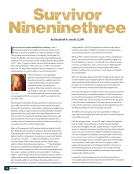
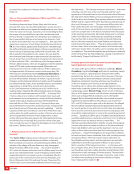
Liz in 1994.
By Elizabeth A. Ianelli, LCSW I
I am a survivor of the troubled-teen industry. I was a
forced participant of a program at the time known as The
Family (a group unrelated to The Family/Children of God).
The program was also known as The Family School and The
Family Foundation School, and was later renamed Allynwood
Academy. The acronym most often used to identify the program
is FFS.1 I was 15 years old when I arrived at the program and was
there from September 1994 until June of 1997. I was abused
there for 993 days, which explains why my signature as an artist
and elsewhere on social media is Survivor Nineninethree.
The FFS program was marketed to
parents and professionals as a therapeutic
boarding school for troubled teens that
would instill positive values, principles,
and good morals. Essentially, the
program offered an option to outsource
parenting to a bucolic country setting
for families who felt their teenagers were
unmanageable. But this scenario couldn’t have been further
from the truth.
The program used attack therapy and forced confessions, and
peers often were left in charge of punishments that ranged
from public humiliation, manual labor, and being wrapped up in
blankets and duct tape, to being restrained by other students,
physical abuse by staff, food control, sleep deprivation, and
mind control. The treatment methodology in which pure and
impure behaviors were capriciously defined created in me a
crucible of inner torment, thus leaving me disconnected from
my authentic self as a child and teenager.
Many of the program’s staff members had previously lived at
East Ridge Recovery Center in Calicoon, New York before they
subsequently joined FFS. East Ridge is a small community that
defines itself as “a laboratory for learning to live the All Addicts
Anonymous Program…,”2 which “essentially consists of the
Four Absolutes of the Oxford Group, and the Twelve Steps
and Ten Points of Alcoholics Anonymous….”3,4 The All Addicts
Anonymous organization adapted these guidelines for all
addicts and all compulsions, which it has loosely grouped into
two types: substance addicts and mental addicts. Substance
addicts include drug addicts, alcohol addicts, tobacco addicts,
coffee addicts, and food addicts. Mental addicts include lying-
and-cheating addicts, resenting-and-hating addicts, worry-
and-anxiety addicts, sex addicts, and depression-moping-and-
sulking addicts. The FFS program also claimed to be able to
treat the same types of addictions while it was disguised as a
structured, therapeutic, educational environment.
While at FFS, I endured repeated sexual, mental, and physical
abuse. Like many other survivors of the harmful programs of
the troubled-teen industry, I was forced to be simultaneously
a witness, a perpetrator, and a victim of abuse. Although the
program was loosely based on the principles of Alcoholics
Anonymous/Narcotics Anonymous, it was rogue, unchecked,
and unregulated.
Mail from program-approved family members and relatives was
closely monitored, and outgoing phone calls were limited and
supervised. No outside influences such as radio, television, other
accounts of current events, or popular music were allowed.
Letters home were checked and had to be preapproved.
If we reported abuse or asked to come home, parents were told
that we were lying, manipulating them, or both. Parents were
convinced by the program staff that they were saving the lives
of their children by showing “tough love.” While at the program,
I was told I was unwanted and no longer part of my family at
home. At the same time, my parents were being told I was “not
working my program, and not progressing at all.”
The effects of my trauma now have spanned more than 20
years. My nuclear family was fractured, and our relationship has
never fully recovered.
I left the program after I turned 18, and I endured a long road
back to reality. During that time, I barely made it through
college and struggled socially, largely because I couldn’t trust
anyone. I worked in emergency medical services and eventually
went on to earn a bachelor’s degree from Marist College and
a master’s degree from Fordham University, both in New York.
It was not an easy road, and I struggled often to make sense
of what had happened to me. My first attempt to seek therapy
occurred about 5 years after I left the FFS program. After I
explained my experience, the therapist told me I “had a very
interesting imagination.” It was clear to me at that time that
no one believed me and I would have to depend on myself to
navigate through the world.
I worked for a Federal agency and, out of fear and shame, I
never publicly disclosed my experience with the FFS. I remained
silent about it for more than 20 years.
Survivor
Nineninethree
Liz in 1994.
By Elizabeth A. Ianelli, LCSW I