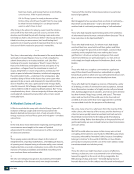
Doni Whitsett, PhD, LCSW, is a Clinical Professor at the University of Southern
California, Suzanne Dworak-Peck School of Social Work. Dr. Whitsett teaches
various courses in practice, behavior, and mental health. She has been working
with cult-involved clients and their families for over 20 years and gives lectures to
students and professionals in this area at national and international conferences.
Her publications include “The Psychobiology of Trauma and Child Maltreatment”
(Cultic Studies Review, Vol. 5, No. 3, 2006) “A Self Psychological Approach to the
Cult Phenomenon” (Journal of Social Work, 1992) “Cults and Families” (Families in Society, Vol. 84, No.
4, 2003), which she coauthored with Dr. Stephen Kent and “Why Cults Are Harmful: Neurobiological
Speculations on Interpersonal Trauma” (ICSA Today, Vol. 5, No. 1, 2014). Dr. Whitsett also has a
specialty in sexuality and was awarded a Fulbright Specialist Scholarship in 2016 to study, teach,
and do research on this topic in China. n
Dear Friends,
In the mid 1980s, I first became aware of what was then known as the American Family Foundation.
I was astonished that an organization was passionately trying to understand the forces of
manipulation, exploitation, coercion, and control and was helping people who had been harmed
by groups that practiced these behaviors. The cultic-studies field was in its infancy then, with little
written about the phenomenon and little guidance for therapists struggling to find ways of treating
survivors. Simultaneously, the larger field of trauma was burgeoning at this time, which resulted in
the important diagnosis of Posttraumatic Stress Disorder (PTSD) being included in the 3rd edition of
the Diagnostic and Statistical Manual of Mental Disorders (DSM-III). Although controversial at the time,
this inclusion provided validation for what therapists were seeing clinically and knew instinctively:
that horrific external events and toxic environments can result in long-term consequences.
Fast forward to 2017, and we can see the exponential growth of the field as reflected in this issue
of ICSA Today. Although Steven Gelberg’s article on ISKCON typifies early groups, Elizabeth Ianelli
expands the parameters by describing her experience in a troubled-teen program, and Andrea
Laisure and Robin Boyle Laisure show an overlap between certain cultic dynamics and human
trafficking. The authors’ excellent list of warning signs is reminiscent of Paul Martin’s book, Cult-
Proofing Your Kids. This issue of ICSA Today also recognizes the experiences of people in cultic groups,
both those who became involved as adults and those who were born and/or raised in them (Steven
Gelberg and Lois Kendall, respectively) and by one-on-one relationships, the latter marking Sharon
Hamm’s entrance into this field as she attempted to understand what was happening to a close
family member. Thus, our understanding of high-demand groups now extends beyond the borders
of our first definition.
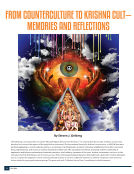
Steven Gelberg’s article, “From Counterculture to Krishna Cult—Memories and Reflections,” gives us
a rare look into the mindset of a first-generation member attracted to a cult. As he takes us along
on his mental journey from early skepticism to final commitment, we get a visceral sense of how
he rationalized and denied to become a “true believer.” His internal experience will resonate with
those who joined cults in the idealistic era of the ‘60s, and hopefully it will give others a nuanced
understanding of these first-generation seekers.
One of the great losses Gelberg identifies resulted from the teachings he experienced around
sexuality. What many consider a gift of the human condition he was taught to view as the vilest
of human behaviors. Such distortions around sexuality are what Steve Eichel addresses in his
article on sex therapy. Cults are notoriously unaccepting of sexual variation—whether in terms of
orientation, identity, expression, or behaviors. Thus, sexual shame is almost always a part of the
survivor profile and must not be overlooked in treatment. As an American Association of Sexuality
Educators, Counselors and Therapists (AASECT)-certified sex therapist myself, I concur with Eichel on
the need for advanced training, in which a therapist does in-depth self-examination and is exposed
to all facets of human nature. I call this “Star Trek therapy” (i.e., a client cannot “go boldly where [a
therapist] has not gone before”).
I’m sure you will enjoy this very pertinent issue of the magazine. May we all “live long and prosper.”
Sincerely,
Doni Whitsett
About ICSA Today
ICSA Today (IT) serves ICSA members by
providing information that enhances
understanding of all aspects of the cult
phenomenon, including how groups
function, how they affect members,
techniques of influence, dealing with
harmful effects, educational and legal
implications, and other subjects.
ICSA Today issues may include
• practical articles for former
members, families, helping
professionals, researchers,
and others
• opinion essays
• theoretical articles
• reports on research
• summaries of news reports on
groups
• information on books, articles, links
• information on ICSA members
• biographical profiles on selected
members
• personal accounts
• art work
• poetry
• short stories and other literary
articles
• special reports from correspondents
around the world
ICSA Today is published three times a
year.
Regular ICSA members receive the print
edition of ICSA Today and have access
to its Web edition. Students and other
special members gain access to the
online edition only.
Nonmember print subscriptions are
available. Submissions to the magazine
should be sent to the Editor-in-Chief,
Michael Langone, PhD:
mail@icsamail.com
We prefer Microsoft Word or a program
compatible with Word. Articles should
be no more than 2,500 words. Please
include a jpeg photo (no less than 360
dpi) and biographical sketch (less than
150 words) with your submission.
Appropriate submissions are reviewed
by the relevant section editor and,
when appropriate, editorial review
advisors.
International Cultic Studies Association
P.O. Box 2265 • Bonita Springs, FL 34133
Phone: 239.514.3081
Email: mail@icsamail.com
Website: icsahome.com
California, Suzanne Dworak-Peck School of Social Work. Dr. Whitsett teaches
various courses in practice, behavior, and mental health. She has been working
with cult-involved clients and their families for over 20 years and gives lectures to
students and professionals in this area at national and international conferences.
Her publications include “The Psychobiology of Trauma and Child Maltreatment”
(Cultic Studies Review, Vol. 5, No. 3, 2006) “A Self Psychological Approach to the
Cult Phenomenon” (Journal of Social Work, 1992) “Cults and Families” (Families in Society, Vol. 84, No.
4, 2003), which she coauthored with Dr. Stephen Kent and “Why Cults Are Harmful: Neurobiological
Speculations on Interpersonal Trauma” (ICSA Today, Vol. 5, No. 1, 2014). Dr. Whitsett also has a
specialty in sexuality and was awarded a Fulbright Specialist Scholarship in 2016 to study, teach,
and do research on this topic in China. n
Dear Friends,
In the mid 1980s, I first became aware of what was then known as the American Family Foundation.
I was astonished that an organization was passionately trying to understand the forces of
manipulation, exploitation, coercion, and control and was helping people who had been harmed
by groups that practiced these behaviors. The cultic-studies field was in its infancy then, with little
written about the phenomenon and little guidance for therapists struggling to find ways of treating
survivors. Simultaneously, the larger field of trauma was burgeoning at this time, which resulted in
the important diagnosis of Posttraumatic Stress Disorder (PTSD) being included in the 3rd edition of
the Diagnostic and Statistical Manual of Mental Disorders (DSM-III). Although controversial at the time,
this inclusion provided validation for what therapists were seeing clinically and knew instinctively:
that horrific external events and toxic environments can result in long-term consequences.
Fast forward to 2017, and we can see the exponential growth of the field as reflected in this issue
of ICSA Today. Although Steven Gelberg’s article on ISKCON typifies early groups, Elizabeth Ianelli
expands the parameters by describing her experience in a troubled-teen program, and Andrea
Laisure and Robin Boyle Laisure show an overlap between certain cultic dynamics and human
trafficking. The authors’ excellent list of warning signs is reminiscent of Paul Martin’s book, Cult-
Proofing Your Kids. This issue of ICSA Today also recognizes the experiences of people in cultic groups,
both those who became involved as adults and those who were born and/or raised in them (Steven
Gelberg and Lois Kendall, respectively) and by one-on-one relationships, the latter marking Sharon
Hamm’s entrance into this field as she attempted to understand what was happening to a close
family member. Thus, our understanding of high-demand groups now extends beyond the borders
of our first definition.
Steven Gelberg’s article, “From Counterculture to Krishna Cult—Memories and Reflections,” gives us
a rare look into the mindset of a first-generation member attracted to a cult. As he takes us along
on his mental journey from early skepticism to final commitment, we get a visceral sense of how
he rationalized and denied to become a “true believer.” His internal experience will resonate with
those who joined cults in the idealistic era of the ‘60s, and hopefully it will give others a nuanced
understanding of these first-generation seekers.
One of the great losses Gelberg identifies resulted from the teachings he experienced around
sexuality. What many consider a gift of the human condition he was taught to view as the vilest
of human behaviors. Such distortions around sexuality are what Steve Eichel addresses in his
article on sex therapy. Cults are notoriously unaccepting of sexual variation—whether in terms of
orientation, identity, expression, or behaviors. Thus, sexual shame is almost always a part of the
survivor profile and must not be overlooked in treatment. As an American Association of Sexuality
Educators, Counselors and Therapists (AASECT)-certified sex therapist myself, I concur with Eichel on
the need for advanced training, in which a therapist does in-depth self-examination and is exposed
to all facets of human nature. I call this “Star Trek therapy” (i.e., a client cannot “go boldly where [a
therapist] has not gone before”).
I’m sure you will enjoy this very pertinent issue of the magazine. May we all “live long and prosper.”
Sincerely,
Doni Whitsett
About ICSA Today
ICSA Today (IT) serves ICSA members by
providing information that enhances
understanding of all aspects of the cult
phenomenon, including how groups
function, how they affect members,
techniques of influence, dealing with
harmful effects, educational and legal
implications, and other subjects.
ICSA Today issues may include
• practical articles for former
members, families, helping
professionals, researchers,
and others
• opinion essays
• theoretical articles
• reports on research
• summaries of news reports on
groups
• information on books, articles, links
• information on ICSA members
• biographical profiles on selected
members
• personal accounts
• art work
• poetry
• short stories and other literary
articles
• special reports from correspondents
around the world
ICSA Today is published three times a
year.
Regular ICSA members receive the print
edition of ICSA Today and have access
to its Web edition. Students and other
special members gain access to the
online edition only.
Nonmember print subscriptions are
available. Submissions to the magazine
should be sent to the Editor-in-Chief,
Michael Langone, PhD:
mail@icsamail.com
We prefer Microsoft Word or a program
compatible with Word. Articles should
be no more than 2,500 words. Please
include a jpeg photo (no less than 360
dpi) and biographical sketch (less than
150 words) with your submission.
Appropriate submissions are reviewed
by the relevant section editor and,
when appropriate, editorial review
advisors.
International Cultic Studies Association
P.O. Box 2265 • Bonita Springs, FL 34133
Phone: 239.514.3081
Email: mail@icsamail.com
Website: icsahome.com