15 VOLUME 8 |ISSUE 3 |2017
A group of former survivors came together in 2009 to form
The Family School Truth Campaign.5 Over the course of the
next 5 years, along with others, I (quietly) dedicated myself to
the mission of publicly exposing the abuses of the program,
especially the mistreatment of children in the care of staff. We
provided a safe space online for survivors to post testimonials
voluntarily we also posted findings from the New York State
investigation of abuse allegations, along with other documents,
some of which were obtained through the Freedom of Information
Act. Among these documents were two cease-and-desist letters
issued to the program years apart, along with a letter from a
New Jersey criminal-court family judge who suspected that a
teen she had sent to the school had been abused. As a collective,
the campaign was relentless, and in August of 2014 the FFS
program announced it would be closing for financial reasons. The
enrollment had dropped from more than 200 students down to
about 8 students. Although a combination of factors, including
the recession, led to this decline, we believe that the campaign
played an important role in the program’s need to abruptly close
because prospective parents now had access to information that
was not previously available. Thus, as a result of the campaign,
parents were able to make a more informed decision about
where to safely educate and treat their children.
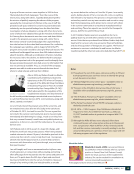
Also in 2009, my lifetime friend Jon Martin-
Crawford bravely testified and shared his
experiences in the FFS in front of Congress,
in support of the Miller bill (Stop Child Abuse
in Residential Programs for Teens Act of 2008
introduced by Rep. George Miller [D-CA]),6
which advocated for the regulation of the
troubled-teen industry. One key element of
the bill would provide teenagers unrestricted access to phones
to call Child Protective Services (CPS). Jon’s testimony, along with
others’, started a revolution.7
Jon and I had entered the program around the same time, and
we remained very close after we left. Sadly, in the early hours
of October 24, 2015, Jon took his own life. This was a great loss
not only for the survivor community, but also to me personally.
Immediately after delivering his eulogy, I made a vow that, from
that very moment forward, I would come out publicly about my
experience, to honor Jon, who left life midsentence. His work was
far from over.
I left Federal work in 2016 as part of a major life change, and I
shifted my work back into private practice. After having treated
combat veterans for almost 10 years, I decided to give back to the
community from which I come to help them heal. I incorporate
artwork into my therapy and use it as a tool to help survivors
reconnect with themselves and “paint through, over, and under
their past traumas.”
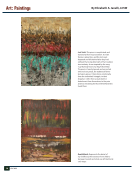
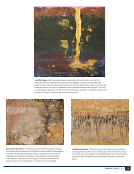
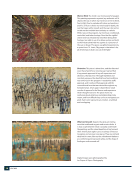
I am self-taught, and I use an unconventional art style as a way
of self-expression, in conjunction with journaling and writing. I
often affix pages from my journals onto the canvas and paint over
them, as if to paste down the 993 days of pain and emotional
trauma and meld them onto the canvas. Sometimes I leave just
enough of my writing visible, but indecipherable, to encode
my secrets below the surface, as I lived for 20 years. I use mainly
acrylic, builder, plaster of Paris, concrete, dirt, rocks, or anything
else relevant to my traumas. This process is very personal. It has
restored my control over my inner narrative and secrets in a way
that I find empowering, and it allows me to connect with others
in the survivor community in a way that is mutually beneficial
and enriching. These two aspects are crucial to the therapeutic
process, both for me and for those I treat.
In 2017, Bellator Studios was born as a platform for me to
publicly share my art with others. Bellator is the Latin word for
warrior. Prints that are purchased from Bellator Studios help fund
treatment for survivors who may encounter financial hardships,
and also the acquisition of therapeutic art supplies. The financial
assistance to survivors is dedicated to and honors Jon Martin-
Crawford and all the other lost souls who died after they left FFS. n
Notes
[1] Throughout the rest of this piece, references will be to FFS and
to the program because survivors choose to identify the group
as cult-like and not a school.
[2] “The East Ridge Recovery Center,” para. 1 (available online at
alladdictsanonymous.org/meetings_eastridge.htm).
[3] “Pioneers in the All Addicts Anonymous Way of Life,” para. 1
(available online at alladdictsanonymous.org/info_pioneers.
htm).
[4] “The All Addicts Anonymous Program” (available online at
alladdictsanonymous.org/info_whatis.htm#absolutes).
[5] The Family Foundation School TRUTH Campaign website is
thefamilyschooltruth.com
[6] H.R. 5876—110th Congress: Stop Child Abuse in Residential
Programs for Teens Act of 2008. See GovTrack.us, 2008, July
23, 2017 (available online at govtrack.us/congress/bills/110/
hr5876).
[7] Although the Miller bill was never adopted, efforts have
continued to pass such a law and are active up to the present
time. Congressman Adam Schiff (D-CA) has reintroduced the
bill, and the survivor community is currently waiting to see the
actual wording because a previous version was vague and still
left many programs out of the regulation.
About the Author
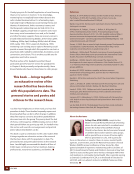
Elizabeth A. Ianelli, LCSW, is a Licensed Clinical
Social Worker in New York State. She has a private
practice in Carmel, New York (Putnam County)
where she treats survivors of the troubled-teen
industry. She can be reached for consultation at
survivor.nineninethree@gmail.com
Artist page and store: www.survivor993.com n
Jon Martin-Crawford
A group of former survivors came together in 2009 to form
The Family School Truth Campaign.5 Over the course of the
next 5 years, along with others, I (quietly) dedicated myself to
the mission of publicly exposing the abuses of the program,
especially the mistreatment of children in the care of staff. We
provided a safe space online for survivors to post testimonials
voluntarily we also posted findings from the New York State
investigation of abuse allegations, along with other documents,
some of which were obtained through the Freedom of Information
Act. Among these documents were two cease-and-desist letters
issued to the program years apart, along with a letter from a
New Jersey criminal-court family judge who suspected that a
teen she had sent to the school had been abused. As a collective,
the campaign was relentless, and in August of 2014 the FFS
program announced it would be closing for financial reasons. The
enrollment had dropped from more than 200 students down to
about 8 students. Although a combination of factors, including
the recession, led to this decline, we believe that the campaign
played an important role in the program’s need to abruptly close
because prospective parents now had access to information that
was not previously available. Thus, as a result of the campaign,
parents were able to make a more informed decision about
where to safely educate and treat their children.
Also in 2009, my lifetime friend Jon Martin-
Crawford bravely testified and shared his
experiences in the FFS in front of Congress,
in support of the Miller bill (Stop Child Abuse
in Residential Programs for Teens Act of 2008
introduced by Rep. George Miller [D-CA]),6
which advocated for the regulation of the
troubled-teen industry. One key element of
the bill would provide teenagers unrestricted access to phones
to call Child Protective Services (CPS). Jon’s testimony, along with
others’, started a revolution.7
Jon and I had entered the program around the same time, and
we remained very close after we left. Sadly, in the early hours
of October 24, 2015, Jon took his own life. This was a great loss
not only for the survivor community, but also to me personally.
Immediately after delivering his eulogy, I made a vow that, from
that very moment forward, I would come out publicly about my
experience, to honor Jon, who left life midsentence. His work was
far from over.
I left Federal work in 2016 as part of a major life change, and I
shifted my work back into private practice. After having treated
combat veterans for almost 10 years, I decided to give back to the
community from which I come to help them heal. I incorporate
artwork into my therapy and use it as a tool to help survivors
reconnect with themselves and “paint through, over, and under
their past traumas.”
I am self-taught, and I use an unconventional art style as a way
of self-expression, in conjunction with journaling and writing. I
often affix pages from my journals onto the canvas and paint over
them, as if to paste down the 993 days of pain and emotional
trauma and meld them onto the canvas. Sometimes I leave just
enough of my writing visible, but indecipherable, to encode
my secrets below the surface, as I lived for 20 years. I use mainly
acrylic, builder, plaster of Paris, concrete, dirt, rocks, or anything
else relevant to my traumas. This process is very personal. It has
restored my control over my inner narrative and secrets in a way
that I find empowering, and it allows me to connect with others
in the survivor community in a way that is mutually beneficial
and enriching. These two aspects are crucial to the therapeutic
process, both for me and for those I treat.
In 2017, Bellator Studios was born as a platform for me to
publicly share my art with others. Bellator is the Latin word for
warrior. Prints that are purchased from Bellator Studios help fund
treatment for survivors who may encounter financial hardships,
and also the acquisition of therapeutic art supplies. The financial
assistance to survivors is dedicated to and honors Jon Martin-
Crawford and all the other lost souls who died after they left FFS. n
Notes
[1] Throughout the rest of this piece, references will be to FFS and
to the program because survivors choose to identify the group
as cult-like and not a school.
[2] “The East Ridge Recovery Center,” para. 1 (available online at
alladdictsanonymous.org/meetings_eastridge.htm).
[3] “Pioneers in the All Addicts Anonymous Way of Life,” para. 1
(available online at alladdictsanonymous.org/info_pioneers.
htm).
[4] “The All Addicts Anonymous Program” (available online at
alladdictsanonymous.org/info_whatis.htm#absolutes).
[5] The Family Foundation School TRUTH Campaign website is
thefamilyschooltruth.com
[6] H.R. 5876—110th Congress: Stop Child Abuse in Residential
Programs for Teens Act of 2008. See GovTrack.us, 2008, July
23, 2017 (available online at govtrack.us/congress/bills/110/
hr5876).
[7] Although the Miller bill was never adopted, efforts have
continued to pass such a law and are active up to the present
time. Congressman Adam Schiff (D-CA) has reintroduced the
bill, and the survivor community is currently waiting to see the
actual wording because a previous version was vague and still
left many programs out of the regulation.
About the Author
Elizabeth A. Ianelli, LCSW, is a Licensed Clinical
Social Worker in New York State. She has a private
practice in Carmel, New York (Putnam County)
where she treats survivors of the troubled-teen
industry. She can be reached for consultation at
survivor.nineninethree@gmail.com
Artist page and store: www.survivor993.com n
Jon Martin-Crawford