9 VOLUME 5 |ISSUE 3 |2014
suffer from negative consequences if they left the protection
of the cult, and the cultic view that the outside world was a
dangerous place.
I realized that my psychoanalytic
training was not enough for
me to fully understand the cult
world. Although I was learning
many tools to help clients grow,
I knew that, to work with former
cult members and their families,
I had to educate myself at cult-
related conferences. There, I
had the opportunity to listen
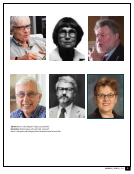
to remarkable pioneers such
as John Clark, Robert Lifton,
Margaret Singer, and Louis
Jolyon West.
What I Learned From Remarkable Pioneers
I learned from Dr. John (Jack) Clark that a clinician in the
office who carefully listens to families without making
strong presumptions is able to consider new possibilities
for the meaning of their behaviors. Clark didn’t align with
the many mental-health professionals who dismissed
alarmed families like mine, telling them they were having
trouble letting their children separate. Instead, he listened
carefully to the families’ descriptions of behavioral changes
in their loved ones and was open to investigating different
possibilities for how these changes had occurred. Instead of
relying on preconceived theories, Jack Clark was open and
willing to learn from his patients. To let my clients teach me
the theory was the most valuable lesson that I could learn as
a new clinician.
Hippocrates observed, “It’s more important to know what
sort of person has a disease than what disease a person has.”
I’ve learned that, although
former cult members might
have gone through similar
processes, each experience
is unique. Based on their
own personalities, members
of the same cult can have
quite different experiences,
and can become controlled
by different beliefs and
dismissive of other beliefs. It’s
important for therapists not
to categorize too quickly.
When I first met Jack Clark and Margaret Singer, they
treated me with compassion and respect they helped me
to learn about the processes that had changed my brother.
Singer, along with West and Lifton, had investigated and
testified about techniques the North Koreans used against
American soldiers in wartime.
These clinicians discovered
that, whereas prisoners of war
were frightened by physical
coercion, the cultic groups
emerging in the United States
in the late 1960s were using
thought-reform programs that
were more “sophisticated, subtle,
and insidious” (Singer, personal
communication) to create a
psychological bond that could be
more powerful than the program
the POWs had experienced.
From Margaret Singer I learned
that “Therapy cannot begin until education ends” (personal
communication). This means that therapy with former cult
members and their families is a psychoeducational process.
The most therapeutic part can be cult education, which can
clarify what often has been a confusing, mystifying, and
overwhelming experience. Furthermore, Margaret helped
me understand how it is possible and important to deliver
complex ideas in plainspoken language. Sometimes I’ll look
at a sentence filled with psychoanalytic jargon and think,
“How would Margaret say this?”
From Robert Lifton I learned about a variety of mind-control
techniques that groups use, and I learned about the power
of influence (1961). I also learned about the psychoanalyst’s
need to look at the individual in the context of the larger
society. Along with Singer and West, Lifton studied American
prisoners of war. On his own, Lifton studied everything
from Nazi doctors, to the effect of the Hiroshima bomb on
survivors, to members of the Aum Shinryko cult.
Appreciating Lifton’s message led me to read Erich Fromm,
particularly Man for Himself,
Fromm’s study of the totalitarian
conscience. This book helped
me understand how those who
are born, raised, or brought into
totalitarian societies develop
a harsh conscience I began
to feel that helping former
cult members develop a more
humane and compassionate
conscience needed to be central
to my work. I began to consider
that the therapist’s conscience could serve as a new and
more loving model for former members. I learned from my
psychoanalytic training that understanding the meaning
I learned about the
loneliness and sense
of loss and alienation
many individuals
experience after they
leave the intense
cult-group experience.
I realized that my
psychoanalytic training
was not enough for me
to fully understand the
cult world.
suffer from negative consequences if they left the protection
of the cult, and the cultic view that the outside world was a
dangerous place.
I realized that my psychoanalytic
training was not enough for
me to fully understand the cult
world. Although I was learning
many tools to help clients grow,
I knew that, to work with former
cult members and their families,
I had to educate myself at cult-
related conferences. There, I
had the opportunity to listen
to remarkable pioneers such
as John Clark, Robert Lifton,
Margaret Singer, and Louis
Jolyon West.
What I Learned From Remarkable Pioneers
I learned from Dr. John (Jack) Clark that a clinician in the
office who carefully listens to families without making
strong presumptions is able to consider new possibilities
for the meaning of their behaviors. Clark didn’t align with
the many mental-health professionals who dismissed
alarmed families like mine, telling them they were having
trouble letting their children separate. Instead, he listened
carefully to the families’ descriptions of behavioral changes
in their loved ones and was open to investigating different
possibilities for how these changes had occurred. Instead of
relying on preconceived theories, Jack Clark was open and
willing to learn from his patients. To let my clients teach me
the theory was the most valuable lesson that I could learn as
a new clinician.
Hippocrates observed, “It’s more important to know what
sort of person has a disease than what disease a person has.”
I’ve learned that, although
former cult members might
have gone through similar
processes, each experience
is unique. Based on their
own personalities, members
of the same cult can have
quite different experiences,
and can become controlled
by different beliefs and
dismissive of other beliefs. It’s
important for therapists not
to categorize too quickly.
When I first met Jack Clark and Margaret Singer, they
treated me with compassion and respect they helped me
to learn about the processes that had changed my brother.
Singer, along with West and Lifton, had investigated and
testified about techniques the North Koreans used against
American soldiers in wartime.
These clinicians discovered
that, whereas prisoners of war
were frightened by physical
coercion, the cultic groups
emerging in the United States
in the late 1960s were using
thought-reform programs that
were more “sophisticated, subtle,
and insidious” (Singer, personal
communication) to create a
psychological bond that could be
more powerful than the program
the POWs had experienced.
From Margaret Singer I learned
that “Therapy cannot begin until education ends” (personal
communication). This means that therapy with former cult
members and their families is a psychoeducational process.
The most therapeutic part can be cult education, which can
clarify what often has been a confusing, mystifying, and
overwhelming experience. Furthermore, Margaret helped
me understand how it is possible and important to deliver
complex ideas in plainspoken language. Sometimes I’ll look
at a sentence filled with psychoanalytic jargon and think,
“How would Margaret say this?”
From Robert Lifton I learned about a variety of mind-control
techniques that groups use, and I learned about the power
of influence (1961). I also learned about the psychoanalyst’s
need to look at the individual in the context of the larger
society. Along with Singer and West, Lifton studied American
prisoners of war. On his own, Lifton studied everything
from Nazi doctors, to the effect of the Hiroshima bomb on
survivors, to members of the Aum Shinryko cult.
Appreciating Lifton’s message led me to read Erich Fromm,
particularly Man for Himself,
Fromm’s study of the totalitarian
conscience. This book helped
me understand how those who
are born, raised, or brought into
totalitarian societies develop
a harsh conscience I began
to feel that helping former
cult members develop a more
humane and compassionate
conscience needed to be central
to my work. I began to consider
that the therapist’s conscience could serve as a new and
more loving model for former members. I learned from my
psychoanalytic training that understanding the meaning
I learned about the
loneliness and sense
of loss and alienation
many individuals
experience after they
leave the intense
cult-group experience.
I realized that my
psychoanalytic training
was not enough for me
to fully understand the
cult world.