Dear Friends,
I remember the first client who told me she had left a cult that day and asked if I could help her. I went to the hospital library and found NO books, a
few journal articles by Maurice and Jane Temerlin in Oklahoma, and a large network of nonprofessional but very wise, experienced people all over the
country who were willing to share by phone what they had learned. That was our version of networking in the early days.
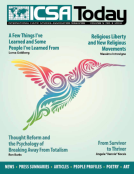
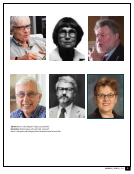
In this issue of ICSA Today, we get some glimpses of the evolution of cultic studies over the past half century. Lorna Goldberg, in “A Few Things I’ve
Learned and People I’ve Learned From,” takes us back to the early 1970s, when she was a young wife whose brother had begun to exhibit bizarre and
frightening changes in his behaviors and speech. Her search for an explanation led her to encounter some of the pioneers in our field, people on
whose shoulders we stand today.
Ron Burks and his wife Vicki had joined a church they thought would enrich their spiritual and family life, only to find themselves in a harmful cult.
There was no Internet at that time, so they turned to a small cadre of professionals who had begun writing about dramatic behavioral changes in
prisoners of war during the Korean conflict, people who freely shared what they had learned from their own studies. In 1982, when I entered the field,
Margaret Singer answered her own phone late one evening when I called her in desperation over a family member in trouble. She was able to pull
from her files one interview with the leader of the cult with which my family member was involved.
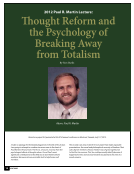
Ron Burks’s “Thought Reform and the Psychology of Breaking Away From Totalism” honors another pioneer, Paul Martin, founder of one of the first
treatment centers devoted to recovery from cultic trauma. Ron Burks and Paul Martin both derived their ideas from Robert Lifton’s foundational
Thought Reform and the Psychology of Totalism (1961, 1989), but adapted Lifton’s ideas to the arena of coercive movements. Burks does an elegant
job of translating his two brilliant predecessors’ words into easily grasped concepts. When these principles are understood, they provide a map that
clarifies the way back to the real world for any person who has been lured into a cultic situation.
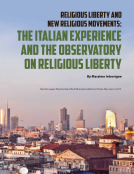
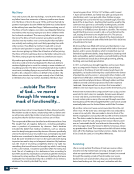
The publication of Massimo Introvigne’s “Religious Freedom and New Religious Movements” reflects ICSA’s ongoing commitment to dialogue and
balance. Although most people in the ICSA community are concerned about abuses associated with belief systems, Introvigne reminds us of the
democratic and human-rights contexts that protect even unpopular belief systems.
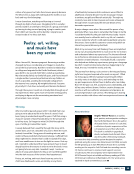
Completing the arc of the past half century, ICSA has pioneered in the recognition and understanding of the unique challenges facing the growing
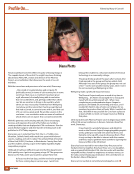
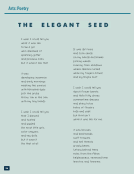
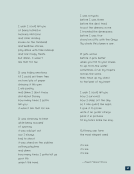
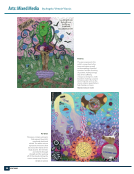
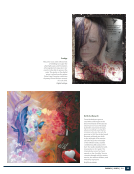
population of young adults born into the movements their parents joined. Angela “Vennie” Koscis tells her moving story of self-discovery and
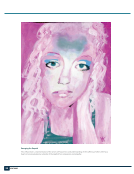
liberation from coerced beliefs, and shows us, through her poetry and art, the role creativity has played in her healing journey.
Information about cults and cult recovery is much more available today for people seeking help and those who want to help them. But there remains
vast ignorance about the topic many people search for too long still in this century, looking to clergy who are often clueless, or therapists who have
never seen a former member or read a scholarly article on the subject, and who know only what they’ve seen in sensationalized news articles or on
TV. My hope is that when you finish reading this issue of ICSA Today you will share its contents with friends and thus help with dissemination of this
needed material!
Sincerely,
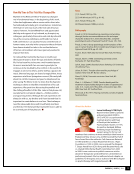
Lois Svoboda, MD
About ICSA Today
ICSA Today (IT) serves ICSA members by providing information that enhances
understanding of all aspects of the cult phenomenon, including how groups function,
how they affect members, techniques of influence, dealing with harmful effects,
educational and legal implications, and other subjects.
ICSA Today issues may include
• practical articles for former members, families, helping professionals, researchers,
and others
• opinion essays
• theoretical articles
• reports on research
• summaries of news reports on groups
• information on books, articles, links
• information on ICSA members
• biographical profiles on selected members
• personal accounts
• art work
• poetry
• short stories and other literary articles
• special reports from correspondents around the world
ICSA Today is published three times a year.
Regular ICSA members receive the print edition
of ICSA Today and have access to its Web edition.
Students and other special members gain access
to the online edition only. Nonmember print
subscriptions are available. Submissions to the
magazine should be sent to the Editor-in-Chief,
Michael Langone, PhD: mail@icsamail.com We
prefer Microsoft Word or a program compatible
with Word. Articles should be no more than
2,500 words. Please include a jpeg photo (less
than 150 KB) and biographical sketch (less than
150 words) with your submission.
Appropriate submissions are reviewed by the
relevant section editor and, when appropriate,
editorial review advisors.
International Cultic Studies Association
P.O. Box 2265 • Bonita Springs, FL 34133
Phone: 239.514.3081 Email: mail@icsamail.com
Website: icsahome.com
I remember the first client who told me she had left a cult that day and asked if I could help her. I went to the hospital library and found NO books, a
few journal articles by Maurice and Jane Temerlin in Oklahoma, and a large network of nonprofessional but very wise, experienced people all over the
country who were willing to share by phone what they had learned. That was our version of networking in the early days.
In this issue of ICSA Today, we get some glimpses of the evolution of cultic studies over the past half century. Lorna Goldberg, in “A Few Things I’ve
Learned and People I’ve Learned From,” takes us back to the early 1970s, when she was a young wife whose brother had begun to exhibit bizarre and
frightening changes in his behaviors and speech. Her search for an explanation led her to encounter some of the pioneers in our field, people on
whose shoulders we stand today.
Ron Burks and his wife Vicki had joined a church they thought would enrich their spiritual and family life, only to find themselves in a harmful cult.
There was no Internet at that time, so they turned to a small cadre of professionals who had begun writing about dramatic behavioral changes in
prisoners of war during the Korean conflict, people who freely shared what they had learned from their own studies. In 1982, when I entered the field,
Margaret Singer answered her own phone late one evening when I called her in desperation over a family member in trouble. She was able to pull
from her files one interview with the leader of the cult with which my family member was involved.
Ron Burks’s “Thought Reform and the Psychology of Breaking Away From Totalism” honors another pioneer, Paul Martin, founder of one of the first
treatment centers devoted to recovery from cultic trauma. Ron Burks and Paul Martin both derived their ideas from Robert Lifton’s foundational
Thought Reform and the Psychology of Totalism (1961, 1989), but adapted Lifton’s ideas to the arena of coercive movements. Burks does an elegant
job of translating his two brilliant predecessors’ words into easily grasped concepts. When these principles are understood, they provide a map that
clarifies the way back to the real world for any person who has been lured into a cultic situation.
The publication of Massimo Introvigne’s “Religious Freedom and New Religious Movements” reflects ICSA’s ongoing commitment to dialogue and
balance. Although most people in the ICSA community are concerned about abuses associated with belief systems, Introvigne reminds us of the
democratic and human-rights contexts that protect even unpopular belief systems.
Completing the arc of the past half century, ICSA has pioneered in the recognition and understanding of the unique challenges facing the growing
population of young adults born into the movements their parents joined. Angela “Vennie” Koscis tells her moving story of self-discovery and
liberation from coerced beliefs, and shows us, through her poetry and art, the role creativity has played in her healing journey.
Information about cults and cult recovery is much more available today for people seeking help and those who want to help them. But there remains
vast ignorance about the topic many people search for too long still in this century, looking to clergy who are often clueless, or therapists who have
never seen a former member or read a scholarly article on the subject, and who know only what they’ve seen in sensationalized news articles or on
TV. My hope is that when you finish reading this issue of ICSA Today you will share its contents with friends and thus help with dissemination of this
needed material!
Sincerely,
Lois Svoboda, MD
About ICSA Today
ICSA Today (IT) serves ICSA members by providing information that enhances
understanding of all aspects of the cult phenomenon, including how groups function,
how they affect members, techniques of influence, dealing with harmful effects,
educational and legal implications, and other subjects.
ICSA Today issues may include
• practical articles for former members, families, helping professionals, researchers,
and others
• opinion essays
• theoretical articles
• reports on research
• summaries of news reports on groups
• information on books, articles, links
• information on ICSA members
• biographical profiles on selected members
• personal accounts
• art work
• poetry
• short stories and other literary articles
• special reports from correspondents around the world
ICSA Today is published three times a year.
Regular ICSA members receive the print edition
of ICSA Today and have access to its Web edition.
Students and other special members gain access
to the online edition only. Nonmember print
subscriptions are available. Submissions to the
magazine should be sent to the Editor-in-Chief,
Michael Langone, PhD: mail@icsamail.com We
prefer Microsoft Word or a program compatible
with Word. Articles should be no more than
2,500 words. Please include a jpeg photo (less
than 150 KB) and biographical sketch (less than
150 words) with your submission.
Appropriate submissions are reviewed by the
relevant section editor and, when appropriate,
editorial review advisors.
International Cultic Studies Association
P.O. Box 2265 • Bonita Springs, FL 34133
Phone: 239.514.3081 Email: mail@icsamail.com
Website: icsahome.com