27 VOLUME 5 |ISSUE 3 |2014
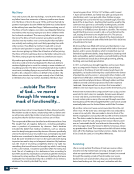
culture of my peers, but I also faced severe poverty because
The Move sent us away with nothing but the clothes on our
back and very few belongings.
I was a chameleon, watching and learning as I moved
through my high-school years. Struggling to fit in socially, I
joined a band in an attempt to feel part of a group and ended
up turning to drug use and partying, trying to numb a pain
that I didn’t yet have the skill to identify. I simply knew it
existed inside of me like a dark hole.
When I turned 20, I became pregnant. Becoming a mother
changed my focus considerably, and I began to study fine
arts at the local university. But then I entered a relationship
in college and migrated to the Pacific Northwest, where I
gave birth to my second child. Still, I ended up wandering.
My relationship failed, my family fell apart, and I found myself
a single mother. I poured my attention into my children as
much as possible, avoiding the inevitable collapse from
the trauma I was carrying. My weight ballooned. I became
physically ill. I shut down outwardly and became hardened.
Through these years I could not critically think through any of
my experiences. Still, I spent much of my time writing poetry
and trying to figure out the excruciating emotional and
physical pain I was carrying.
Thriving
After my mother passed away in 2007, I decided that I was
going to write about my life in the form of a novel. I had
been trying to understand myself for years. I felt that using a
character outside of myself would allow me the perspective
to tell my story. So I began to write Cult Child through the
eyes of a little girl named Sila Caprin.
I naively believed that I would fly through this story, tell it,
and be done, and I set a deadline of a year to finish the novel.
Instead, it would be 7 long years of traveling into me, and I
could not have predicted what would emerge. I suffered from
deep night terrors, dreams that I could not speak of for days,
and I was unable even to turn on the light in a room. I lost my
job. I started to understand that I was going to have to travel
deeply back into the trauma in order to write the book. It was
not going to be an easy ride. I avoided. I wept. I wrote an
album of songs and lullabies for Sila as we travelled together
into the dark recesses of the torture I had experienced.
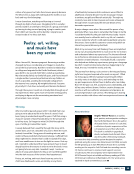
Poetry, art, writing, and music have been my savior. As a
child I was disallowed a voice, an identity, or any forms
of authenticity because artistic endeavors were stifled. In
adulthood, creativity became my rite of passage. I began
to embrace my gifts and flourish artistically. Through my
creativity I was able to take my pain and create a blueprint
through which I could study the intricate details of my
traumatic experiences.
A major change came when I discovered the power of my
gratitude. When I was able to remember the things in my life
I could be thankful for, the pain didn’t hurt as badly. I wasn’t
sure exactly how to utilize this tool in my life, so I created a
sensory system by which I could explore gratitude using my
five senses. I later used this system to create and publish an
interactive journal, Becoming Gratitude.
Most of my recovery from cult thinking I have accomplished
on my own, knowing that there is much more for me to learn
and understand about my experiences. The Internet allowed
me to find more information about how my experiences had
resulted in certain behaviors. I eventually found a counselor
who helped me define my experiences, giving me a language
by which I could communicate what was happening in my
head, the way I viewed the world, and why.
The journey from being a cult survivor to thriving and being
joyful was long and required active work on my part. I filled
my living space with kind sayings toward myself, written
on sticky notes in multiple colors, and reminding me that
my past experiences did not have to define who I am today.
Now I let the pain out, feel, accept my own vulnerability, and
tell my story without shame. I believe creative therapy can
reunite us with our authentic uniqueness and purpose. As
a second-generation cult survivor, I find deep joy in sharing
creative outlets with others who have experienced trauma. n
About the Artist
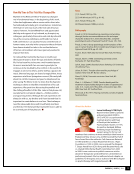
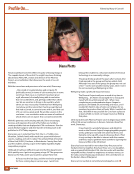
Angela “Vennie” Kocsis is an author,
poet, painter, and songwriter residing in
the Pacific Northwest. She is the author
of Dusted Shelves: memoir of a cult child,
a collection of poetic expressions of her
cult experiences and their aftermath.
This book is available in paperback,
ebook, and audio-book formats. She is
also the author of Becoming Gratitude,
an interactive daily journaling system designed to explore
gratitude using the senses. Her debut novel, Cult Child, recounts
her life growing up in Sam Fife’s Move of God. She is currently
working on the sequel to Cult Child and also recording a music
CD. Vennie continues to create art and support survivors
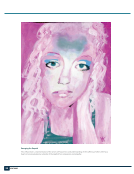
of cult trauma. Her art and poetry were represented in the
2014 Phoenix Project art exhibit and literary reading at ICSA’s
2014 Annual Conference in Washington, DC. Her work can be
explored in depth at venniekocsis.com n
Poetry, art, writing,
and music have
been my savior.
culture of my peers, but I also faced severe poverty because
The Move sent us away with nothing but the clothes on our
back and very few belongings.
I was a chameleon, watching and learning as I moved
through my high-school years. Struggling to fit in socially, I
joined a band in an attempt to feel part of a group and ended
up turning to drug use and partying, trying to numb a pain
that I didn’t yet have the skill to identify. I simply knew it
existed inside of me like a dark hole.
When I turned 20, I became pregnant. Becoming a mother
changed my focus considerably, and I began to study fine
arts at the local university. But then I entered a relationship
in college and migrated to the Pacific Northwest, where I
gave birth to my second child. Still, I ended up wandering.
My relationship failed, my family fell apart, and I found myself
a single mother. I poured my attention into my children as
much as possible, avoiding the inevitable collapse from
the trauma I was carrying. My weight ballooned. I became
physically ill. I shut down outwardly and became hardened.
Through these years I could not critically think through any of
my experiences. Still, I spent much of my time writing poetry
and trying to figure out the excruciating emotional and
physical pain I was carrying.
Thriving
After my mother passed away in 2007, I decided that I was
going to write about my life in the form of a novel. I had
been trying to understand myself for years. I felt that using a
character outside of myself would allow me the perspective
to tell my story. So I began to write Cult Child through the
eyes of a little girl named Sila Caprin.
I naively believed that I would fly through this story, tell it,
and be done, and I set a deadline of a year to finish the novel.
Instead, it would be 7 long years of traveling into me, and I
could not have predicted what would emerge. I suffered from
deep night terrors, dreams that I could not speak of for days,
and I was unable even to turn on the light in a room. I lost my
job. I started to understand that I was going to have to travel
deeply back into the trauma in order to write the book. It was
not going to be an easy ride. I avoided. I wept. I wrote an
album of songs and lullabies for Sila as we travelled together
into the dark recesses of the torture I had experienced.
Poetry, art, writing, and music have been my savior. As a
child I was disallowed a voice, an identity, or any forms
of authenticity because artistic endeavors were stifled. In
adulthood, creativity became my rite of passage. I began
to embrace my gifts and flourish artistically. Through my
creativity I was able to take my pain and create a blueprint
through which I could study the intricate details of my
traumatic experiences.
A major change came when I discovered the power of my
gratitude. When I was able to remember the things in my life
I could be thankful for, the pain didn’t hurt as badly. I wasn’t
sure exactly how to utilize this tool in my life, so I created a
sensory system by which I could explore gratitude using my
five senses. I later used this system to create and publish an
interactive journal, Becoming Gratitude.
Most of my recovery from cult thinking I have accomplished
on my own, knowing that there is much more for me to learn
and understand about my experiences. The Internet allowed
me to find more information about how my experiences had
resulted in certain behaviors. I eventually found a counselor
who helped me define my experiences, giving me a language
by which I could communicate what was happening in my
head, the way I viewed the world, and why.
The journey from being a cult survivor to thriving and being
joyful was long and required active work on my part. I filled
my living space with kind sayings toward myself, written
on sticky notes in multiple colors, and reminding me that
my past experiences did not have to define who I am today.
Now I let the pain out, feel, accept my own vulnerability, and
tell my story without shame. I believe creative therapy can
reunite us with our authentic uniqueness and purpose. As
a second-generation cult survivor, I find deep joy in sharing
creative outlets with others who have experienced trauma. n
About the Artist
Angela “Vennie” Kocsis is an author,
poet, painter, and songwriter residing in
the Pacific Northwest. She is the author
of Dusted Shelves: memoir of a cult child,
a collection of poetic expressions of her
cult experiences and their aftermath.
This book is available in paperback,
ebook, and audio-book formats. She is
also the author of Becoming Gratitude,
an interactive daily journaling system designed to explore
gratitude using the senses. Her debut novel, Cult Child, recounts
her life growing up in Sam Fife’s Move of God. She is currently
working on the sequel to Cult Child and also recording a music
CD. Vennie continues to create art and support survivors
of cult trauma. Her art and poetry were represented in the
2014 Phoenix Project art exhibit and literary reading at ICSA’s
2014 Annual Conference in Washington, DC. Her work can be
explored in depth at venniekocsis.com n
Poetry, art, writing,
and music have
been my savior.