15 VOLUME 5 |ISSUE 3 |2014
going to hell for leaving, but I couldn’t stay either.” For second-
generation members (SGAs), if family is still in the group, the
isolation and lack of support are excruciating.
Even with the affirmation of family and friends, the sweet
rebellion, the joy of not complying, the first trip to the mall
without witnessing eventually give way to the Rip Van Winkle
effect: “So what is this Twitter thing again?” Reality sets in: You’re
43 and all you have done since you were recruited at age 18 was
clean carpets. You never finished your freshman year because
“God called you.” The last time you applied for a job there was an
application packet and a receptionist. Now there’s just a kiosk and
a keyboard, or, more often, just a website.
Freedom after a cult can be a lonely, confusing, and discouraging
experience. Thinking they’re free, former members without
treatment can find themselves in less restrictive but still
controlling situations or relationships. “Hey, having to give 20% of
your income is way better than the group we were in where we
had to turn in our paychecks and get an allowance for underwear
and toothpaste.”
Indeed, some former members who realize that their leader was
a fraud and the group abusive, and who have been out of the
group for years, may still demonstrate some attachment to the
mindset of the group by wishing for the “good old days before
things got bad.” Former members frequently avoid exercising
their freedom because of the challenges freedom brings after a
cult experience: anxiety, boredom, loss of a sense of purpose and
meaning. Worse yet, for many, life loses its context.
A useful anecdote from one of my military friends tells the tale:
A young airman was leaving the Air Force. His crusty
staff sergeant warned the young airman, “Listen to me
you need to reenlist.”
“No, Sarge I’m sick and tired of the military telling me
what to do all the time.”
His face now pale, the sergeant warned again, “You
don’t understand you need to reenlist” and with a
slight tremor in his voice, “there’s nobody in charge out
there.”
Freedom can be daunting, which is why subjection to the will and
whims of another can be tempting. But by living an unexamined
life based on a single perspective, followers become slaves to
that perspective. They get used to not being wrong. They give up
something others are willing to die to achieve—freedom. They
are deceived into trading their autonomy for what they are told is
a noble cause that makes them part of a special elite, and for the
security that comes with perspective that permits no uncertainty.
Choices
Someone once asked Margaret Singer, “How will I know who I
am, now that the cult is not there to tell me?” She admitted that
was a philosophical question and she was a psychologist. But
then, in a burst of insight, she added, “By the choices you make.”
She echoes Simon Weill, who said, “Liberty, taking the word in
its concrete sense, consists in the ability to choose” (Weil, 2005,
p. 11).
Learning to make choices is the antidote to thought reform,
the foundation for finding purpose and meaning, and a new
life context. The problem is that with choice often comes
uncertainty. If we are sure about which way is the right way, we
don’t need choice. Freedom implies living with uncertainty, the
uncertainty of facing choices, small and large, every day of our
lives. Former members have a greatly diminished capacity to
choose, due to the nature of thought reform. For the most part,
former members have been conditioned to look at choosing,
exercising their own judgment, as willfulness, a spiritually fatal
vice. And they have not been able to exercise their mental
abilities, which languish from disuse.
Choosing is hard and sometimes risky work. Every time we
make a choice, we could have made a different choice and
borne the consequences. Freedom of choice means we have the
opportunity to screw up.
Emancipation: A Welcome Discomfort
After the cult, good choices are the ones I make because to me,
they are reasonable, they make sense in the short and long run,
and they are desirable, to me. Freedom of choice takes research.
It takes self-knowledge. Research and self-knowledge are messy.
Facts only go so far, then I have to know what I like.
The yearning for certainty is one reason people are attracted to
cultic belief systems. But as so many philosophers have said, by
accepting someone else’s certainty, we give up what makes us
human beings, our freedom of thought, our freedom to become
who we, and only we, are. n
References
Lifton, R. J. (1961). Thought reform and the psychology of totalism.
New York, NY: W. W. Norton.
Lippmann, Walter. (2009). A preface to morals (7th edition).
Piscataway, NJ: Transaction Publishers.
Otero, C. P. (Ed.). (2003). Chomsky on democracy and education.
New York, NY: RoutledgeFalmer.
Roe, Merwin. (Ed.). (1907). Speeches and letters of Abraham Lincoln.
London, England: J. M. Dent and Sons.
Weil, Simone. (2005). The need for roots: Prelude to a declaration of
duties towards mankind. London, England: Taylor &Francis.
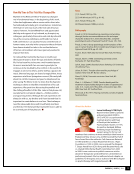
About the Author
Ron Burks, PhD,
holds an MDiv and an MA in
counseling from Asbury Theological
Seminary and a PhD in Counselor
Education from Ohio University. He
worked for many years at Wellspring
Retreat and Resource Center in
Albany, Ohio. He and his wife Vicki
wrote Damaged Disciples: Casualties
of Authoritarian Churches and the
Shepherding Movement, published by Zondervan. He and Vicki
now live near Tallahassee, Florida where both are licensed mental-
health counselors. n
going to hell for leaving, but I couldn’t stay either.” For second-
generation members (SGAs), if family is still in the group, the
isolation and lack of support are excruciating.
Even with the affirmation of family and friends, the sweet
rebellion, the joy of not complying, the first trip to the mall
without witnessing eventually give way to the Rip Van Winkle
effect: “So what is this Twitter thing again?” Reality sets in: You’re
43 and all you have done since you were recruited at age 18 was
clean carpets. You never finished your freshman year because
“God called you.” The last time you applied for a job there was an
application packet and a receptionist. Now there’s just a kiosk and
a keyboard, or, more often, just a website.
Freedom after a cult can be a lonely, confusing, and discouraging
experience. Thinking they’re free, former members without
treatment can find themselves in less restrictive but still
controlling situations or relationships. “Hey, having to give 20% of
your income is way better than the group we were in where we
had to turn in our paychecks and get an allowance for underwear
and toothpaste.”
Indeed, some former members who realize that their leader was
a fraud and the group abusive, and who have been out of the
group for years, may still demonstrate some attachment to the
mindset of the group by wishing for the “good old days before
things got bad.” Former members frequently avoid exercising
their freedom because of the challenges freedom brings after a
cult experience: anxiety, boredom, loss of a sense of purpose and
meaning. Worse yet, for many, life loses its context.
A useful anecdote from one of my military friends tells the tale:
A young airman was leaving the Air Force. His crusty
staff sergeant warned the young airman, “Listen to me
you need to reenlist.”
“No, Sarge I’m sick and tired of the military telling me
what to do all the time.”
His face now pale, the sergeant warned again, “You
don’t understand you need to reenlist” and with a
slight tremor in his voice, “there’s nobody in charge out
there.”
Freedom can be daunting, which is why subjection to the will and
whims of another can be tempting. But by living an unexamined
life based on a single perspective, followers become slaves to
that perspective. They get used to not being wrong. They give up
something others are willing to die to achieve—freedom. They
are deceived into trading their autonomy for what they are told is
a noble cause that makes them part of a special elite, and for the
security that comes with perspective that permits no uncertainty.
Choices
Someone once asked Margaret Singer, “How will I know who I
am, now that the cult is not there to tell me?” She admitted that
was a philosophical question and she was a psychologist. But
then, in a burst of insight, she added, “By the choices you make.”
She echoes Simon Weill, who said, “Liberty, taking the word in
its concrete sense, consists in the ability to choose” (Weil, 2005,
p. 11).
Learning to make choices is the antidote to thought reform,
the foundation for finding purpose and meaning, and a new
life context. The problem is that with choice often comes
uncertainty. If we are sure about which way is the right way, we
don’t need choice. Freedom implies living with uncertainty, the
uncertainty of facing choices, small and large, every day of our
lives. Former members have a greatly diminished capacity to
choose, due to the nature of thought reform. For the most part,
former members have been conditioned to look at choosing,
exercising their own judgment, as willfulness, a spiritually fatal
vice. And they have not been able to exercise their mental
abilities, which languish from disuse.
Choosing is hard and sometimes risky work. Every time we
make a choice, we could have made a different choice and
borne the consequences. Freedom of choice means we have the
opportunity to screw up.
Emancipation: A Welcome Discomfort
After the cult, good choices are the ones I make because to me,
they are reasonable, they make sense in the short and long run,
and they are desirable, to me. Freedom of choice takes research.
It takes self-knowledge. Research and self-knowledge are messy.
Facts only go so far, then I have to know what I like.
The yearning for certainty is one reason people are attracted to
cultic belief systems. But as so many philosophers have said, by
accepting someone else’s certainty, we give up what makes us
human beings, our freedom of thought, our freedom to become
who we, and only we, are. n
References
Lifton, R. J. (1961). Thought reform and the psychology of totalism.
New York, NY: W. W. Norton.
Lippmann, Walter. (2009). A preface to morals (7th edition).
Piscataway, NJ: Transaction Publishers.
Otero, C. P. (Ed.). (2003). Chomsky on democracy and education.
New York, NY: RoutledgeFalmer.
Roe, Merwin. (Ed.). (1907). Speeches and letters of Abraham Lincoln.
London, England: J. M. Dent and Sons.
Weil, Simone. (2005). The need for roots: Prelude to a declaration of
duties towards mankind. London, England: Taylor &Francis.
About the Author
Ron Burks, PhD,
holds an MDiv and an MA in
counseling from Asbury Theological
Seminary and a PhD in Counselor
Education from Ohio University. He
worked for many years at Wellspring
Retreat and Resource Center in
Albany, Ohio. He and his wife Vicki
wrote Damaged Disciples: Casualties
of Authoritarian Churches and the
Shepherding Movement, published by Zondervan. He and Vicki
now live near Tallahassee, Florida where both are licensed mental-
health counselors. n