VOLUME 3 |NUMBER 2 |2012 33
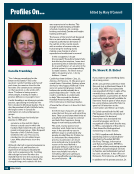
Eichel, a licensed and board-certified counseling
psychologist, offers his services as comoderator
of the Philadelphia ICSA meeting each month
and is involved with a number of other
professional associations. He is a past president of
the American Academy of Counseling Psychology
and the Greater Philadelphia Society of Clinical
Hypnosis.
Charming and forthcoming, he spoke with deep
feeling, in a voice that can only be described as
mellifluous. He commented about the important
women in his life in a way that would thrill the
heart of Gloria Steinem, and about subjects from
his childhood, to his “gut-level dislike for
totalism,” to his love for his pets Bud and Zoe,
now both deceased. Here is a bit of what he had
to say concerning his family:
I am married to Terri Cheek, a brilliant and
fascinating woman who keeps me on my toes
(and humble). She is one of the most caring
and loving people I have ever been honored
to meet... I have one biological daughter, Dr.
Jennifer Dubrow, who is married to Dr. Jameel
Ahmad. I also have two stepsons, Nathan and
Tristan. My parents, both survivors of the Nazi
Holocaust, are deceased. My legacy as a child
of Holocaust survivors greatly influenced my
involvement in the field of cultic studies.
…his hobbies: “I spend my leisure time reading,
trying to stay in touch with many friends and
acquaintances, traveling, hiking, and watching
(usually) great movies.”
…his mentor/role model: “I have had many
mentors in this field. My advisor, Art Dole, was
instrumental in helping me to develop my
thinking about cultic relationships. However, my
former and current clients have taught me more
than anyone else.”
…Mrs. Lorna Goldberg, the outgoing president
of ICSA: “She was a marvelous president, and I
will rely on her counsel quite extensively... Lorna
brought a level of trust and class that is going to
be difficult to match, let alone exceed... She is a
deeply empathic and sincere person.”
…those who have left a cultic situation: “My best
advice ...is to find a few deeply understanding
and nonjudgmental people and connect,
connect, connect. Isolation is the enemy
connection is the solution.”
…his hopes for ICSA:
I think research [should continue to be] a
strong priority, and it is vital to continue
support of a range of recovery groups and
people who are working in the field. I would
like to see better communication between
people in ICSA with competing viewpoints ...
continuing dialogue, appreciation and respect
for differences.
…and finally, one of his favorite quotations: “Less
judgment, more curiosity.” ■
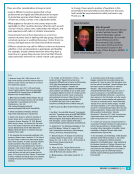
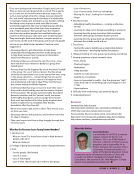
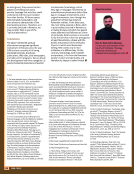
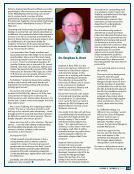
Dr. Stephen A. Kent
Stephen A. Kent, PhD, is in the
process of creating a collection of
materials on alternative religions
and extremist groups. In this
project, he is working with Gordon
Drever of Athabasca University.
The collection is housed at the
University of Alberta and is meant
to be a resource for graduate
students, reporters, lawyers, and
other serious researchers.
Doctor Kent himself is the author
of a book and 65 articles, and he
has worked on 23 cult-related
court cases. He has two master’s
degrees his PhD in Religion and
Modern Western Society is from
McMaster University.
One might think that with all these
accomplishments he would rest on
his laurels. Not Stephen Kent. His
favorite saying is “Get to work!”
And that’s exactly what he has
done: “...As I age (and I have no
children), I realize that if I will have
any legacy at all, then it will be
primarily through my publications
and the research collection on
alternative religions that I have
amassed.”
Stephen Kent has been the
recipient of many awards
throughout his life, starting in high
school. At the ICSA conference in
Montreal, Canada in July 2012, he
received the Margaret Singer
Award. But perhaps the most
telling is the one he received in
2009 from the Graduate Students’
Association for outstanding work
as a graduate student supervisor.
Similarly, and reflective of the high
standards against which
undergraduates evaluate their
instructors, Dr. Kent earned his
department’s undergraduate
teaching award in 2010.
One hint about why students
admire him so much and what
makes him the kind of teacher one
longs for may be gleaned from the
delightful and unexpected speech
he delivered at the time of his
award at the ICSA conference. With
true story-telling artistry, humility,
and generosity, he used the
opportunity to praise Margaret
Singer and give the audience
members, some of whom may not
have known her, a hilarious and
fascinating bird’s-eye view into her
personality:
I am surprised about receiving
this award...
One aspect of my background,
however, that does give
credence to my receiving the
Margaret Singer Award is that I
had the privilege of spending
considerable time with her and
her files during the last years of
her life. You would be correct to
imagine that, in doing so, I
acquired a few stories about
Margaret and her fight against
abuse and abusers. Then, of
course, there were the other
stories.
In a different setting, in a
different time, perhaps I would
tell you the story of Margaret
and her machine gun or
Margaret and her hand
grenade. Possibly I would
recount the tale about Margaret
and the Mafia boss....
I thank you again for this
honour, and I do hope that my
own work aspires to the
standards that Margaret set in
the struggle against abuse,
manipulation, and deception.
Dr. Kent is a full professor at the
University of Alberta in Canada. ■
Eichel, a licensed and board-certified counseling
psychologist, offers his services as comoderator
of the Philadelphia ICSA meeting each month
and is involved with a number of other
professional associations. He is a past president of
the American Academy of Counseling Psychology
and the Greater Philadelphia Society of Clinical
Hypnosis.
Charming and forthcoming, he spoke with deep
feeling, in a voice that can only be described as
mellifluous. He commented about the important
women in his life in a way that would thrill the
heart of Gloria Steinem, and about subjects from
his childhood, to his “gut-level dislike for
totalism,” to his love for his pets Bud and Zoe,
now both deceased. Here is a bit of what he had
to say concerning his family:
I am married to Terri Cheek, a brilliant and
fascinating woman who keeps me on my toes
(and humble). She is one of the most caring
and loving people I have ever been honored
to meet... I have one biological daughter, Dr.
Jennifer Dubrow, who is married to Dr. Jameel
Ahmad. I also have two stepsons, Nathan and
Tristan. My parents, both survivors of the Nazi
Holocaust, are deceased. My legacy as a child
of Holocaust survivors greatly influenced my
involvement in the field of cultic studies.
…his hobbies: “I spend my leisure time reading,
trying to stay in touch with many friends and
acquaintances, traveling, hiking, and watching
(usually) great movies.”
…his mentor/role model: “I have had many
mentors in this field. My advisor, Art Dole, was
instrumental in helping me to develop my
thinking about cultic relationships. However, my
former and current clients have taught me more
than anyone else.”
…Mrs. Lorna Goldberg, the outgoing president
of ICSA: “She was a marvelous president, and I
will rely on her counsel quite extensively... Lorna
brought a level of trust and class that is going to
be difficult to match, let alone exceed... She is a
deeply empathic and sincere person.”
…those who have left a cultic situation: “My best
advice ...is to find a few deeply understanding
and nonjudgmental people and connect,
connect, connect. Isolation is the enemy
connection is the solution.”
…his hopes for ICSA:
I think research [should continue to be] a
strong priority, and it is vital to continue
support of a range of recovery groups and
people who are working in the field. I would
like to see better communication between
people in ICSA with competing viewpoints ...
continuing dialogue, appreciation and respect
for differences.
…and finally, one of his favorite quotations: “Less
judgment, more curiosity.” ■
Dr. Stephen A. Kent
Stephen A. Kent, PhD, is in the
process of creating a collection of
materials on alternative religions
and extremist groups. In this
project, he is working with Gordon
Drever of Athabasca University.
The collection is housed at the
University of Alberta and is meant
to be a resource for graduate
students, reporters, lawyers, and
other serious researchers.
Doctor Kent himself is the author
of a book and 65 articles, and he
has worked on 23 cult-related
court cases. He has two master’s
degrees his PhD in Religion and
Modern Western Society is from
McMaster University.
One might think that with all these
accomplishments he would rest on
his laurels. Not Stephen Kent. His
favorite saying is “Get to work!”
And that’s exactly what he has
done: “...As I age (and I have no
children), I realize that if I will have
any legacy at all, then it will be
primarily through my publications
and the research collection on
alternative religions that I have
amassed.”
Stephen Kent has been the
recipient of many awards
throughout his life, starting in high
school. At the ICSA conference in
Montreal, Canada in July 2012, he
received the Margaret Singer
Award. But perhaps the most
telling is the one he received in
2009 from the Graduate Students’
Association for outstanding work
as a graduate student supervisor.
Similarly, and reflective of the high
standards against which
undergraduates evaluate their
instructors, Dr. Kent earned his
department’s undergraduate
teaching award in 2010.
One hint about why students
admire him so much and what
makes him the kind of teacher one
longs for may be gleaned from the
delightful and unexpected speech
he delivered at the time of his
award at the ICSA conference. With
true story-telling artistry, humility,
and generosity, he used the
opportunity to praise Margaret
Singer and give the audience
members, some of whom may not
have known her, a hilarious and
fascinating bird’s-eye view into her
personality:
I am surprised about receiving
this award...
One aspect of my background,
however, that does give
credence to my receiving the
Margaret Singer Award is that I
had the privilege of spending
considerable time with her and
her files during the last years of
her life. You would be correct to
imagine that, in doing so, I
acquired a few stories about
Margaret and her fight against
abuse and abusers. Then, of
course, there were the other
stories.
In a different setting, in a
different time, perhaps I would
tell you the story of Margaret
and her machine gun or
Margaret and her hand
grenade. Possibly I would
recount the tale about Margaret
and the Mafia boss....
I thank you again for this
honour, and I do hope that my
own work aspires to the
standards that Margaret set in
the struggle against abuse,
manipulation, and deception.
Dr. Kent is a full professor at the
University of Alberta in Canada. ■