Cultic Studies Review, Vol. 8, No. 3, 2009, Page 9
In the devotee‘s mind, the grand purpose is possible, no matter what appearances indicate
to outsiders.
Circular Tension
We often use phrases like ―circle of friends,‖ ―family circle,‖ and ―circle of influence‖ to
describe social contracts and relationships. A gang can be a ―ring of thieves.‖ The
implication is that the bond surrounds something or someone. The bond is an organizing
principle. We as outsiders sense that the system is closed up within the circle. To enter it,
one must join by enduring some kind of initiation. We prepare to climb through levels of
improvement and awareness.
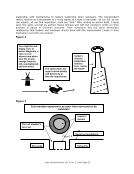
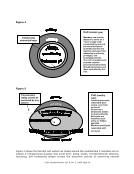
I suggest here that participating in a harmful totalist cult is not so much being inside a circle
as moving on one. Circular tension is a perversion of that proverbial ―razor‘s edge‖ known to
seekers familiar with Eastern religion and Somerset Maugham‘s 1944 novel by that name.
Maugham quotes Hinduism‘s Katha-Upanishad (III:14) for the epigraph of The Razor‟s
Edge: ―The sharp edge of a razor is difficult to pass over thus the wise say the path to
Salvation is hard.‖ Another translation by Sri Aurobindo says it this way: ―Arise, awake, find
out the great ones and learn of them: for sharp as a razor‘s edge, hard to traverse, difficult
of going is that path, say the sages.‖4
Cults that are of concern to a deprogrammer manipulate dynamic relationships to keep
members focused on a dubious purpose. Members do ―the work‖ constantly, sustain rituals
of self-improvement, maintain doctrinal thoughts, and strive to serve a transcendent ideal.
They never completely understand that ideal (as well as the leader or managers apparently
understand) but they can certainly approach that goal by doing certain things. In fact, most
cults rely on a leader‘s progressive exposition of the foundation myth that has many
irrational therefore questionable features.
The initiate‘s apparent upward climb to enlightenment or deeper relationship with God soon
reaches a plateau. This plateau may have more to do with common human limitations than
any thing else—there is no evidence that psychic powers are repeatable under test
conditions, for example. Veteran cult members and even the leader seem to be no more
enlightened at this ―advanced‖ stage of membership, yet the newer member persists
because she made a commitment and continues to hope for new gains and revelations. Her
brain may have the capacity to question or doubt her spiritual attainment, but a powerful
cult suggestion tells her, ―Do not go there‖ or she will fall prey to the exit perils.
The leader is the only one who represents a fully enlightened being, so only the leader can
act as a guide to her enlightenment. The catch here is that unless she is enlightened like the
leader, she cannot grasp and achieve the full mystery of the revelation, a revelation that the
leader changes from time to time to suit his needs anyway. So she continues meditating,
chanting, taking workshops, performing seva or services, adjusting her attitude, praying,
and adapting to new revelations.
Fear and doubt are the devils that members suppress daily. As my hippie-era colleagues
used to say, ―You just keep on truckin!‖ But the illusion in deceptive cults is that
participants are on a path to climb the highest mountain, to move up a ladder to total
freedom, or that the path as journey is the truth—they are already there if they are on the
way! Just keep going. From the deprogrammer‘s perspective, harmful cults tie people to a
circular path that seems never ending and yet never quite fulfills the promises.
One might argue that most of life is repetition anyway, with rounds of workdays and social
functions, so why should cults be any different? Native American jargon says that we live in
a hoop, as indicated by the sun, moon, and stars going around us, with seasons coming and
going regularly. Major religions all have cycles of devotion and repeat rituals. And New
Agers like to point to the ―nonlinear‖ circle of life. The circle of cult life by that standard
In the devotee‘s mind, the grand purpose is possible, no matter what appearances indicate
to outsiders.
Circular Tension
We often use phrases like ―circle of friends,‖ ―family circle,‖ and ―circle of influence‖ to
describe social contracts and relationships. A gang can be a ―ring of thieves.‖ The
implication is that the bond surrounds something or someone. The bond is an organizing
principle. We as outsiders sense that the system is closed up within the circle. To enter it,
one must join by enduring some kind of initiation. We prepare to climb through levels of
improvement and awareness.
I suggest here that participating in a harmful totalist cult is not so much being inside a circle
as moving on one. Circular tension is a perversion of that proverbial ―razor‘s edge‖ known to
seekers familiar with Eastern religion and Somerset Maugham‘s 1944 novel by that name.
Maugham quotes Hinduism‘s Katha-Upanishad (III:14) for the epigraph of The Razor‟s
Edge: ―The sharp edge of a razor is difficult to pass over thus the wise say the path to
Salvation is hard.‖ Another translation by Sri Aurobindo says it this way: ―Arise, awake, find
out the great ones and learn of them: for sharp as a razor‘s edge, hard to traverse, difficult
of going is that path, say the sages.‖4
Cults that are of concern to a deprogrammer manipulate dynamic relationships to keep
members focused on a dubious purpose. Members do ―the work‖ constantly, sustain rituals
of self-improvement, maintain doctrinal thoughts, and strive to serve a transcendent ideal.
They never completely understand that ideal (as well as the leader or managers apparently
understand) but they can certainly approach that goal by doing certain things. In fact, most
cults rely on a leader‘s progressive exposition of the foundation myth that has many
irrational therefore questionable features.
The initiate‘s apparent upward climb to enlightenment or deeper relationship with God soon
reaches a plateau. This plateau may have more to do with common human limitations than
any thing else—there is no evidence that psychic powers are repeatable under test
conditions, for example. Veteran cult members and even the leader seem to be no more
enlightened at this ―advanced‖ stage of membership, yet the newer member persists
because she made a commitment and continues to hope for new gains and revelations. Her
brain may have the capacity to question or doubt her spiritual attainment, but a powerful
cult suggestion tells her, ―Do not go there‖ or she will fall prey to the exit perils.
The leader is the only one who represents a fully enlightened being, so only the leader can
act as a guide to her enlightenment. The catch here is that unless she is enlightened like the
leader, she cannot grasp and achieve the full mystery of the revelation, a revelation that the
leader changes from time to time to suit his needs anyway. So she continues meditating,
chanting, taking workshops, performing seva or services, adjusting her attitude, praying,
and adapting to new revelations.
Fear and doubt are the devils that members suppress daily. As my hippie-era colleagues
used to say, ―You just keep on truckin!‖ But the illusion in deceptive cults is that
participants are on a path to climb the highest mountain, to move up a ladder to total
freedom, or that the path as journey is the truth—they are already there if they are on the
way! Just keep going. From the deprogrammer‘s perspective, harmful cults tie people to a
circular path that seems never ending and yet never quite fulfills the promises.
One might argue that most of life is repetition anyway, with rounds of workdays and social
functions, so why should cults be any different? Native American jargon says that we live in
a hoop, as indicated by the sun, moon, and stars going around us, with seasons coming and
going regularly. Major religions all have cycles of devotion and repeat rituals. And New
Agers like to point to the ―nonlinear‖ circle of life. The circle of cult life by that standard