Cultic Studies Review, Vol. 8, No. 3, 2009, Page 13
(see his eight themes in the Appendix of his book Thought Reform and the Psychology of
Totalism). In his final analysis, this one theme practically defines a cult. It is the ―them
verses us‖ mentality that Arthur Deikman defines in his book by that name.
In choosing to defect, the group member must come to grips with what happened. Spiritual
rape is a common description. For some, rape may be too strong an image but it is
nevertheless very unsettling to realize that they have shared their most intimate selves for
years with a deceitful, perhaps nutcase guru who is incapable of truly guiding them. Then
there is the peril of facing their own functional integrity. A body of believers can participate
wholeheartedly in the delusions of the lead person—cults, like persons, can have personality
disorders with delusional features (for example, grandiosity), albeit shared ones, as in folie
de groupe. Thus, doubting devotees may feel imperiled by the very possibility of recognizing
that their behavior in the cult was madness in action.
Deprogramming works when it reduces the perils of the exit process. Deprogrammers do
this by reality testing questionable beliefs and perceptions with the client. Insights from the
lives of ex-members from the same and other cults help: ―If they survived and thrived
under worse perils, then so can you.‖ Undermining the authority of the leader with solid
scholarship and accurate history brings the ex-member not only to eye level with the leader,
but also takes the leader out of the center of the circle, thus removing the illusion that she
is transcendent.
The living leader is no more transcendent than a group member is. At eye level, the
member can assume authority and control over personal choice. Life feels perilous when he
is not in control, and dependency increases. With self-reliance restored, he can take the
reins of his horse, so to speak. The deprogrammer is like a coach, or a ―horse whisperer‖
who convinces the wary animal that crossing a creek to leave an enclosed area is not so
dangerous. The creek is a metaphor for all the phobias and imagined threats that cult
members avoid. Some of these phobias remain even after the exiting member has crossed
the ―most dangerous‖ waters. This is not an easy process if he is not used to riding alone
[taking back his life], especially on a skittish horse, but it is a clearer one with known
possibilities after a successful intervention.
An ex-member may notice a wide variety of people and average folks whom he used to look
down upon from his elite cult position, and notice that these ―lesser beings‖ are doing quite
well. At eye level, he finds it easier to identify with group outsiders again, or maybe for the
first time, if he was raised in an elitist cult. Normal life and plain religion now appear very
exciting when he realizes that salvation and enlightenment are still possible, and probably
even more so than before. He no longer has to wear a social and intellectual straightjacket,
converse with angels, or be able to read auras for God to love him. He no longer needs to
pursue a grandiose future to feel good in this normal life.
If the leader and cultic group were unhealthy, then, by contrast, there can be healthy
groups and leaders out there. The deprogrammer should offer some guidelines to get the
ex-member started but not direct specific choices of healthier life affiliations. The
deprogrammer‘s invitation is for the cult member to get off the tiny merry-go-round of a
haunted and badly managed theme park. The deprogrammer encourages the client to exit
into a greater circle of life and to apply thinking skills held back by cult constriction.
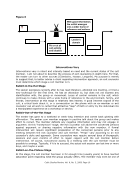
Images of Cult Formation
The illustrations that follow present, as I see it, the unhealthy and healthy models of cult
activity. In the figures and discussion, I mean by ―surround‖ to indicate the social
environment, assuming that it is reasonably democratic and not a totalist political system or
abusive dictatorship (I discuss this term more fully following the illustrations). Ironically,
more cults tend to appear in open political climates that tolerate social experimentation than
(see his eight themes in the Appendix of his book Thought Reform and the Psychology of
Totalism). In his final analysis, this one theme practically defines a cult. It is the ―them
verses us‖ mentality that Arthur Deikman defines in his book by that name.
In choosing to defect, the group member must come to grips with what happened. Spiritual
rape is a common description. For some, rape may be too strong an image but it is
nevertheless very unsettling to realize that they have shared their most intimate selves for
years with a deceitful, perhaps nutcase guru who is incapable of truly guiding them. Then
there is the peril of facing their own functional integrity. A body of believers can participate
wholeheartedly in the delusions of the lead person—cults, like persons, can have personality
disorders with delusional features (for example, grandiosity), albeit shared ones, as in folie
de groupe. Thus, doubting devotees may feel imperiled by the very possibility of recognizing
that their behavior in the cult was madness in action.
Deprogramming works when it reduces the perils of the exit process. Deprogrammers do
this by reality testing questionable beliefs and perceptions with the client. Insights from the
lives of ex-members from the same and other cults help: ―If they survived and thrived
under worse perils, then so can you.‖ Undermining the authority of the leader with solid
scholarship and accurate history brings the ex-member not only to eye level with the leader,
but also takes the leader out of the center of the circle, thus removing the illusion that she
is transcendent.
The living leader is no more transcendent than a group member is. At eye level, the
member can assume authority and control over personal choice. Life feels perilous when he
is not in control, and dependency increases. With self-reliance restored, he can take the
reins of his horse, so to speak. The deprogrammer is like a coach, or a ―horse whisperer‖
who convinces the wary animal that crossing a creek to leave an enclosed area is not so
dangerous. The creek is a metaphor for all the phobias and imagined threats that cult
members avoid. Some of these phobias remain even after the exiting member has crossed
the ―most dangerous‖ waters. This is not an easy process if he is not used to riding alone
[taking back his life], especially on a skittish horse, but it is a clearer one with known
possibilities after a successful intervention.
An ex-member may notice a wide variety of people and average folks whom he used to look
down upon from his elite cult position, and notice that these ―lesser beings‖ are doing quite
well. At eye level, he finds it easier to identify with group outsiders again, or maybe for the
first time, if he was raised in an elitist cult. Normal life and plain religion now appear very
exciting when he realizes that salvation and enlightenment are still possible, and probably
even more so than before. He no longer has to wear a social and intellectual straightjacket,
converse with angels, or be able to read auras for God to love him. He no longer needs to
pursue a grandiose future to feel good in this normal life.
If the leader and cultic group were unhealthy, then, by contrast, there can be healthy
groups and leaders out there. The deprogrammer should offer some guidelines to get the
ex-member started but not direct specific choices of healthier life affiliations. The
deprogrammer‘s invitation is for the cult member to get off the tiny merry-go-round of a
haunted and badly managed theme park. The deprogrammer encourages the client to exit
into a greater circle of life and to apply thinking skills held back by cult constriction.
Images of Cult Formation
The illustrations that follow present, as I see it, the unhealthy and healthy models of cult
activity. In the figures and discussion, I mean by ―surround‖ to indicate the social
environment, assuming that it is reasonably democratic and not a totalist political system or
abusive dictatorship (I discuss this term more fully following the illustrations). Ironically,
more cults tend to appear in open political climates that tolerate social experimentation than