Cultic Studies Review, Vol. 8, No. 3, 2009, Page 17
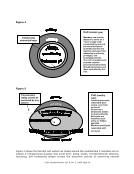
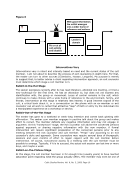
doubts and entertaining surrounding criticism. In Figure 5, the expansive, second model of
a healthy cult (yes, there is such a thing), we clearly see an enclosed arena of activity that
nevertheless sustains easy access both socially and intellectually with the surround (the
social and intellectual environment). I borrow the term surround as applied by self-
psychologists who follow the work of Heinz Kohut (1913–1981) who significantly advanced
Freud‘s analytic approach to psychotherapy. ―Narrowly conceived, self-psychology consists
of ideas of Heinz Kohut, ideas that apply to the understanding and treatment of narcissistic
disorders.‖8
Narcissism as both a behavior trait and a disorder appears in discussions about cults and
cult leaders 9 thus, my interest in Kohut and how he used the surround to augment
assessments of self. In Kohut‘s psychology, some measure of narcissism may be healthy,
just as in my discussion here, certain cult formations can be healthy. Malignant narcissism
appears in totalist systems that harm participants and society. Cults as closed authoritarian
systems create perceptions about the social environment and greatly influence interactions
with that environment. In that process, a manipulative cult will tap and feed the narcissistic
tendencies of recruits with grandiose transpersonal causes and infect the recruits with
flawed perceptions of peril projected onto the surround. I believe Kohut‘s insights regarding
the self as part of an interactive social structure can add value to this discussion. Here I
only wish to alert the reader to why I use surround in my illustrations.
In the healthier version, the group member has ease of contact with the surround, as well
as reasonable entry and exit, with no hidden agendas either way. The transpersonal
purpose is not confused with the person of the living leader or guru. In other words, until
the leader is dead and gone, he is just as human as his followers, albeit with a special role.
He must serve the purpose, not have the purpose serve him as if he were God or a god.
There is no such thing as a living god. Gods are spirits, if they exist at all. Even in
Christianity, a religion that claims a living deity in the historical Jesus, we read of the
struggle among the Apostles to recognize ―God‖ as Jesus until after his death and reported
resurrection. Similarly, the avatars of Hinduism exist as divine creatures only in Hindu
scripture and on some devotional levels. Any claim by a living guru to be the tenth or Kalki
Avatar, for example, is bogus until he dies and ―earns‖ that designation through a living
testament to the fruits of his labor. The quality of the tradition is what we can criticize when
the ―divine‖ person is gone.
For example, the Self-Realization Fellowship (SRF) founded by Swami Yogananda in 1925
posits the mysterious, a-historical Babaji as the divine root inspiration for the lineage of SRF
gurus. Babaji can function as the traditional embodiment of the transpersonal, much like
Jesus does in Christianity, but the embodied or living leader cannot, in my view. To the
extent that any devotee sees the living guru as having achieved a transpersonal state is the
extent to which the devotee risks living in a closed system controlled by the guru. The only
humans I know who handle divine power well are those who can hold molten steel in their
bare hands indefinitely.
I remind the reader that these are my models that assist me in helping my clients assess
their group experience. I do not make exceptions regarding the God confusion. No living
leader is God or a god. Many traditions have deified a living leader, such as Caesar but
during Roman inaugurations, a slave stood behind a triumphant general and chanted,
―Memento mori [remember, thou art mortal remember, you will die].‖ In a similar vein,
during papal coronations a plain Catholic monk holds a pole on which burns a common piece
of flax. Once the flax stops burning, the monk thrice repeats, ―Pater sancte, sic transit gloria
mundi [Fame is fleeting, Holy Father remember, you are mortal].‖ Cult leaders and
dictators who take center stage as objects of devotion tend to avoid this admonition.
doubts and entertaining surrounding criticism. In Figure 5, the expansive, second model of
a healthy cult (yes, there is such a thing), we clearly see an enclosed arena of activity that
nevertheless sustains easy access both socially and intellectually with the surround (the
social and intellectual environment). I borrow the term surround as applied by self-
psychologists who follow the work of Heinz Kohut (1913–1981) who significantly advanced
Freud‘s analytic approach to psychotherapy. ―Narrowly conceived, self-psychology consists
of ideas of Heinz Kohut, ideas that apply to the understanding and treatment of narcissistic
disorders.‖8
Narcissism as both a behavior trait and a disorder appears in discussions about cults and
cult leaders 9 thus, my interest in Kohut and how he used the surround to augment
assessments of self. In Kohut‘s psychology, some measure of narcissism may be healthy,
just as in my discussion here, certain cult formations can be healthy. Malignant narcissism
appears in totalist systems that harm participants and society. Cults as closed authoritarian
systems create perceptions about the social environment and greatly influence interactions
with that environment. In that process, a manipulative cult will tap and feed the narcissistic
tendencies of recruits with grandiose transpersonal causes and infect the recruits with
flawed perceptions of peril projected onto the surround. I believe Kohut‘s insights regarding
the self as part of an interactive social structure can add value to this discussion. Here I
only wish to alert the reader to why I use surround in my illustrations.
In the healthier version, the group member has ease of contact with the surround, as well
as reasonable entry and exit, with no hidden agendas either way. The transpersonal
purpose is not confused with the person of the living leader or guru. In other words, until
the leader is dead and gone, he is just as human as his followers, albeit with a special role.
He must serve the purpose, not have the purpose serve him as if he were God or a god.
There is no such thing as a living god. Gods are spirits, if they exist at all. Even in
Christianity, a religion that claims a living deity in the historical Jesus, we read of the
struggle among the Apostles to recognize ―God‖ as Jesus until after his death and reported
resurrection. Similarly, the avatars of Hinduism exist as divine creatures only in Hindu
scripture and on some devotional levels. Any claim by a living guru to be the tenth or Kalki
Avatar, for example, is bogus until he dies and ―earns‖ that designation through a living
testament to the fruits of his labor. The quality of the tradition is what we can criticize when
the ―divine‖ person is gone.
For example, the Self-Realization Fellowship (SRF) founded by Swami Yogananda in 1925
posits the mysterious, a-historical Babaji as the divine root inspiration for the lineage of SRF
gurus. Babaji can function as the traditional embodiment of the transpersonal, much like
Jesus does in Christianity, but the embodied or living leader cannot, in my view. To the
extent that any devotee sees the living guru as having achieved a transpersonal state is the
extent to which the devotee risks living in a closed system controlled by the guru. The only
humans I know who handle divine power well are those who can hold molten steel in their
bare hands indefinitely.
I remind the reader that these are my models that assist me in helping my clients assess
their group experience. I do not make exceptions regarding the God confusion. No living
leader is God or a god. Many traditions have deified a living leader, such as Caesar but
during Roman inaugurations, a slave stood behind a triumphant general and chanted,
―Memento mori [remember, thou art mortal remember, you will die].‖ In a similar vein,
during papal coronations a plain Catholic monk holds a pole on which burns a common piece
of flax. Once the flax stops burning, the monk thrice repeats, ―Pater sancte, sic transit gloria
mundi [Fame is fleeting, Holy Father remember, you are mortal].‖ Cult leaders and
dictators who take center stage as objects of devotion tend to avoid this admonition.