Cultic Studies Review, Vol. 8, No. 3, 2009, Page 11
explaining origins of the foundation myth. I entered rather than attacked his circle of
thought. I offered insights into the leader‘s life without criticizing the system. Criticism came
much later. Those first hours were dominated by the circular ideation that can frustrate a
critic who engages a cult member. The young doctor could have left the discussion at any
time but did not, out of respect for his father. That was the only leverage we needed in this
case initially. The rest came when I piqued his interest with new and nonthreatening
information.
Many a skeptic who confronts a hard-core cult member will tell you, ―I tried to reason with
him but got nowhere. We just went round and round about the same things, it seemed.‖
Circular arguments end when one party says, ―Well, you have your reality and I have mine.
We will just have to agree to disagree. Unless you have my experience you cannot know if
this is true or not. You are coming from your head, and to know my truth you have to come
from your heart. If you doubt it, you cannot know the truth. If you are not enlightened, you
will not understand.‖ These statements are thought-stopping clichés that end discursive
thinking as well as dialogue. Self-expression becomes a monologue. At this stage, the
frustrated skeptic has images of hitting his opponent over the head with a hammer to knock
some sense into him. The cult member feels that he or she has just won and continues
truckin‘ merrily along. All so-called seeds of doubt the skeptic tried to sow soon burn up in
the heat of ritual or blow away in the winds of dogma.
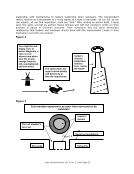
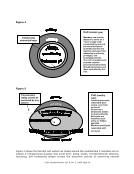
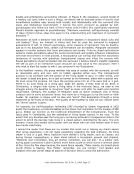
If anything defines mind control, it is circular ideation or a fixed mind set. Tethered
ideologically to a leader‘s revelation, the devotee will adjust his or her thoughts and
impulses to sustain the least resistance and to stay in a flow. Leadership or cult
management can jerk the chain of influence to get the member back in line if he drifts too
far. Management can snap a whip if the devotee comes too close. The leader‘s domain of
authority is inside the circle—no one else is allowed there without permission. Think of a
dressage trainer with a young or untamed horse in a ring (I was introduced to training
horses this way, so I have some idea). In contrast, a well-trained or experienced horse will
hardly tug on the lead and needs only subtle movement from the whip to guide.
Of course, this is a metaphor. Human beings are not horses, but ex-members of
controversial cults with totalist features can identify with the metaphor. To carry it further,
from the ex-members‘ perspective, every member felt the all-seeing eye of the leader on
their backs whenever they ventured forth to work in society, fundraise, or recruit new
members. Internalizing the guru or leader who acts in the place of God or as God is a
common cult experience. ―I live now, not I, but Christ lives in me,‖ said St. Paul and say
members of Bible cults who believe that their ―anointed‖ preacher speaks for Christ. ―The
guru is greater than God,‖ say Sant Mat-related cult devotees. ―The guru arranges
everything.‖
It is a mistake to think that cult members are stupid. Most of them will argue circles around
you. Unless you are well-prepared and very patient, you might end up feeling stupid after a
session with a cult member. Muslim fanatics for example, include doctors and other
professionals who know very well how to justify a Muslim Brotherhood version of Sharia or
Muslim law. The question is Why? Part of the answer is in my first point, of transpersonal
purpose. The devotee comes to a belief that a grand purpose is not only necessary but
attainable. Therefore, he or she will act in faith to further the process through self-sacrifice
and attempted ego-extinction. The other half of this bargain regards what is outside of the
circle, or that perilous area of social and psychological interaction that continually tests the
devotee.
Exit Perils
―To leave this path is like a dog returning to eat its vomit.‖
explaining origins of the foundation myth. I entered rather than attacked his circle of
thought. I offered insights into the leader‘s life without criticizing the system. Criticism came
much later. Those first hours were dominated by the circular ideation that can frustrate a
critic who engages a cult member. The young doctor could have left the discussion at any
time but did not, out of respect for his father. That was the only leverage we needed in this
case initially. The rest came when I piqued his interest with new and nonthreatening
information.
Many a skeptic who confronts a hard-core cult member will tell you, ―I tried to reason with
him but got nowhere. We just went round and round about the same things, it seemed.‖
Circular arguments end when one party says, ―Well, you have your reality and I have mine.
We will just have to agree to disagree. Unless you have my experience you cannot know if
this is true or not. You are coming from your head, and to know my truth you have to come
from your heart. If you doubt it, you cannot know the truth. If you are not enlightened, you
will not understand.‖ These statements are thought-stopping clichés that end discursive
thinking as well as dialogue. Self-expression becomes a monologue. At this stage, the
frustrated skeptic has images of hitting his opponent over the head with a hammer to knock
some sense into him. The cult member feels that he or she has just won and continues
truckin‘ merrily along. All so-called seeds of doubt the skeptic tried to sow soon burn up in
the heat of ritual or blow away in the winds of dogma.
If anything defines mind control, it is circular ideation or a fixed mind set. Tethered
ideologically to a leader‘s revelation, the devotee will adjust his or her thoughts and
impulses to sustain the least resistance and to stay in a flow. Leadership or cult
management can jerk the chain of influence to get the member back in line if he drifts too
far. Management can snap a whip if the devotee comes too close. The leader‘s domain of
authority is inside the circle—no one else is allowed there without permission. Think of a
dressage trainer with a young or untamed horse in a ring (I was introduced to training
horses this way, so I have some idea). In contrast, a well-trained or experienced horse will
hardly tug on the lead and needs only subtle movement from the whip to guide.
Of course, this is a metaphor. Human beings are not horses, but ex-members of
controversial cults with totalist features can identify with the metaphor. To carry it further,
from the ex-members‘ perspective, every member felt the all-seeing eye of the leader on
their backs whenever they ventured forth to work in society, fundraise, or recruit new
members. Internalizing the guru or leader who acts in the place of God or as God is a
common cult experience. ―I live now, not I, but Christ lives in me,‖ said St. Paul and say
members of Bible cults who believe that their ―anointed‖ preacher speaks for Christ. ―The
guru is greater than God,‖ say Sant Mat-related cult devotees. ―The guru arranges
everything.‖
It is a mistake to think that cult members are stupid. Most of them will argue circles around
you. Unless you are well-prepared and very patient, you might end up feeling stupid after a
session with a cult member. Muslim fanatics for example, include doctors and other
professionals who know very well how to justify a Muslim Brotherhood version of Sharia or
Muslim law. The question is Why? Part of the answer is in my first point, of transpersonal
purpose. The devotee comes to a belief that a grand purpose is not only necessary but
attainable. Therefore, he or she will act in faith to further the process through self-sacrifice
and attempted ego-extinction. The other half of this bargain regards what is outside of the
circle, or that perilous area of social and psychological interaction that continually tests the
devotee.
Exit Perils
―To leave this path is like a dog returning to eat its vomit.‖